
Views: 0 Author: Site Editor Publish Time: 2026-11-20 Origin: Site


A liquid filling machine is an automated system that measures a set volume or weight of liquid and deposits it into containers. Many people also call this equipment a liquid packing machine. In practice, the machine fills bags, sachets, pouches, bottles, jars, and jugs with consistent amounts of product. It removes the guesswork from manual filling and keeps output steady across a production run.
Readers who need a clear starting point will find useful guidance here. The article explains how filling mechanisms work, the main machine types, typical applications, and the key factors that guide a purchase decision.
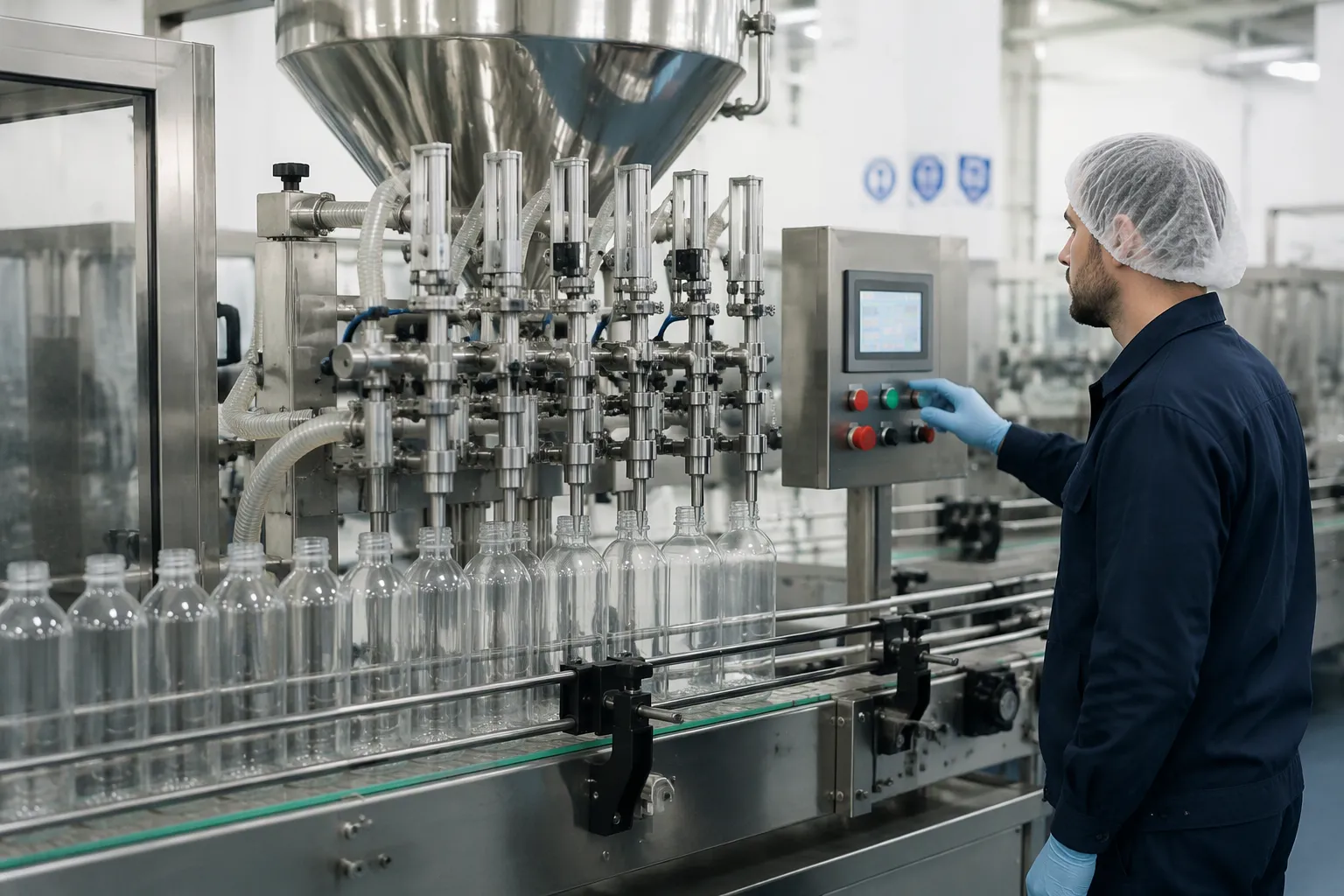
A liquid packaging machine is an automated system. It fills liquid or semi-liquid products into flexible formats and rigid containers alike. Flexible formats include bags, sachets, and pouches. Rigid containers include bottles, jars, and jugs. This dual capability makes the equipment versatile across many production lines.
Some models go a step further. These units form the bag themselves. They combine bag forming, filling, and sealing in one unit. An operator loads a roll of film, and the machine shapes each pouch, doses the product, and seals the top. This integrated design suits high-volume operations that run sachets or pouches continuously. A liquid packing machine of this kind reduces handling steps and keeps the fill zone enclosed.
Every liquid packing machine relies on a set of core parts. Each part plays a distinct role in the filling cycle.
Hopper or product tank. This vessel holds the liquid before filling. Its size sets the batch volume the machine can run without a refill.
Filling nozzles. These deliver product into each container. Nozzle count and spacing determine how many containers the machine fills per cycle.
Measuring system. This mechanism controls the dose. It may work by volume or by weight, and it governs fill accuracy.
Conveyor. The conveyor moves containers to and from the filling station. It sets the pace of the whole line.
Control panel. Operators use the panel to set fill volumes, adjust speeds, and monitor the run. Modern panels store recipes for different products.
The parts work as one system. The tank feeds the nozzles, the measuring system sets each dose, and the conveyor keeps containers moving in step. A well-matched set of components produces steady fills run after run. Poorly matched parts cause variation, spills, or slowdowns. Buyers should therefore review each component against their product and output targets before choosing a liquid packing machine.
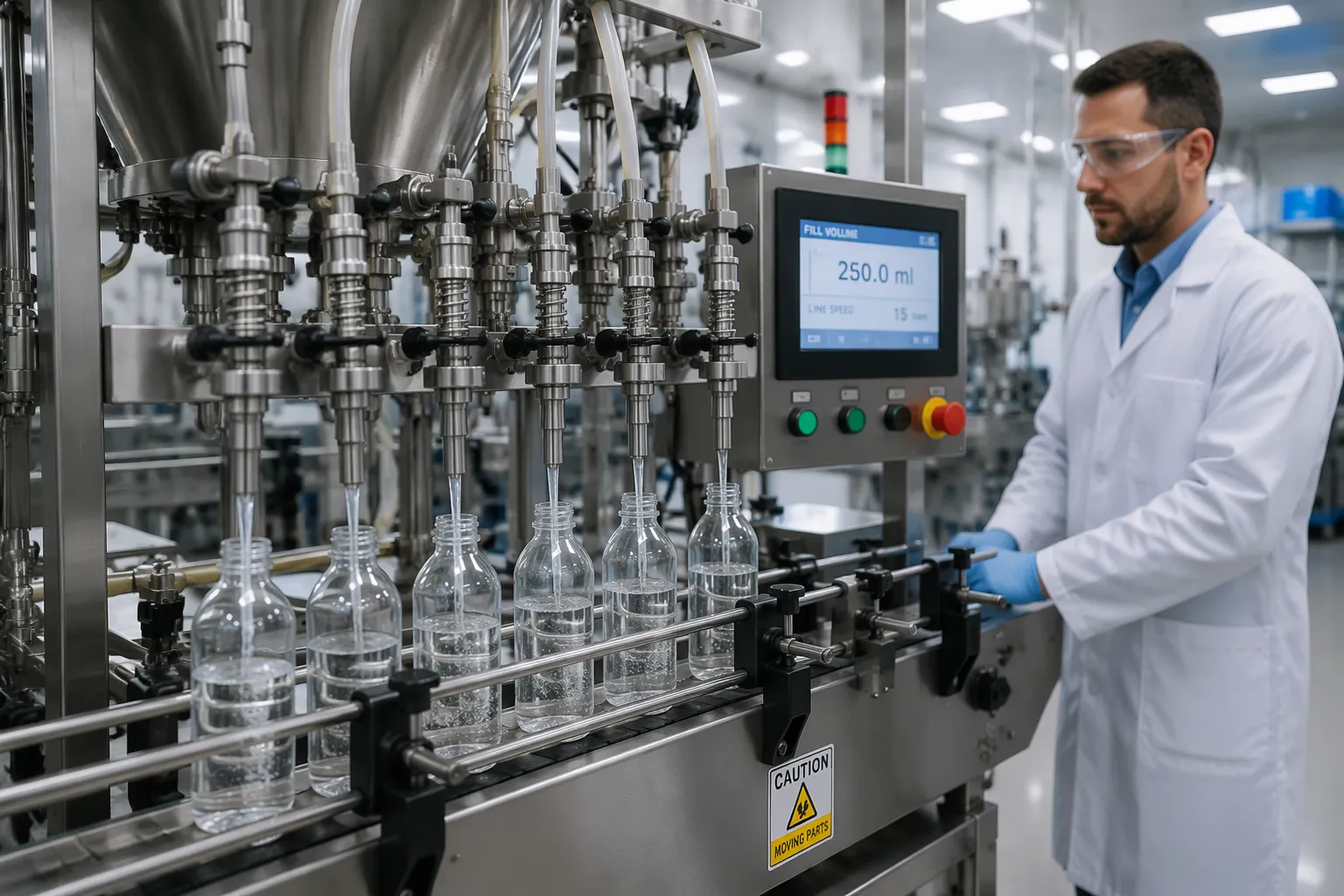
A liquid filling machine measures a set volume or weight of liquid before it releases product into a container. This measuring step drives everything else. It ensures precise, consistent, and efficient fill levels across an entire production run. Each container receives the same dose, so labels stay accurate and customers get what they pay for.
The process runs continuously. Product flows from the tank to the nozzles, the measuring system sets each dose, and the conveyor carries containers through the fill station. Many systems also seal each container right after filling. That combination of filling and sealing automates the whole cycle at high precision. Operators set the target dose once, and the machine repeats it container after container. A liquid packing machine therefore delivers steady output with minimal manual intervention.
Gravity filling relies on the natural fall of liquid from an elevated tank into containers below. A valve opens for a set time, and the liquid drops through the nozzle. This method suits thin, free-flowing products such as water, juice, and light oils. It offers a simple design with few moving parts.
Pressure filling pushes liquid into containers under applied force. The added pressure speeds the flow and handles products that resist gravity alone. It works well for moderately viscous liquids and for containers with narrow openings.
Vacuum filling uses suction to draw liquid into the container. The nozzle creates a seal, and the vacuum pulls product upward to a set level. This approach suits foamy products because it reduces turbulence during the fill.
Piston filling draws a fixed volume of liquid into a cylinder and then drives it out through the nozzle. The piston stroke sets the dose, so operators adjust volume by changing that stroke. This mechanism handles semi-liquids and thicker products with solid pieces, such as sauces, jams, and chunky mixtures. It maintains accuracy across a wide range of viscosities.
Pump filling moves product with a rotary, gear, or peristaltic pump. The pump turns for a set period or a set number of revolutions to deliver the target dose. Gear and rotary pumps suit thick, dense liquids. Peristaltic pumps keep the product inside a tube, which suits sterile or sensitive liquids in pharmaceutical and cosmetic work.
Mechanism | Best suited liquids |
|---|---|
Gravity | Thin, free-flowing products |
Pressure | Moderately viscous liquids |
Vacuum | Foamy products |
Piston | Semi-liquids with solid pieces |
Pump | Thick liquids; sterile products |
Each mechanism has a clear fit. The right match depends on the product's viscosity, its tendency to foam, and the container format. A buyer who understands these mechanisms can compare options on equal terms and select the technology that matches the liquid.
Machine types differ mainly in automation level and layout. Each design fits a particular production scale and product mix.
Model type | How it runs | Where it fits best |
|---|---|---|
Semi-automatic | An operator places containers; the machine doses | Small batches, startups, frequent product changes |
Automatic | The machine fills and often seals with little operator input | Steady, higher-volume runs |
Inline | Containers move in a straight line through the fill station | Long containers, multi-station lines, easy integration |
Rotary | Containers travel in a circle past the nozzles | High speeds, compact footprints, many small containers |
A semi-automatic liquid packing machine gives new producers a low-cost entry point. Automatic units reward stable demand with steady output. Inline layouts suit lines that add capping or labeling stations. Rotary models pack many containers into a small floor space. No single type wins everywhere; the right pick depends on volume, container shape, and available room.
Viscosity is the first question to settle. Thin products flow fast and fill easily by gravity or pressure. Semi-liquids need more control, so piston or pump systems take over. Thick products with chunks demand piston fillers or heavy-duty pumps that push the product through.
Foaming tendency matters too. A thin, foamy liquid may suit vacuum filling better than gravity. The container also guides the choice. Narrow-neck bottles favor pressure or vacuum methods. Wide-mouth jars accept almost any nozzle design. Testing a sample batch on the candidate machine remains the surest way to confirm the match.
Food producers rely on liquid filling equipment for sauces, jams, honey, cooking oils, and dairy products. A liquid packing machine handles these products in pouches, jars, and bottles with steady doses. Chunky sauces suit piston fillers, while thin juices run well on gravity systems. Sachet lines fill single-serve condiments at high speed. The machine keeps portions even, which protects recipe consistency and label claims.
Beverage plants fill water, juice, tea, and syrups into bottles and jugs. Thin drinks flow quickly, so pressure or gravity filling keeps the line moving. Cosmetics manufacturers fill lotions, shampoos, gels, and liquid soaps. These products often need gentle handling to avoid foam and contamination. Peristaltic pumps keep the product inside a tube, which protects sensitive formulas. Wide-mouth jars accept almost any nozzle, so creams and body scrubs fill cleanly.
Pharmaceutical production demands tight control over every dose. Liquid filling machines measure syrups, tinctures, and sterile solutions into bottles and vials. Peristaltic pump systems suit this work because the product never touches the pump mechanism. Vacuum filling helps with foamy medicines. Accurate dosing matters here, since each container must hold the labeled amount.
Chemical plants fill solvents, detergents, cleaners, and agricultural liquids. These products range from thin and free-flowing to thick and aggressive. Pump filling handles dense chemicals, and pressure filling moves moderate-viscosity formulas through narrow openings. Corrosion-resistant nozzles and tanks protect the machine and the product. Many chemical lines also need sealed fill zones to control fumes. Across all these industries, the same principle holds: match the filling mechanism to the liquid, and the machine delivers consistent results.
Product properties drive the technical choice. Viscosity, foaming tendency, and the presence of solid pieces all point toward specific filling mechanisms. A thin juice runs well on gravity or pressure systems. A chunky sauce needs a piston filler. A sterile medicine calls for a peristaltic pump. Buyers should list these traits before comparing models. A liquid packing machine that suits one product may struggle with another.
Capacity deserves equal attention. Output targets, container sizes, and batch frequency set the required speed. A small producer with frequent product changes may prefer a semi-automatic unit. A steady, high-volume line rewards an automatic or rotary model. Buyers should also check tank size against batch length. A small tank forces frequent refills and slows the run. Headroom for future growth matters too. A machine sized just above current demand leaves room to expand without replacing the line.
Budget covers more than the purchase price. Installation, training, spare parts, and maintenance all add to the total cost of ownership. A cheaper machine with costly downtime can cost more over time. Buyers should request a full cost picture from each supplier. They should also confirm which parts wear fastest and how often those parts need replacement.
Supplier support shapes long-term performance. A responsive supplier offers technical guidance, fast part delivery, and clear documentation. Buyers should ask about response times and warranty terms. They should check whether the supplier can service the machine locally. A short trial run on a sample batch confirms the match before purchase. Good support keeps a liquid packing machine productive for years. Weak support turns a minor fault into a long stoppage.
A liquid filling machine is an automated system that measures a set volume or weight of liquid and fills it into containers. That single definition answers the core question.
The article covered the main points. Filling mechanisms range from gravity and pressure to vacuum, piston, and pump designs. Machine types include semi-automatic, automatic, inline, and rotary models. Common applications span food, beverage, cosmetics, pharmaceutical, and chemical production. Selection factors include liquid properties, capacity, budget, and supplier support.
A liquid packing machine works best when its technology matches the product. Thin juices, chunky sauces, and sterile medicines each demand a different approach. Buyers should test a sample batch before committing. The right match between machine type and filling method delivers steady, reliable output for years.
It measures a set volume or weight of liquid and deposits that dose into bags, sachets, pouches, bottles, jars, or jugs. Many units also seal each container after filling. The result is a steady, repeatable fill across a full production run.
Piston and pump systems handle thick products best. A piston filler draws a fixed volume into a cylinder and pushes it out, which suits sauces and jams with solid pieces. Gear and rotary pumps move dense liquids reliably. Thin products do not need this extra force.
Some models can, but most machines specialize. Form-fill-seal units shape pouches from film and fill them in one pass. Bottle fillers use conveyors and nozzles sized for rigid containers. Buyers should confirm the format before choosing a model.
The operator sets the target dose on the control panel. The measuring system then repeats that dose for every container. Many panels store recipes, so switching between products takes little time. A sample batch confirms the setting before full production begins.
A trial run on a sample batch is the surest check. The test reveals how the machine handles the product's viscosity, foaming tendency, and container shape. Buyers should also confirm spare parts availability and supplier response times.


