
Views: 0 Author: Site Editor Publish Time: 2026-11-19 Origin: Site


A liquid packaging machine is equipment that fills, seals, and packs liquid products into containers like pouches, sachets, bottles, and bags. When those products are edible, the same equipment works as a food packing machine for sauces, dairy, and beverages.
Manufacturers use this equipment to move liquid products into finished packaging quickly and with steady fill volumes. The sections below explain how the fill-seal process works, which machine types exist, and how buyers match a machine to a product, a compliance standard, and a budget.
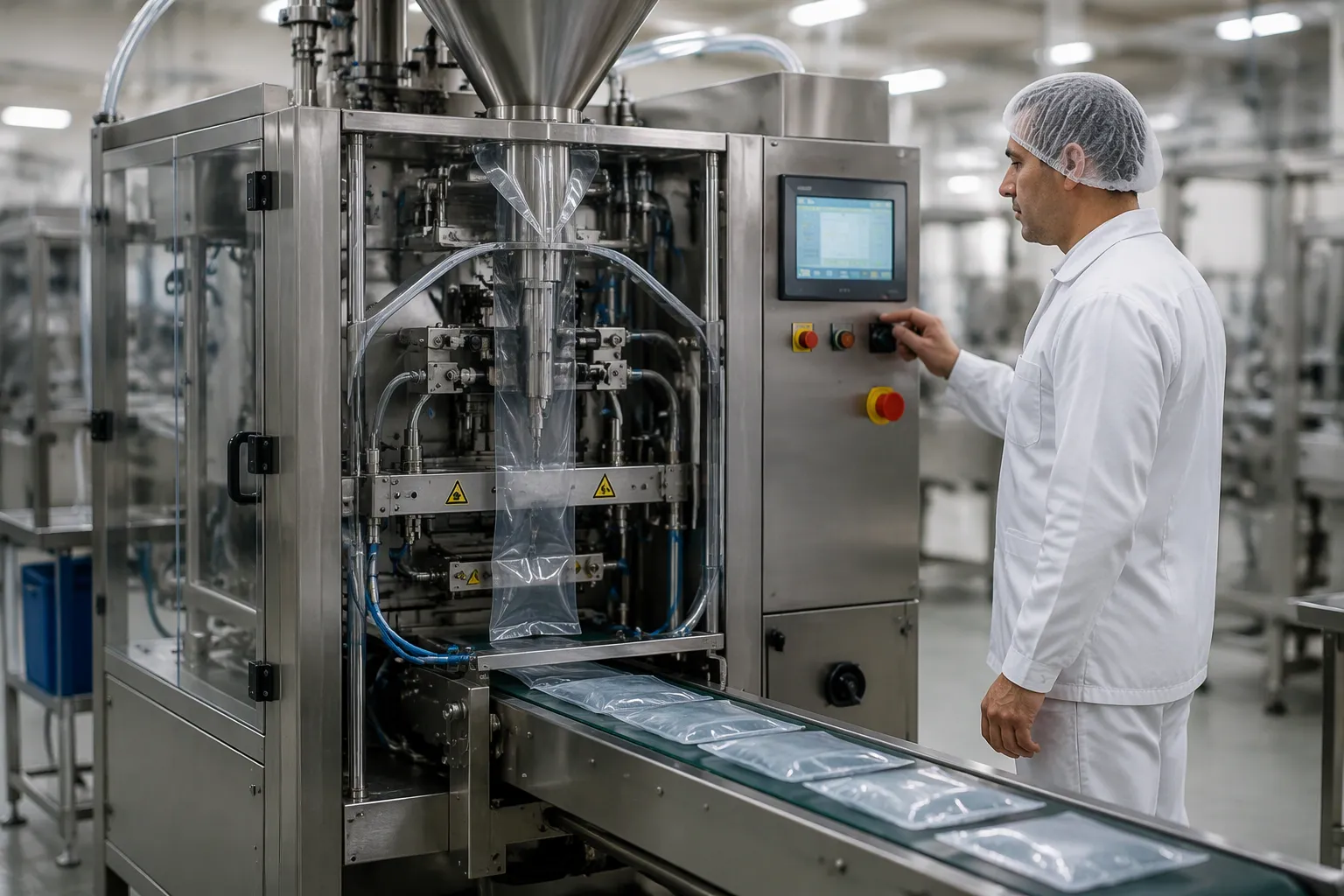
A liquid packaging machine is equipment made to package products like beverages, dairy products, and thick liquid foods. The machine fills, seals, and packages products in less time and with less labor. This speed helps manufacturers work more efficiently and reduce manual handling.
Accuracy matters just as much. The machine puts the same amount of product into every pouch or container. Precise filling and sealing keep waste low and protect the product from contamination. A well-tuned machine keeps a steady fill volume across a long production run. Operators set the target volume once, and the machine repeats it pouch after pouch. That repeatability supports accurate dosing and minimal waste.
A pump moves product from a hopper to a fill head. The fill head releases a measured dose into the pouch. Seal jaws close the pouch and form a tight edge. A cut knife separates the finished unit from the film web. Each step runs in sequence, and it repeats the cycle at high speed. Speed depends on pouch size, fill volume, and film type. A small sachet runs faster than a large pouch. Fill accuracy depends on pump calibration and steady product flow. Hygiene depends on smooth surfaces and easy access for cleaning.
Liquid packaging covers a wide product range. The machine handles sauces, thick creams, gels, and water with equal ease. Thick products demand careful pump and nozzle selection. Thin products like water flow fast and need tight control at the fill head. This equipment sits within the broader food packaging market. Each product type shapes the pump, nozzle, and packaging film choice. A sauce line needs a different setup than a water line. The machine adapts through adjustable fill heads and seal parameters. Clean design supports hygiene across every packaging run. Stainless contact parts resist corrosion and simplify washdown. Consistent packaging protects shelf life and brand trust.
Water needs a clean, low-residue fill. Sauces need wider nozzles and slower dosing. Gels need pressure control to avoid air pockets. Creams need gentle handling to keep texture. Dairy products need chilled handling in some plants. Product temperature affects flow rate and fill accuracy. Warm products flow faster and may need slower dosing. Film thickness affects seal quality. Thicker film needs more heat and pressure at the seal jaw.
Buyers compare each machine on speed, fill accuracy, and hygiene. A reliable machine reduces downtime and rework. Modern packaging lines combine speed with tight quality control. Good packaging design also lowers film waste. The right machine matches the product's viscosity and target output. Fillers handle thin and thick products with different pump types. Packaging teams value simple changeover between product runs. Each packaging format suits a different product. Clear labeling and sealed edges complete the packaging step. Operators monitor fill weight and seal strength during each shift. A quick check catches drift before it becomes waste. Buyers should test their own product on a demo unit before purchase.
A pouch packing machine for liquids is also known as a Form-Fill-Seal (FFS) machine. The machine pulls film from a roll, forms it into a bag shape, drops a measured dose of product inside, and seals the top edge. This workflow handles filling and sealing liquids into bags in one continuous cycle. A vertical FFS machine runs the steps from top to bottom. A horizontal FFS machine runs them along a flat track. Both designs share the same core parts: a film feed, a forming collar, a fill head, seal jaws, and a cut knife. The machine repeats the cycle without stopping the film web. A second dosing station can add a cap or a straw before the final seal. The machine forms, fills, and seals in one pass, and that design keeps the packaging compact.
Four factors decide whether a liquid packaging line meets its targets. Speed sets output per minute, and it depends on bag size, fill volume, and film type. Fill accuracy keeps doses even, and pump calibration protects that accuracy over long runs. Waste reduction comes from tight seal control and fewer rejected units. Hygiene depends on smooth contact surfaces and fast cleaning access. A packaging team should test each factor on its own product. A machine that runs fast on water may run slower on thick sauces. A packaging line with strong seal control cuts film waste and rework. Buyers should weigh all four factors together, because a packaging machine that excels at one may lag at another. Operators check fill weight and seal strength at the start of each shift. A slow drift in fill volume shows up early in that check.
Liquid filling speed and accuracy also shape the packaging budget. A packaging line that holds tight fill accuracy needs less rework, and that saving shows up in packaging cost per unit. The machine and the packaging film must match, because a mismatched film hurts seal quality. Film tension and jaw temperature also affect the final result. A buyer who tests the machine with the actual packaging film avoids surprises on the production floor. A well-matched machine and packaging format protect output and quality.
A sachet filling machine fills, seals, and cuts liquid, semi-liquid, or powdered products into small resealable bags on its own. These bags usually hold 1 to 100 ml. The machine works well for single-serve portions of sauces, gels, and condiments. In one pass, each cycle forms the bag, doses the product, and seals the edge.
Multi-lane shape sachet packing machines run several lanes at the same time. They give fast output, strong hygiene, and efficient film use. Each lane fills and seals its own sachet, so the machine multiplies throughput without using extra floor space. Buyers choose the lane count based on target output and sachet size.
A pure water packaging machine fills and seals drinking water into flexible pouches. This kind of water packaging machine handles the full cycle, from film forming to the final seal. Modern flexible packaging handles water cleanly, and the sealed pouch keeps the contents safe from handling contact.
A bagged water packaging machine serves plants that sell water in sealed pouches. A fully automatic liquid water packaging machine runs the cycle with very little operator input. An automatic bag water filling machine doses each pouch to a set volume. A water filling and packaging machine pairs a calibrated fill head with tight seal control. Water filling and packaging lines also work for flavored drinks and other thin liquids.
Bagged water production depends on clean film and steady fill control. Water bags need strong seals, because a weak edge leaks in transit. A bagged water packaging machine with good seal control cuts rejects. Water bag packaging also lowers film waste when the machine matches the film. Drinking water packaging plants often run several shifts, so uptime matters.
These machines also serve the food, pharmaceutical, chemical, and cosmetic industries. A liquid filling line for shampoo shares the same core design as a sauce line. The machine adapts through pump type, nozzle size, and film choice.
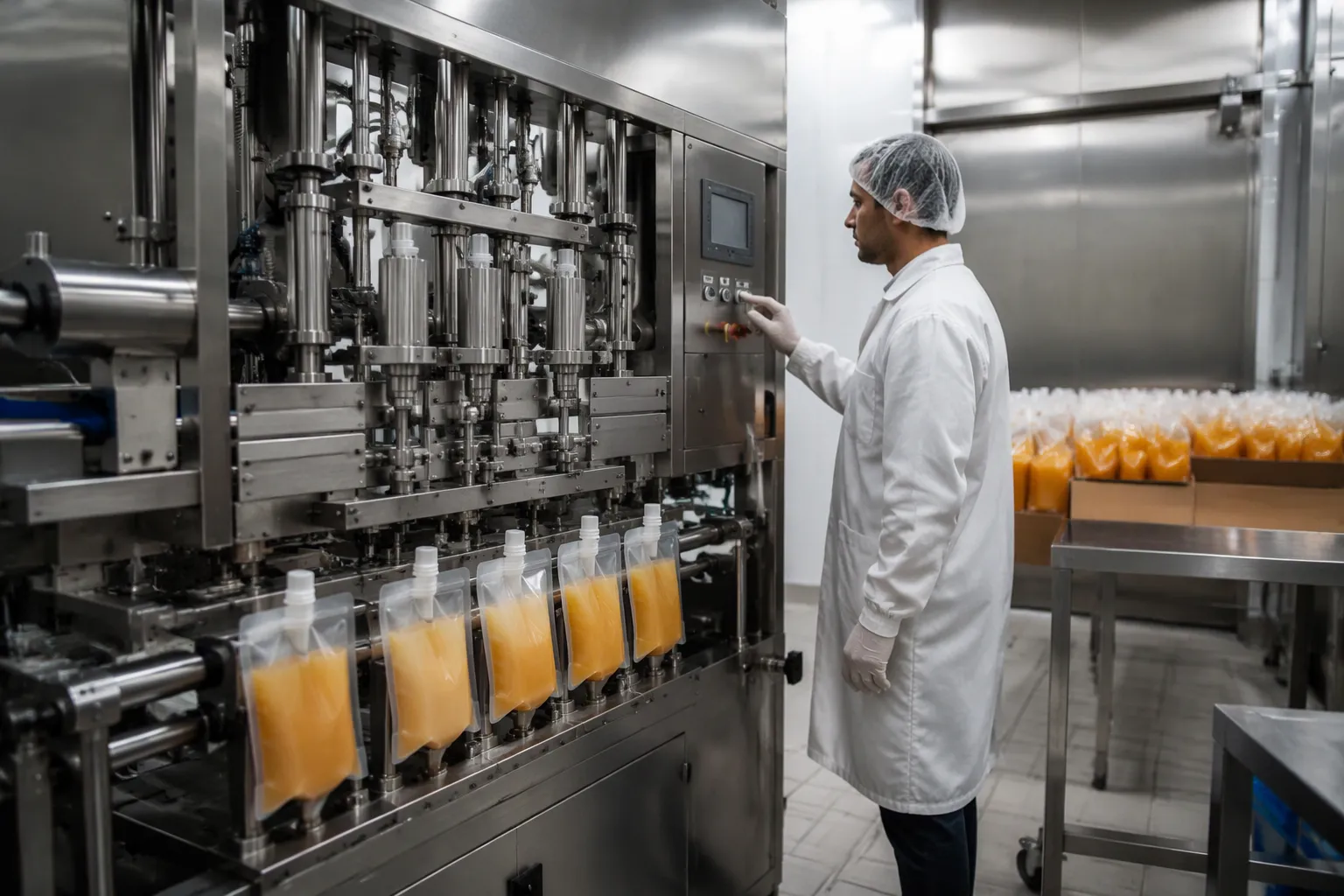
A liquid packaging machine is part of the food packing machine family when it handles products you can eat. Sauces, dairy, and beverages are all types of liquid food packaging, and the same equipment serves the larger food packaging equipment market. A plant that runs a sauce line and a juice line may use one machine platform with different pumps and films. That flexibility is why liquid food packaging is at the center of many food packaging operations.
The category also overlaps with paperboard based liquid food packaging, where carton systems fill and seal juice and milk. Flexible pouch systems cover the same liquid food range at smaller volumes. Beverage packaging lines add caps, straws, and fitments before the final seal. Each format suits a different shelf-life target and retail channel. A food packing machine for sachets serves single-serve portions, and a pouch line serves family sizes. Buyers should map their product range before they choose a machine.
Food-safety compliance comes first. Buyers should confirm that contact parts meet FDA food-contact rules and that the machine supports cleaning to 3-A Sanitary Standards where dairy applies. A food packing machine should offer smooth stainless surfaces, drainable frames, and easy access to fill heads and seal jaws. Documentation matters too. A supplier should provide material certificates and a cleaning procedure. Plants that run liquid food packaging should check allergen changeover steps, because traces of one product can reach the next run.
Cost factors follow the product and the output target. Machine price rises with lane count, fill accuracy, and automation level. Film cost depends on the packaging format and the seal quality the machine holds. A bagged water line carries lower film cost per unit than a thick-sauce pouch, because the dose is smaller and the film is thinner. Energy and downtime add to the total. A machine with fast changeover cuts lost production between runs. Buyers should compare total cost per finished unit, not the sticker price alone.
Water filling and packaging shows the cost picture clearly. A bagged water operation runs high volumes at low margin, so uptime and seal reliability drive profit. A bagged water machine that rejects fewer pouches pays back faster. Sauce and dairy lines run lower volumes at higher margin, so fill accuracy and hygiene carry more weight. Each buyer should weigh speed, accuracy, waste, and hygiene against the product and the budget. A demo run with the actual film and product settles most of these questions before purchase.
A liquid packaging machine fills and seals liquid products. When those products can be eaten, the same equipment works as a special food packing machine.
One machine keeps the main job the same: dose, seal, and cut in one pass. Sachet, pouch/FFS, and water packaging machine options each fit a different volume and format. Buyers should match pump type and film to how thick the product is, then confirm food packaging compliance and compare total cost per finished unit. A demo run with the real product answers most questions. That approach lets readers judge any packaging line, from a sachet packaging format to a bagged water operation, on evidence. Careful comparison of speed, fill accuracy, waste, and hygiene shortens the option list.
The machine pulls film from a roll and forms it into a bag shape. A fill head drops a measured dose inside, and seal jaws close the top edge. A cut knife separates the finished pouch. The cycle repeats without stopping the film web.
A sachet filling machine fits this job. It fills, seals, and cuts products into small resealable bags, usually 1 to 100 ml. Multi-lane models raise output without using extra floor space. Buyers pick the lane count based on target output and sachet size.
Confirm that contact parts meet FDA food-contact rules. Check seal strength, because a weak edge leaks in transit. Test the machine with the actual film and product. A water packaging machine that rejects fewer pouches pays back faster on high-volume, low-margin runs.
The same core design serves food, pharmaceutical, chemical, and cosmetic lines. A bagged water packaging machine adapts through pump type, nozzle size, and film choice. Water bags need strong seals and steady fill control. Buyers should map their product range before choosing a platform.
Machine price rises with lane count, fill accuracy, and automation level. Film cost depends on format and seal quality. A bagged water line carries a lower film cost per unit than a thick-sauce pouch. Compare total cost per finished unit, not the sticker price alone.


