
Views: 0 Author: Site Editor Publish Time: 2026-09-16 Origin: Site


The shift toward single-dose administration and patient-centric packaging makes sachet formats a core component of modern pharmaceutical manufacturing. Engineering and procurement teams face a complex challenge on the production floor. You must balance high-throughput production demands with uncompromising requirements for dosing accuracy, strict cGMP compliance, and absolute barrier protection against moisture and oxygen. Selecting the appropriate machinery requires a rigorous evaluation of material characteristics, production volumes, control system architectures, validation requirements, and procurement strategies. This guide provides a technical framework for evaluating and shortlisting sachet packing machines for pharmaceutical products. We will break down the mechanical configurations, dosing mechanisms, and integration requirements necessary to maintain overall equipment effectiveness (OEE) and ensure regulatory compliance.
Dosing Precision is Paramount: The physical properties of the API and excipients dictate the required dosing mechanism (e.g., servo-driven augers vs. mass flow meters) to maintain strict weight tolerances.
Throughput vs. Flexibility Trade-offs: While a multi-lane packing machine offers exponential output scaling, it introduces complexities in changeover times and maintenance compared to agile, single-lane systems.
Compliance is Non-Negotiable: Viable equipment must feature sanitary design (cGMP) for cross-contamination prevention and software capable of 21 CFR Part 11 compliance for data integrity.
Integration Defines OEE: The true value of a sachet machine is measured by its ability to seamlessly integrate with downstream serialization, checkweighing, and cartoning equipment without creating bottlenecks.
Evaluating machinery begins with a clear understanding of the end-user application and the specific rheology of the product. Pharmaceutical manufacturers increasingly rely on sachets for pediatric dosing, travel packs, and clinical trial sizes. Single-dose powders intended for oral suspension or reconstitution represent a massive segment of this market. These applications demand absolute consistency because the therapeutic window for active pharmaceutical ingredients (APIs) is often narrow. A patient mixing a powder into water relies entirely on the manufacturer to provide the exact dosage. Equipment must handle varying bulk densities without compromising the final fill weight. You must assess how the machine handles specific formulations, especially those prone to segregation during the feeding process. If the heavier API particles separate from the lighter excipients in the hopper, the resulting sachets will fail content uniformity testing.
Validating the packaging format is a prerequisite to equipment procurement. Flat sachets offer distinct mechanical and regulatory advantages over alternative formats. They provide a superior printable surface area compared to stick packs. Stick packs utilize a fin seal down the back, which interrupts the printable area and complicates barcode scanning. The extra space on a flat sachet is mandatory for compliance labeling, 2D matrix barcodes, lot numbers, and patient instructions. Furthermore, sachets generally offer better moisture barriers for hygroscopic powders than push-through blister packs. Blisters require a delicate balance between seal integrity and push-through ease, often forcing a compromise on the lidding foil thickness. Sachets eliminate this compromise. You can utilize high-barrier foil laminates (such as PET/ALU/PE structures) that protect sensitive compounds from oxygen and moisture degradation. The flat geometry also simplifies downstream cartoning and secondary packaging processes, as sachets stack uniformly in magazines.
Dosing precision dictates batch viability and directly impacts your bottom line. You must establish acceptable standard deviations for fill weights before selecting equipment. The physical properties of your product directly impact dosing consistency. Product density, flowability, and moisture content all play a role. Free-flowing granules behave differently than cohesive, fine powders. When a hopper runs low, the head pressure drops, which can alter the amount of powder forced into the dosing chamber. Equipment must compensate for these variables using level sensors and automated refill systems to maintain constant head pressure. Advanced systems utilize real-time feedback loops from integrated checkweighers. This allows the machine's PLC to automatically adjust servo-motor dosing parameters on the fly. Maintaining strict weight control prevents costly product giveaway and ensures patient safety.
Regulatory compliance drives equipment design in the pharmaceutical sector. Machine construction must adhere to strict sanitary standards to pass inspection. All product contact parts should utilize 316L stainless steel or approved food-grade polymers like PTFE. Surface finishes must typically meet a roughness average (Ra) of less than 0.8 micrometers, and all welds must be ground flush and passivated to prevent bacterial adhesion. You must evaluate the system for dead legs where product could accumulate. Accessibility is required for cleaning and inspection. Tool-less dismantling of dosing heads, hoppers, and forming tubes significantly reduces changeover times and ensures thorough cleaning validation. Cross-contamination between batches is a severe risk. Equipment must support rigorous clean-in-place (CIP) or wash-in-place (WIP) protocols, utilizing spray balls and automated drainage systems depending on the facility's standard operating procedures.
A sachet is only as effective as its seal. Hermetic sealing is mandatory for pharmaceutical products to ensure shelf life. You must evaluate the machine's temperature distribution across the sealing jaws. High-end machines use multiple embedded thermocouples and independent PID control loops to maintain temperature within a one-degree tolerance. Inconsistent heat causes weak spots, micro-leaks, or burn-throughs on the packaging film. Seal pressure consistency is equally important. Mechanical systems must apply uniform force across the entire width of the jaw, regardless of machine speed. You should also consider the sealing technology. Traditional heat sealing works well for most laminates. However, ultrasonic sealing offers advantages for highly sensitive formulations. Ultrasonic systems generate heat only at the seal interface through high-frequency vibration. This prevents thermal degradation of the API and easily seals through powder contamination in the seal area.
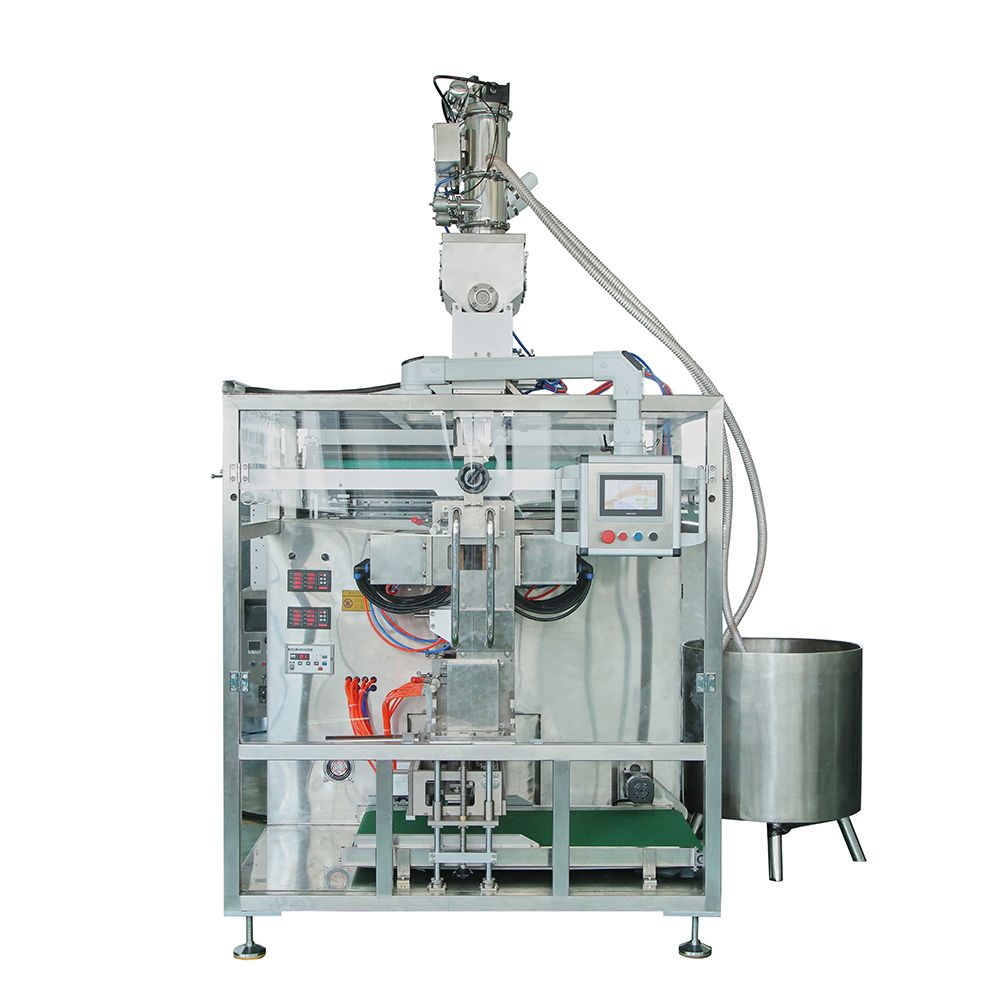
The physical state of the product dictates the machine's internal architecture and dosing technology. A sachet powder packing machine utilizes specific filling heads designed to manage dust generation. Fine powders often require enclosed auger systems with vacuum dust extraction nozzles positioned directly above the seal area. If fugitive dust settles on the inner film before sealing, it creates capillary channels that destroy the hermetic seal. Cohesive APIs demand agitation mechanisms within the hopper. An agitator blade typically rotates in the opposite direction of the auger screw to prevent rat-holing and bridging. Conversely, granule configurations rely on volumetric cups or mass flow vibratory systems. Granules flow freely and require gentle handling to prevent particle degradation and dust creation. Liquid configurations introduce entirely different challenges. They utilize peristaltic or piston pumps to handle varying viscosities. Liquid systems must also incorporate suck-back mechanisms or shut-off nozzles to prevent stringing or dripping, which can compromise the seal area.
Production volume dictates the choice between single and multi-lane systems. You must assess the footprint-to-output ratio. Single-lane machines offer exceptional flexibility. They require minimal floor space, operate on standard power drops, and allow for rapid format changeovers. This makes them ideal for clinical trials, small batch runs, or contract manufacturing environments where agility is prioritized over raw speed. However, when commercial volumes scale into the millions of units per month, a multi-lane packing machine becomes necessary. These systems multiply output exponentially without a proportional increase in floor space. A 10-lane machine can easily exceed 800 sachets per minute. The transition from single to multi-lane requires careful engineering consideration. Multi-lane systems demand more complex tooling, massive film rolls requiring lifting hoists, and significantly longer alignment times during setup.
Web movement mechanics significantly impact production speed, seal quality, and maintenance schedules. Intermittent motion systems pause the film web during the sealing phase. The jaws close, apply heat and pressure, open, and then the film advances. This provides ample dwell time for heat transfer, making it highly effective for complex, thick laminates requiring longer sealing durations. However, the start-and-stop motion limits overall line speed and puts stress on the web tensioning system. Continuous motion systems keep the web moving constantly. The sealing jaws are mounted on rotary drums or walking-beam carriages that travel with the film. This architecture allows for significantly higher throughput and reduces film tension spikes. Matching the motion type to your specific film characteristics and production goals is a critical engineering decision.
Matching the feeder type to the product is the most critical mechanical decision in the specification process. The wrong dosing mechanism guarantees batch failure and constant operator intervention. Servo-driven augers excel with non-free-flowing powders. They provide precise volumetric control by rotating a specific number of degrees, controlled by a high-resolution encoder. Volumetric cups are the standard for free-flowing granules. They offer high-speed, repeatable dosing for stable products by filling a machined cavity and scraping off the excess. Peristaltic pumps isolate the liquid product within sterile silicone tubing. This prevents cross-contamination, as the product never touches the pump mechanics, and simplifies cleaning protocols for liquid sachets.
Product Type | Recommended Dosing Mechanism | Primary Mechanical Advantage | Common Pharmaceutical Application |
|---|---|---|---|
Non-Free-Flowing Powder | Servo-Driven Auger with Agitator | Forces cohesive material into the dosing funnel with high precision | Antibiotic suspensions, API blends, dry powder inhalers |
Free-Flowing Granules | Volumetric Cup / Vibratory Feeder | High speed, gentle product handling prevents particle breakdown | Effervescent granules, dietary supplements, antacids |
Sterile Liquids | Peristaltic Pump | Zero product contact with machine parts; disposable fluid path | Oral liquid doses, topical gels, sterile saline |
Viscous Liquids | Servo Piston Pump | Consistent volume displacement regardless of viscosity changes | Ointments, heavy syrups, suspension gels |
Modern pharmaceutical packaging relies heavily on robust automation and data logging. You must evaluate the Human-Machine Interface (HMI) and Programmable Logic Controller (PLC) architectures. Industry standards like Allen-Bradley ControlLogix or Siemens S7 ensure long-term support, availability of spare parts, and reliability. Data integrity is a regulatory mandate, not an optional feature. The control system must provide native support for FDA 21 CFR Part 11 compliance. This includes secure audit trails, unique user logins tied to Microsoft Active Directory, and electronic signatures. The machine must log every parameter change, alarm state, and batch report in an unalterable format (like a secure SQL database or encrypted PDF). Operators should not be able to alter critical dosing parameters or seal temperatures without supervisor authorization. Seamless integration with the facility's Manufacturing Execution System (MES) via OPC UA protocols is highly recommended for centralized batch record management.
Material waste directly impacts operational efficiency and yield calculations. The mechanics of web tracking require careful scrutiny. As the heavy film roll unwinds, its diameter decreases, causing tension to fluctuate. Advanced machines utilize active dancer rollers and load cells to measure web tension in real-time. The PLC uses this data to adjust the speed of the unwind motor via a Variable Frequency Drive (VFD), maintaining consistent tension. This prevents film stretching, which distorts printed graphics, or snapping, which halts production. Splice detection systems automatically identify where two rolls of film were joined using metallic tape. The machine tracks this splice through the web path and automatically rejects the affected sachets at the discharge chute without operator intervention. Auto-alignment systems continuously monitor the web edge using ultrasonic or optical sensors. They make micro-adjustments to the unwinding mandrel laterally to prevent seal misalignment. Proper film handling ensures that the printed graphics align perfectly with the cutting blades and sealing jaws.
Scaling up production requires accurate throughput modeling based on real-world conditions. You cannot rely solely on the manufacturer's maximum theoretical speed rating. Theoretical output rarely matches actual yield on the floor. Overall Equipment Effectiveness (OEE) provides a more accurate metric by factoring in availability, performance, and quality. You must account for micro-stops, reject rates, and routine maintenance tasks. Film roll changeovers represent a significant source of downtime on high-speed lines. Systems with automatic splicing capabilities can drastically improve OEE by joining a new roll to the expiring roll without stopping the machine. When evaluating a multi-line powder packing machine, calculate the impact of a single lane failure. Does the machine allow operators to isolate a faulty lane (e.g., shut off one auger and one slitting blade) while the others continue running? This feature is vital for maintaining high output during minor mechanical issues instead of shutting down the entire 10-lane system.
Multi-lane architectures introduce specific technical challenges that single-lane machines avoid. Maintaining uniform temperature across wide sealing jaws (often exceeding 1000mm in width) is difficult. A temperature drop on the outer lanes compromises seal integrity and leads to batch rejection. High-end machines utilize multiple heating cartridges zoned across the jaw, each with independent PID controllers, to ensure even heat distribution. Precise rotary slitting is another critical factor. The machine must slice the wide web into individual lanes with absolute accuracy before forming the sachets. Dull blades or slight misalignments cause jagged edges, aesthetic defects, and uneven lane widths. The slitting mechanism must utilize spring-loaded knife assemblies that maintain constant pressure against the anvil roller, and the design must allow for easy blade replacement and precise lateral tension adjustments.
The sachet machine does not operate in a vacuum. It must integrate seamlessly with downstream equipment to maintain continuous flow. Architecting the handover from the multi-lane discharge is complex. The sachets drop from multiple lanes simultaneously and must transition smoothly to checkweighers or counting conveyors. Robotic pick-and-place units equipped with vacuum end-effectors often handle the transfer to secondary cartoning systems, placing exact counts into the cartoner's bucket conveyor. You must ensure the sachet machine's control system can communicate with these downstream units. A bottleneck at the cartoner will force the sachet machine to pause, destroying your OEE. Look for equipment that offers standardized communication protocols and physical buffer zones (like accumulation chutes) to absorb minor downstream stoppages without halting the primary packaging process.
Procurement teams must balance initial capital outlay against long-term operational efficiency. High-end European or North American machinery often requires a larger upfront investment. However, these systems typically feature robust construction, advanced automation, and superior reliability. You must evaluate the long-term resource allocation. Consider the energy consumption of different actuation technologies. Servo-driven systems cost more initially than pneumatic cylinders, but they consume significantly less energy, provide precise positional feedback, and require less maintenance than compressed air systems. Cheaper equipment might save capital initially but can drain resources through frequent breakdowns, higher reject rates, and expensive proprietary spare parts. A thorough analysis of operational longevity and utility consumption is essential.
Acquiring high-capacity packaging equipment requires strategic financial planning. Many manufacturers explore alternative procurement models to manage capital expenditure effectively. Equipment leasing models offer flexibility and preserve cash flow for other facility upgrades. They allow facilities to upgrade machinery more frequently, keeping pace with technological advancements in automation and serialization. Phased capital expenditures involve purchasing a base machine with the modular option to add lanes or dosing heads later as production volumes increase. Vendor financing options can also offset the high initial investment of multi-lane systems. You should discuss these structures during the RFP process to align the equipment acquisition with your facility's financial strategy and depreciation schedules.
Operations teams constantly fight the battle between high-speed output and changeover agility. Multi-lane systems deliver massive volume, pushing millions of sachets per month. However, they introduce significant operational friction during format changes. Changing tooling, realigning multiple slitting blades, and calibrating 10 different dosing heads takes time. This downtime eats into production schedules. Conversely, modular single-lane units offer rapid changeover capabilities utilizing SMED (Single-Minute Exchange of Die) principles. Operators can swap color-coded format parts in minutes without tools. You must analyze your production schedule. If your facility runs large, continuous campaigns of a single product for weeks at a time, multi-lane is the clear choice. If you process multiple small batches of different formulations daily, prioritize changeover agility.
The choice of internal components dictates long-term maintainability and uptime. Some manufacturers utilize proprietary servo motors, drives, and custom circuit boards. This creates vendor lock-in. You must purchase spare parts directly from the OEM, often at a premium and with longer lead times, which can leave a line down for weeks. Standard, off-the-shelf automation components offer a significant advantage. Systems built with universally available parts (e.g., standard SMC pneumatic cylinders, Allen-Bradley servos, Sick sensors) are easier to maintain. Your internal maintenance team can source replacements locally from industrial suppliers. This reduces downtime, simplifies inventory management for spare parts, and allows your technicians to troubleshoot using familiar software environments.
Cross-contamination is the most severe risk in pharmaceutical packaging, potentially leading to product recalls and regulatory action. You must implement aggressive mitigation strategies. Clean-in-Place (CIP) or Sterilize-in-Place (SIP) protocols are mandatory for many liquid and suspension products. The equipment must support these automated cleaning cycles without requiring complete disassembly, utilizing integrated spray balls that ensure 100% coverage of internal surfaces. For powder systems, tool-less dismantling designs are crucial. Operators must be able to remove hoppers, augers, and forming tubes quickly for manual cleaning in a washroom. Thorough cleaning validation requires swabbing all product contact surfaces and running riboflavin tests to verify coverage. The machine design must eliminate blind spots, exposed threads, and inaccessible crevices where powder can hide.
Pharmaceutical equipment requires rigorous validation before entering commercial production. You must structure a comprehensive Factory Acceptance Test (FAT) at the vendor's facility. This test proves the machine meets your User Requirement Specification (URS) before shipment. The FAT should include a dry run to test alarms and interlocks, followed by a wet run using a placebo powder to verify dosing accuracy and seal integrity. The Site Acceptance Test (SAT) verifies performance after installation in your facility, ensuring no damage occurred during transit and that facility utilities are properly integrated. Ensure the vendor provides comprehensive documentation packages. The Installation Qualification (IQ), Operational Qualification (OQ), and Performance Qualification (PQ) documents are non-negotiable. These documents prove to regulatory bodies that the equipment operates consistently within specified parameters and includes material certificates for all contact parts.
Human error remains a significant cause of batch failures and machine downtime. You must mitigate this risk through comprehensive operator training before the SAT is signed off. Intuitive HMI design plays a major role. The interface should guide operators through setup, operation, and troubleshooting with clear visual instructions and diagnostic screens. Standard operating procedures (SOPs) must be strictly enforced for changeovers and cleaning. Preventative maintenance schedules are equally important. Do not wait for components to fail. Implement a routine maintenance program based on machine cycles or operating hours tracked by the PLC. Replace wear parts like Teflon sealing jaw tape, cutting blades, and suction cups before they degrade seal quality or cause jams.
The optimal sachet packing machine is not necessarily the fastest, but the one that aligns perfectly with the specific rheology of the pharmaceutical product, the facility's batch sizes, and regulatory compliance standards. Begin technical evaluation by defining the required dosing mechanism based on product flowability. Next, determine lane requirements based on commercial volume forecasts. Finally, filter vendors strictly by their ability to provide robust validation documentation, standard automation components, and local technical support.
Draft a comprehensive User Requirement Specification (URS) detailing product characteristics, required throughput, environmental conditions, and utility constraints.
Initiate requests for proposals (RFPs) with vendors capable of conducting physical product trials using your specific API and excipients to prove dosing accuracy.
Schedule a detailed review of the vendor's 21 CFR Part 11 compliance capabilities, focusing on audit trail exports and Active Directory integration.
Develop a preventative maintenance and spare parts inventory plan, identifying all critical wear parts before finalizing the equipment purchase.
A: Dosing accuracy tolerances depend heavily on the product's bulk density and flow characteristics. Pharmaceutical-grade machines equipped with servo-driven augers typically achieve weight tolerances of ±1% to ±2% for most cohesive powders. Advanced systems integrated with real-time checkweighing feedback loops can tighten this tolerance further. This minimizes product giveaway and ensures strict dosage compliance for highly active pharmaceutical ingredients.
A: Multi-lane systems utilize active web edge guiding systems. Ultrasonic or optical sensors continuously monitor the edge of the primary film roll as it unwinds. If the web drifts, the system automatically adjusts the unwinding mandrel laterally to correct the alignment. This ensures the wide web feeds perfectly straight into the rotary slitting blades, preventing uneven lane widths and misaligned graphics.
A: Pharmaceutical equipment requires a complete validation package. Installation Qualification (IQ) verifies the machine is installed correctly according to schematics and utility requirements. Operational Qualification (OQ) tests that all components, alarms, and dosing heads function within specified limits. Performance Qualification (PQ) proves the machine consistently produces acceptable sachets under normal operating conditions using the actual pharmaceutical product.
A: Yes, but it requires interchangeable dosing modules. A machine cannot use the same feeding mechanism for both. Non-free-flowing APIs require servo-auger fillers to force the powder into the sachet. Free-flowing granules require volumetric cups or vibratory feeders. The machine must be designed to allow operators to swap these entire dosing assemblies during a format changeover.
A: Changeover times vary drastically by machine architecture. A modular, single-lane machine utilizing SMED principles and tool-less dismantling can typically be changed over and cleaned in 30 to 45 minutes. A complex multi-lane system may require 2 to 4 hours for a full format change, as operators must align multiple slitting blades, dosing heads, and sealing jaws.
A: Compliance requires strict data integrity features built into the HMI software. This includes unique, password-protected user logins with defined hierarchical access levels. The system must generate an unalterable, time-stamped electronic audit trail recording every parameter change, alarm, and operator action. It must also support secure electronic signatures for batch approvals and parameter modifications.


