
Views: 0 Author: Site Editor Publish Time: 2026-07-10 Origin: Site


Cosmetic packing machines help you pack liquids, pastes, powders, and sachets fast and accurately. You can trust these machines for packing jobs in cosmetics, food, medicine, and health products. Packing machines use liquid pumps to fill without drips. They use special auger fillers for powders. These machines can be accurate up to about 1%. Modern cosmetic packing machines can pack, seal, and fill by themselves. You do not need people to help. You get live monitoring, fast changes, and recipe saving with smart controls. These machines make packing faster and waste less product. This makes your packing work easy and dependable.
High-speed output can reach 80 units each minute.
Multi-head weighing gives exact fill weights.
Stainless steel designs keep things clean and are easy to wash.
You can make your packing better with cosmetic packing machines. You can handle big orders and keep your process flexible.
Cosmetic packing machines help pack liquids, pastes, powders, and sachets faster. This makes your job easier and helps you work better.
Pick the right filling machine for your product type. This helps you pack things correctly and waste less.
It is important to take care of packing machines often. Clean and check them every month to stop problems.
Using machines that work by themselves can save money. They also help you make more products quickly and work better.
Always think about safety and follow rules when you pick and use packing machines.
There are many liquid filling machines for cosmetics. These machines help you pack things like foundation and lotion. You can also use them for shampoo and perfumes. They work for nail polish, face cream, and bath gels too. Here are some types of filling machines you might use:
Single-head filling machines
Double-head filling machines
Multi-head filling machines
Each machine is good for different jobs. Multi-head machines fill more bottles at once. This helps you pack faster. Fully automatic fillers can fill up to 120 bottles each minute. Semi-automatic machines can fill up to 800 bottles every hour.
There are different filling technologies in cosmetics. The most common ones are overflow fillers, piston fillers, and pump fillers. The table below shows how each one works and what it does:
Type of Filler | Key Features | Benefits |
|---|---|---|
Overflow Fillers | Uses a nozzle system that recycles overflow. | Makes bottles look the same. Reduces waste. Works for thin to medium liquids. |
Piston Fillers | Uses a piston-cylinder for precise filling. | Good for thick liquids. Custom settings. Handles tough jobs. |
Pump Fillers | Uses different pumps for many liquid types. | Works for all thicknesses. Good for small and big bottles. Easy to change settings. |
You can follow these steps to pack liquids with machines:
The machine pulls liquid from storage tanks. It changes speed for thick or thin products.
Pistons or pumps measure the right amount for each bottle.
Bottles move into place. The nozzle fills each one evenly.
The machine stops drips after filling. This keeps bottles clean.
Filled bottles go to capping and labeling. The machine gets ready for the next round.
Tip: Always check the fill amount and sealing during packing. This helps you avoid mistakes and keeps your bottles the same.
When picking a liquid filling machine, think about your liquid type. Some machines work better for thin liquids. Others are better for thick creams or gels. You should also match the machine to your bottle size and shape. Overflow machines are good for clear bottles.
The packaging material is important too. NY/PE (nylon/poly) is strong and flexible. It helps stop leaks and keeps your product safe.
Filling accuracy is also important. Most machines fill with an accuracy of ±0.3% to ±1%. This keeps your product quality high. Digital systems help you find problems early. Training and rules help workers make fewer mistakes.
If you pack liquids with different thicknesses, choose servo-driven machines. These let you change the fill amount easily. Temperature control and special pumps help with thick or sensitive products.
You need special machines to pack pastes in cosmetics. These machines fill creams, gels, and ointments very well. The table below shows the main types of paste filling machines:
Machine Type | Applications | Advantages |
|---|---|---|
Automatic Filling Machine | Cosmetics, creams, ointments | Controls flow well, saves work, and costs less |
Paste Filling Machine | Food, medicine, cosmetics | Good for thick pastes, wastes less, works for tubes |
Cream Filler Machine | Personal care products | Gives even results, works fast, stays clean, and helps you do more |
These machines help you with many packaging jobs. You can use them for tubes, jars, or bottles. They fill each one neatly and evenly.
Here are the steps to pack pastes with machines:
Get the machine ready. Check all parts and make sure they are tight. Get your paste and containers set up.
Check before you fill. Clean the containers and filling head. Make sure everything is working right.
Start filling. Put the paste in the barrel. Turn on the filling head. Fill each container to the right level.
Clean up after. Wash the filling head and containers. Disinfect before you use them again. Check that the machine works well.
Tip: Always check the fill level and machine settings first. This helps you stop mistakes and keeps your packing easy.
You must keep your work area clean when packing pastes. New paste filling machines use sensors to watch the process. These sensors find problems like pressure changes or uneven paste flow. The machine will stop or warn you if something is wrong. Safety guards keep you safe from moving parts or splashes.
Clean your equipment every day. Pastes can leave stuff behind that blocks the nozzle or hurts the machine. Use the cleaning steps your machine maker gives you. Water-based cleaners or special solvents work best. Make sure you clean all parts that touch the paste. This keeps your packing safe and your products good.
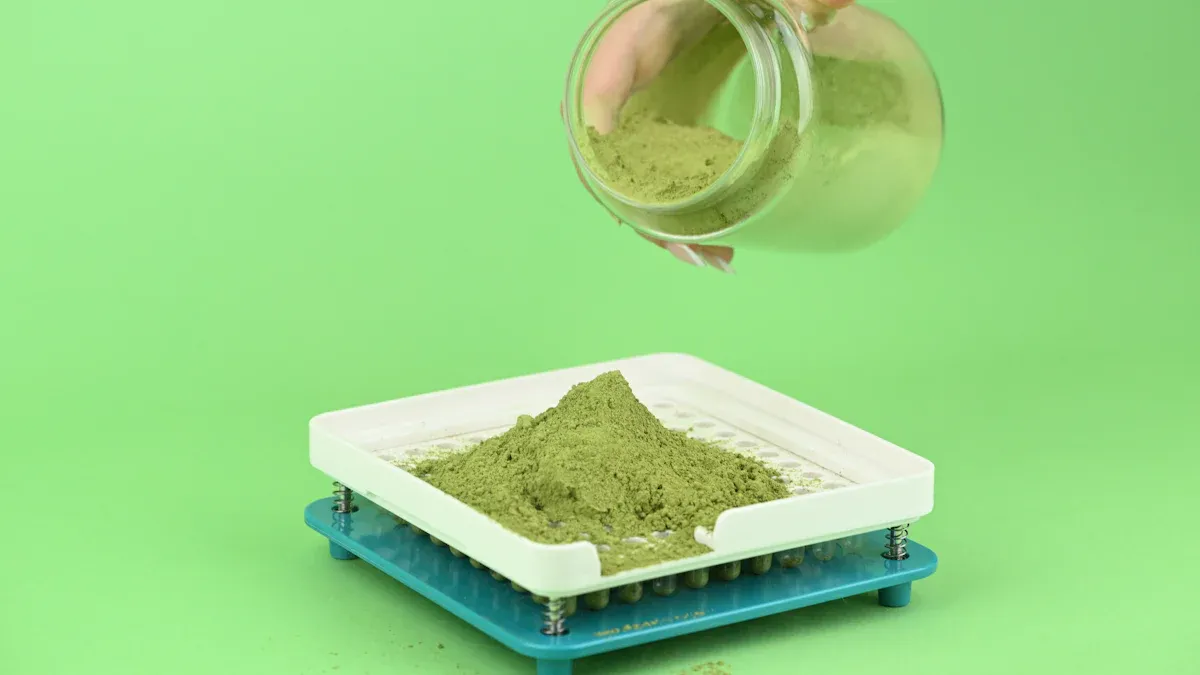
Image Source: unsplash
You need the right powder packaging machine for cosmetic powders. These machines help you pack loose powders, eye shadows, and blushes. The CS intermittent-motion vertical packaging machine is good for sealed sachets in stick pack format. Its dosing system can work with many powder products. Many machines have dust-proof designs and vibration-assisted filling. These features stop powders from spilling or getting dirty. You can add marking units to your line for better tracking and speed.
Filling Machine Type | Typical Accuracy Range | Best For Products |
|---|---|---|
Servo-Driven Filling System | ±0.5% or better | Premium cosmetics, all powders |
Tip: Pick a powder packaging machine that fits your product’s needs. Flexible machines let you switch between powders fast.
Here are steps to pack powder products:
Get the powder ready and check for lumps or wet spots.
Put the powder into the filling hopper.
Set the fill amount on the control panel.
The machine uses vibration to help the powder move.
The filling head puts powder into each container or sachet.
The machine seals the product to keep out air and water.
You should always check the filling accuracy. Most new machines fill with ±0.5% accuracy or better. This keeps your powder products the same and cuts waste.
You may have problems when packing powders. Moisture can make powders stick together or clump. You need to control water to keep powders loose. Powders can also change form, which affects how they stay stable. For example, some powders can switch between crystal and non-crystal forms. Problems in production include hitting the right moisture, lowering changes, and stopping rework. You can fix these with training and real-time feedback systems.
Note: Always keep your work area dry and clean. Use automation tools to help control powder flow and lower mistakes.
Sachet filling machines can pack many cosmetic products. These machines work with liquids, pastes, powders, and granules. You can change the filling head or hopper for each product. This makes sachet and pouch filling machines very useful. If you want to pack shampoo, face cream, or powder blush, just adjust the filling part. This gives you more choices and saves time.
Here is a quick look at how different product forms work with a sachet filling machine:
Product Form | Filling Mechanism | Special Requirements |
|---|---|---|
Liquids | Piston fillers, peristaltic pumps, gear pumps | Leak-proof sealing, heat sealing |
Pastes | Specialized nozzles, slower speeds | Prevent air bubbles, smooth flow |
Powders | Auger fillers, vibratory feeders | Adaptable hopper, dust control |
You can set up your sachet packaging for each product. This helps you meet special needs and makes things easier for customers.
A sachet filling machine uses a form-fill-seal process. First, you put your product in the hopper. The machine pulls film from a roll to make a pouch. It shapes the pouch and fills it with your product. Then, the machine seals the pouch to keep it safe. After sealing, the machine cuts the pouch from the film. Last, you collect the finished sachets for storage or shipping.
Here are the main steps:
Put product into the hopper.
Make sachets from film rolls.
Fill each pouch with your product.
Seal the pouch to keep it fresh.
Cut the sachet from the film.
Collect the finished sachets.
This process is fast, clean, and gives accurate sachet packaging.
You want your sachet packaging to be safe and high quality. Sachet filling machines use strong sealing methods. You can pick 3-side, 4-side, or center seals. Each seal type has its own benefits for cosmetics and personal care.
Type of Seal | Description | Application Area |
|---|---|---|
3-side seal | Simple, cost-effective | Personal care, food |
4-side seal | Premium look, strong sealing | High-value cosmetics, pharmaceuticals |
Center seal | Good for stick pouches | Gels, powders, single-use products |
You should use food-grade, BPA-free films for your sachets. This keeps your products safe from germs. Good sealing systems stop leaks and help your product last longer. Sachet and pouch filling machines help you give the right amount and make things easy for customers. You can trust these machines to keep your products safe and simple to use.
Picking the right cosmetic packing machine is important for your business. First, look at what kind of product you have. Liquids, powders, pastes, and solids all need different machines. You need to match the machine to your product for good results. Think about how much you want to make each day. If you need to make a lot, you need a faster machine.
Check what kind of packaging you will use. Some machines work better with plastic, glass, or metal. Make sure your workspace is big enough for the machine. You need space for the machine and for people to move around safely. Your budget is important too. You have to think about the price of the machine and how much it costs to use.
Safety and following the rules are important. You must follow the rules for the cosmetic industry. Pick machines that meet safety standards and keep your products safe.
Here is a table to help you compare the main things to think about:
Factor | Description |
|---|---|
Product Type | The type of product being packaged (liquid, solid, powder, paste) dictates the machine choice. |
Production Volume | The required capacity based on production needs influences the machine's speed and efficiency. |
Packaging Material | Compatibility with materials like plastic, glass, or metal is crucial for effective packaging. |
Space and Layout | Available space in the facility must accommodate the machine and integrate with existing lines. |
Budget | Initial purchase and ongoing costs should be considered in the overall budget. |
Compliance and Safety | Adherence to industry standards is essential, especially in regulated sectors like cosmetics. |
You also need to decide how much automation you want. Automation changes how fast you can pack and how much you spend. Here is a table that shows how automation affects cost and speed:
Automation Level | Cost Impact | Throughput Impact |
|---|---|---|
Semi-automatic | Lowest cost | Moderate throughput |
Automatic | Higher cost | Increased throughput |
Fully automatic | Highest cost | Maximum throughput |
Manufacturers use automation to make packing faster and more accurate. Automation means you need fewer workers and can save money. Industry 4.0 machines let you watch your machines in real time and fix problems before they get big. These features help you make your packing better.
Tip: Always think about how much you need to make, your budget, and your space before you buy a new machine. This helps you avoid spending too much or making mistakes.
You need to take care of your packing machines to keep them working well. Clean the feeding and filling parts every month. Check the motors and moving parts for damage or problems. Save your machine settings so you do not lose them. Change old or broken parts to keep your machine running right.
Follow these steps to keep your machine in good shape:
Clean the feeding and filling parts every month.
Check motors and moving parts for damage.
Save your software and machine settings.
Change filters and broken parts when needed.
Use food-safe materials like SUS304 or SUS316 stainless steel. Machines with smooth edges are easier to clean. Dry cleaning is best for powders. Machines you can take apart without tools are easier to clean and keep safe.
Teach your workers to spot problems early. Watch the sealing pressure and speed to find issues. Work with experts to set up smart maintenance. Keep a schedule for maintenance and track your spare parts.
Here is a table that shows the main maintenance jobs:
Task | Component | Purpose |
|---|---|---|
Inspect drive systems | Chains, sprockets, motors | Identify wear, friction, or misalignment |
Review software and controls | Software and parameters | Improve functionality and fix bugs |
Replace filters | Air, product, hydraulic | Prevent efficiency loss and damage |
Check frame and support | Structural components | Ensure long-term durability |
Note: Always follow the instructions from the machine maker. Keep good records and use real parts. Do maintenance when the machine is not running to stop problems.
If you follow these tips, you protect your machines and keep your packing work running well.
You can make your cosmetic packaging better by picking machines that match each product. Sachet packing machines can pack liquids, powders, and pastes. They do this with good accuracy and keep things clean. There are many types of cosmetic packaging machines for different textures and sizes. If you use the right machine for your product, your packaging will be safe and work well. Look at the table below to help you choose the best filling method for what you need.
Filling Method | Ideal For | Key Benefits |
|---|---|---|
Gravity Filling | Thin liquids | Minimal waste |
Piston Filling | Thick pastes | Consistent volume |
Auger Filling | Powders | Accurate dosing |
These machines can pack liquids, pastes, powders, and granules. They work for many kinds of cosmetic products. You can change the machine to fit each packaging type.
Clean your machine every day to keep it safe. Use food-safe materials and follow the maker’s cleaning steps. This helps keep your packaging safe for everyone.
Yes, you can change settings or parts on most machines. This lets you use many packaging sizes for your products. You save time and keep your work easy.
Accurate packaging gives the right amount to customers. It also cuts down on waste and keeps your product good. Modern machines help you do this well.


