
Views: 0 Author: Site Editor Publish Time: 2026-09-25 Origin: Site


Liquid oil packaging operations face constant pressure from inaccurate filling, seal failures, and product giveaway. Packaging viscous, high-value liquids presents distinct mechanical difficulties on the plant floor. You must manage ambient temperature variations that alter fluid dynamics. You must prevent oil migration into seal areas to avoid catastrophic leaks. Maintaining strict food-grade hygiene standards is also a non-negotiable baseline for facility compliance.
This technical evaluation guide helps you select the correct edible oil packing machines based on production volume, target market, and specific pouch, sachet, or bag formats. We break down the engineering principles behind dosing accuracy, seal integrity, and machine architecture. You will learn how to match equipment specifications to your exact fluid characteristics and operational demands, ensuring maximum uptime and minimal product waste.
Format Dictates Equipment: Selection between sachet, premade pouch, and large bag systems fundamentally alters required footprint, dosing technology, and CapEx.
Dosing Accuracy is Critical: Precision filling mechanisms (piston pumps vs. mass flow meters) directly impact profitability by minimizing product giveaway across both free-flowing and highly viscous oils.
Seal Integrity Non-Negotiable: Oil contamination in the seal zone causes catastrophic failure; evaluating specialized sealing jaws and drip-proof nozzles is mandatory.
Hygiene & Compliance: Equipment must feature sanitary design, ideally with automated Clean-in-Place (CIP) capabilities to meet global food safety regulations.
System Versatility Drives ROI: Machines capable of handling diverse materials (e.g., paper pouches, laminates) and multiple liquid types maximize long-term asset utilization.
Specific gravity and kinematic viscosity fluctuate heavily with ambient temperature changes on the production floor. Different oils behave differently under pumping pressure. Olive oil, palm oil, and castor oil possess unique flow characteristics that dictate machine selection. Cold environments increase fluid thickness significantly, causing cavitation in standard pumps. This requires adaptable pumping systems engineered for heavy liquids. The equipment must handle both free-flowing and highly viscous states without losing volumetric dosing accuracy. Standard gravity fillers fail entirely when processing thick oils. You need positive displacement mechanisms to maintain consistent flow rates. Temperature-controlled hoppers with double-jacketed water heating often become necessary to stabilize fluid dynamics before the oil reaches the filling nozzles.
Fluid aeration presents another mechanical challenge. High-speed pumping introduces micro-bubbles into the oil. These bubbles expand and contract, throwing off volumetric measurements and causing inconsistent fill weights. De-aeration systems or settling tanks must integrate into the upstream process. The filling nozzles must feature laminar flow designs to prevent further agitation as the oil enters the pouch or bag.
Oil migration follows specific physical laws that ruin packaging runs. Capillary action pulls stray oil droplets into the packaging film seams. If oil drips onto the film before the sealing jaws close, standard heat seals will fail. This contamination prevents the inner polymer layers from melting and bonding correctly. Leaks and rapid product spoilage follow immediately. Micro-leaks often go unnoticed during initial visual inspection or water-bath testing. They manifest later during pallet transport or warehouse storage, leading to rejected shipments.
Preventing this requires precision nozzle design and synchronized machine timing. You must completely eliminate splashing and dripping during the high-speed filling cycle. The distance between the nozzle tip and the maximum fill line must be calculated perfectly. If the nozzle sits too high, the oil splashes against the inner walls of the pouch. If it sits too low, the nozzle exterior becomes coated in oil, which then transfers to the seal zone as the pouch indexes forward.
Food safety regulations demand rigorous equipment standards. You must utilize 304 or 316L stainless steel for all product contact parts. Surface finishes must achieve specific roughness averages (Ra less than 0.8 micrometers) to prevent bacterial adhesion and biofilm formation. Crevice-free, continuous TIG welding is non-negotiable for all internal pipework. Dead legs in the piping system trap stagnant oil. This leads to rapid rancidity and cross-contamination between different product batches.
FDA and CE compliance require transparent sanitary designs. Operators must access internal fluid paths easily for visual inspection and ATP swabbing. Tri-clamp fittings should connect all hoses and pipes, allowing rapid disassembly without specialized tools. The machine frame itself must feature sloped surfaces to shed washdown water, preventing pooling and microbial growth on the exterior chassis.
Oil Type | Viscosity Profile | Primary Packaging Challenge | Required Machine Feature |
|---|---|---|---|
Olive Oil | Medium, temperature sensitive | Oxidation and flavor degradation | Nitrogen flushing integration |
Palm Oil | High, solidifies at room temp | Pump cavitation, pipe clogging | Heated hoppers and jacketed pipes |
Sunflower Oil | Low, highly free-flowing | Splashing during high-speed fills | Laminar flow nozzles, bottom-up filling |
Sesame Oil | Medium, highly aromatic | Cross-contamination between batches | Automated CIP with high-velocity flushing |
Single-use portions dominate fast food, travel, and sample distribution sectors. Emerging markets heavily rely on bestselling sachet products for daily household consumption. A sachet liquid packing machine addresses these high-volume demands efficiently. You must choose between Vertical Form Fill Seal (VFFS) multi-lane and single-lane configurations. Single-lane machines offer mechanical simplicity, easier maintenance, and rapid format changes. Multi-lane architectures multiply output exponentially but require precise web tracking and uniform film tension across a wide roll.
Stick pack configurations differ mechanically from flat sachets. Multi-channel stick packs utilize a tubular shape formed around individual mandrels. This geometry saves up to 30% in packaging material compared to traditional flat sachets. However, 3-side or 4-side seal flat sachets often provide better branding real estate. They offer a traditional market appeal that some retail consumers prefer. The choice dictates the forming collar design and the sealing jaw layout.
Performance metrics depend entirely on your specific configuration and oil viscosity. Throughput often exceeds 400 sachets per minute on 8-lane setups. You must evaluate footprint requirements and film roll capacity. Larger rolls (up to 600mm diameter) reduce splicing frequency and operator intervention. Technical limitations exist regarding high-speed output. Aligning multi-lane cutting knives and sealing mechanisms requires skilled technicians. Misalignment causes cascading failures, producing stringers (uncut sachets) across all lanes simultaneously.
Supermarket retail environments demand premium presentation to capture consumer attention. Stand-up pouches (Doypacks) and spout pouches serve this segment perfectly. A premade pouch liquid packing machine delivers superior aesthetic results without the complexity of forming the pouch inline. Rotary pouch packaging systems utilize a circular station layout, indexing pouches through 8 or 10 specific operational stops. Inline systems move pouches in a straight path using walking-beam mechanisms. Rotary systems generally offer smaller footprints and highly ergonomic operator access for maintenance.
Material versatility defines these machines. They handle diverse film structures effortlessly because the pouch is already formed. You can run eco-friendly paper pouches, multi-layer laminates, and heavy foil-lined materials on the same equipment. The mechanical grippers adjust to different material thicknesses automatically. Operational flexibility is a major advantage for co-packers. You achieve rapid changeover times for different pouch sizes. You do not need complex forming tube adjustments or film tracking calibrations. Operators simply adjust the gripper width via the HMI touchscreen, and servo motors reposition the holding arms.
Premade systems ensure superior print registration. The pouches are manufactured off-site by specialized converters to exact specifications. The machine only handles opening, filling, and sealing. This guarantees perfect seal aesthetics compared to form-fill-seal alternatives where film stretching can distort graphics. Spout insertion and cap tightening stations integrate seamlessly into the rotary sequence. A typical 8-station rotary process includes:
Pouch feeding from the magazine.
Date and batch code printing.
Zipper opening or spout alignment.
Pouch opening using vacuum suction pads and air blasts.
Volumetric filling with anti-drip nozzles.
Nitrogen gas flushing to displace oxygen.
First-stage heat sealing.
Cooling and automated discharge to the outfeed conveyor.
Commercial kitchens, catering services, and bulk transport rely heavily on large-format packaging. Bag-in-box (BIB) setups dominate this sector due to their storage efficiency and dispensing ease. A large bag liquid packing machine features heavy-duty filling stations designed for 5-liter to 25-liter capacities. Volumetric filling loses accuracy at high volumes due to temperature fluctuations. Therefore, these machines utilize weight-based filling. High-precision load cells measure the exact mass of the oil in real-time. This ensures strict accuracy regardless of temperature-induced density changes.
Structural integrity is paramount for large volumes. The hydraulic pressure inside a 20-liter bag during transport is immense. You need reinforced sealing jaws to create wide, durable seams. Multi-stage sealing processes handle this pressure effectively. The machine applies heat multiple times to ensure complete polymer fusion across thick barrier films. Cooling stations then set the seal under pressure before the bag moves, preventing the hot tack from peeling apart under the oil's weight.
Secondary packaging integration streamlines the entire end-of-line process. Primary filling must transition seamlessly to secondary containers without manual lifting. Automated drop-off systems load the filled bags directly into erected corrugated boxes. Pouch-in-carton setups prevent bag rupture post-fill. Conveyor systems must handle the heavy bags gently. Drop heights are minimized to prevent hydraulic shock from bursting the fresh seals. Roller conveyors transition to belt conveyors smoothly to avoid snagging the bag corners.
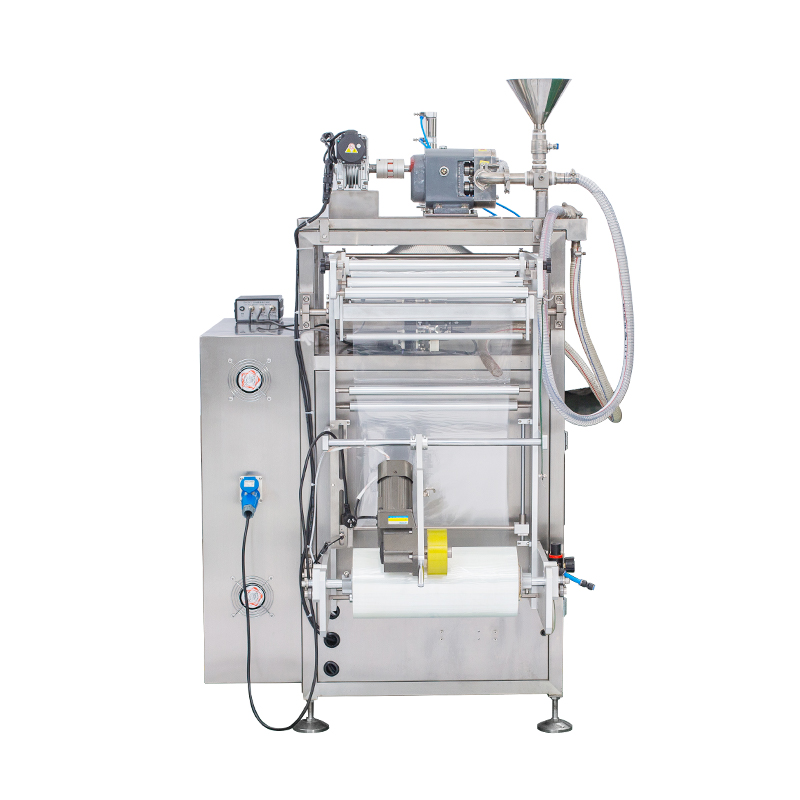
The dosing system dictates your yield optimization and directly controls product giveaway. Servo-driven piston pumps provide excellent consistency for viscous oils. The servo motor controls the exact stroke length, acceleration, and deceleration of the piston. This handles thick liquids without losing accuracy and prevents splashing at the end of the stroke. Mass flow meters (such as Coriolis meters) offer an alternative for varying temperatures. They measure the actual mass of the fluid passing through the pipe, ignoring volume changes caused by heat. Flow meters eliminate the mechanical wear associated with piston seals.
Anti-drip technology is critical for oil packaging. Shut-off nozzles physically block the fluid path at the end of the fill cycle using an internal pneumatic pin. Suck-back technology reverses the pump slightly just before the nozzle closes. This pulls the fluid meniscus up into the nozzle tip. These mechanisms prevent stray drops from contaminating the seal zone. Without them, high-speed packaging of edible oil results in continuous seal failures.
Sealing edible oil requires specialized approaches based on the film structure. Constant heat sealing uses continuously heated brass or steel jaws controlled by PID temperature controllers. It works well for thick, multi-layer laminates and paper-backed foils. Impulse sealing applies a brief, intense burst of electrical current to a Nichrome heating element, followed immediately by a cooling phase while the jaws remain closed. It suits thinner films and specific polyethylene blends. You must match the sealing technology to your exact film structure.
Jaw profiles matter significantly for oil environments. Serrated jaws create interlocking horizontal or vertical patterns that bite through minor surface contamination. Flat jaws provide a smooth, aesthetic finish but require perfectly clean film and higher pressure. Oil-resistant barrier films often require specific temperature and pressure profiles to activate the sealant layer. Teflon coatings or Teflon tape on the sealing jaws prevent melted film from sticking, which causes jams and tears.
Modern packaging requires robust automation to maintain OEE (Overall Equipment Effectiveness). Programmable Logic Controllers (PLCs) govern all machine timings down to the millisecond. High-speed processors ensure synchronization between filling, indexing, and sealing. Human-Machine Interfaces (HMIs) provide intuitive touchscreens for operators. Recipe management allows instant recall of parameters (fill weight, seal temperature, machine speed) for different products. Automated fault diagnostics pinpoint issues immediately. The HMI displays the exact sensor or pneumatic cylinder that triggered the stoppage. This drastically reduces troubleshooting time for maintenance crews.
Manual cleaning causes excessive downtime and introduces human error into sanitation protocols. Machine architecture must support automated flushing. Clean-in-Place (CIP) systems circulate cleaning fluids through the entire fluid path at high velocities (typically above 1.5 meters per second) to create turbulent flow. The sequence typically involves a pre-rinse, caustic wash, intermediate rinse, acid wash, and final sanitizing rinse. The machine must feature sanitary butterfly valves and self-draining pipework pitched at a minimum angle. This allows thorough sanitization without requiring full teardowns. CIP integration ensures compliance with strict food safety audits and extends the lifespan of internal seals.
Evaluating equipment requires looking beyond the initial purchase price. Capital Expenditure (CapEx) represents the machine cost, but Operational Expenditure (OpEx) dictates long-term profitability. Cheap machines often consume excessive compressed air, require frequent seal replacements, and draw high electrical loads. Premium machines utilize energy-efficient servo drives instead of air cylinders for major movements, drastically reducing compressor load. You must calculate the annual cost of consumables, energy, and spare parts when comparing vendor quotes.
Product giveaway destroys margins in high-volume oil packaging. If a machine overfills a 1-liter pouch by just 5 grams to guarantee the label weight, the annual loss across millions of pouches is staggering. Upgrading to high-accuracy mass flow meters or precision servo pistons tightens the standard deviation of your fill weights. You can set the target fill closer to the label claim. Calculate the ROI of upgrading the dosing system by quantifying the reduction in annual product giveaway. Often, precision dosing pays for the entire machine upgrade within 14 months.
Maximize asset utilization by evaluating machines capable of packing other viscous or free-flowing liquids. A facility packing olive oil might also secure contracts for honey, ketchup, syrups, or liquid detergents. Machines equipped with versatile piston pumps and adjustable hopper agitators handle these transitions with minimal changeover parts. This flexibility allows you to run the machine across multiple shifts for different clients, improving overall return on investment.
Downtime costs money. Evaluate the availability of standardized, off-the-shelf spare parts (like Omron sensors or SMC pneumatics) versus proprietary vendor components. Ease of access to internal components reduces mean time to repair (MTTR). Assess the reduction in manual intervention required for automated pouch feeding, automatic film splicing, and end-of-line packing. Machines that require one operator instead of three provide immediate labor savings that improve the economic justification of the project.
Bottlenecking occurs if machine capacity misaligns with refinery output. A high-speed sachet machine might outpace the oil delivery system, causing frequent starvation stops. Conversely, a slow bagging line might back up the holding tanks, forcing the processing side to halt. You must integrate buffer tanks between the processing and packaging stages. Flow rate synchronization ensures continuous operation. Level sensors in the buffer tank communicate with the packaging machine PLC to adjust filling speeds dynamically, slowing the machine down rather than stopping it completely when oil levels drop.
Film delamination ruins entire production runs. Specific oils react chemically with certain polymer adhesives used in laminated films. Experimental paper pouches may lack the necessary barrier properties to prevent oil seepage over time. Seal failure results in massive product loss and warehouse cleanup. You must mandate rigorous material testing before finalizing equipment. Conduct a Factory Acceptance Test (FAT) using the exact production film and the specific oil grade. Do not rely on generic testing materials or water. Simulate real-world pressure and temperature conditions during the FAT to verify seal strength.
Complex machinery intimidates operators. Difficult changeover procedures lead to extended downtime and mechanical damage. Improper adjustments cause increased scrap rates during startup. You must prioritize machines featuring tool-less changeovers. Color-coded adjustment points and digital position indicators simplify the process. Invest heavily in comprehensive vendor training. Operators must understand the mechanical principles of the machine, not just button-pushing. Develop standard operating procedures (SOPs) based on the manufacturer's guidelines and post them directly on the machine frame.
The optimal machine depends entirely on your specific operational parameters. You must evaluate the intersection of product viscosity, target packaging format, and required throughput. Multi-lane sachets dominate volume sampling and single-serve markets. Rotary premade systems win in premium retail environments where aesthetics matter. Weight-based large bags serve the foodservice industry best by guaranteeing bulk accuracy. Selecting the right architecture guarantees long-term efficiency and protects your profit margins.
Take the following actionable steps to finalize your equipment selection:
Request detailed FAT protocols from vendors to ensure performance guarantees before authorizing shipment.
Demand OEE (Overall Equipment Effectiveness) commitments written directly into the procurement contract.
Supply actual product samples and production film rolls to vendors for physical testing and validation.
Map your factory floor space to confirm the footprint accommodates buffer tanks, operator access, and secondary packaging conveyors.
Audit the vendor's spare parts inventory and technical support response times for your specific geographic region.
A: Servo-driven piston pumps are ideal for highly viscous oils. The servo motor provides precise control over the piston stroke length and speed. This ensures accurate volumetric dosing even when the oil is thick. It maintains consistency without losing speed, unlike standard gravity fillers which struggle with high viscosity and cause severe underfills.
A: It utilizes specialized anti-drip nozzles and suck-back technology. At the end of the fill cycle, the pump reverses slightly. This pulls the fluid meniscus back up into the nozzle. Synchronized sealing timing ensures the jaws only close when the seal zone is completely clear of oil droplets, preventing contamination.
A: Yes, rotary premade systems offer immense flexibility. Operators adjust the mechanical grippers to accommodate different pouch widths via the touchscreen. Tool-less changeovers take minutes. The sealing jaws adapt to various materials, including multi-layer laminates, foil-lined structures, and eco-friendly paper pouches by adjusting PID temperature settings.
A: Large bag machines typically achieve accuracy rates between +/- 0.2% to 0.5%. They utilize weight-based filling with precision load cells rather than volumetric pumps. This mass-based measurement ignores temperature-induced density changes, ensuring exact product weights for bulk commercial packaging and eliminating costly product giveaway.
A: Yes, versatile dosing systems allow these machines to package other products. With minimal changeover parts and proper CIP cleaning, you can run water, juice, honey, syrups, or ketchup. Upgrading to a versatile piston pump maximizes asset utilization and allows co-packers to take on diverse contracts.
A: Cleaning utilizes automated Clean-in-Place (CIP) systems. The machine circulates hot water, caustic solutions, and sanitizers through the internal fluid paths at high velocities. Sanitary 304/316L stainless steel construction and crevice-free welding prevent oil buildup. This automated flushing eliminates the need for daily manual teardowns and ensures food safety compliance.


