
Views: 0 Author: Site Editor Publish Time: 2026-09-22 Origin: Site


Manufacturing facilities face a constant battle with SKU proliferation. Shorter production runs and just-in-time inventory models force plants to execute multiple format swaps per shift. This reality makes equipment downtime the primary bottleneck for plant profitability. When you stop a line to swap forming tubes or adjust guide rails, you immediately degrade Overall Equipment Effectiveness (OEE). These inefficient format changes inflate labor costs and cause missed delivery windows. You cannot solve this by simply telling operators to work faster. Instead, you need a holistic approach. We must combine proven operational methodologies, such as SMED and Centerlining, with strategic equipment upgrades. By systematically engineering the downtime out of the process, you can systematically reduce packing machine changeover time. This ensures rapid transitions without compromising seal integrity, sanitation standards, or product safety.
Separate Internal vs. External Tasks: Up to 50% of changeover time can be eliminated by moving preparation tasks outside of the machine's downtime window.
Prioritize Tool-less Adjustments & Centerlining: Modern equipment utilizing quick-release mechanisms, servo-driven automation, and fixed reference points significantly outperforms manual, wrench-based setups.
Standardize via HMI Recipes: Digital recipe management ensures repeatable, precise parameter settings (temperature, pressure, timing) across different shifts and operators.
Match Machine Type to SKU Variability: Selecting the right architecture—whether a horizontal premade pouch packing machine or a large bag vertical packing machine—dictates baseline changeover efficiency.
Account for Sanitation: Allergen swaps and washdowns are often the longest phase of a changeover; hygienic machine design is critical for rapid turnaround.
Understanding the financial drain of format transitions requires precise metrics. Facilities often underestimate the true cost of downtime because they only track the lost production minutes. To calculate the exact financial impact of changeovers, operators must use a specific formula: (Machine Rate + Labor Cost) × Downtime Duration. The machine rate represents the revenue generated per minute of active production. When a high-speed line stops for an hour to swap forming tubes and recalibrate seal jaws, the facility loses the profit margin of every bag that should have been packed during that window. Add the wages of the operators and maintenance technicians performing the swap, and the financial bleed becomes substantial.
Changeover time acts as a massive availability loss within the OEE calculation. Availability is the ratio of actual operating time to planned production time. Every minute spent adjusting guide rails or waiting for sealing bars to reach optimal temperature directly reduces this metric. It is vital to distinguish between major format changes and micro-stops. A major format change might involve swapping from a 500-gram stand-up pouch to a 1-kilogram flat-bottom bag, requiring mechanical part replacements and washdowns. Micro-stops, such as film roll replacements or clearing minor jams, take only minutes but occur frequently. Both degrade OEE, but they require entirely different mitigation strategies.
Downtime Category | Typical Duration | Primary Cause | OEE Impact Level |
|---|---|---|---|
Micro-Stops | 1 - 5 minutes | Film roll changes, minor jams, sensor faults | Moderate (High frequency compounds the loss) |
Minor Format Change | 10 - 30 minutes | Adjusting guide rails, changing pouch width | High (Directly cuts into planned production time) |
Major Format Change | 60+ minutes | Swapping forming tubes, allergen washdowns | Severe (Can eliminate an entire production run) |
Beyond the direct loss of production time, poor changeovers carry severe hidden costs. Material waste during startup calibration is a primary offender. When operators rely on trial-and-error to dial in jaw pressure and film tracking, the machine produces dozens of rejected bags before achieving a stable run. This increases scrap rates and wastes expensive packaging film and raw product. Furthermore, extended and frustrating mechanical adjustments lead to operator fatigue. Fatigued operators are more likely to make errors, resulting in compromised packaging integrity, weak seals, and potential product recalls down the line.
The Single-Minute Exchange of Dies (SMED) framework revolutionized automotive manufacturing and applies directly to packaging lines. The core philosophy of SMED is to reduce equipment changeover times to the single digits by systematically categorizing and optimizing every action taken during a format swap. For packaging operations, this means treating a changeover like a pit stop in a race. Every tool, part, and operator must be perfectly synchronized to minimize the time the machine sits idle.
The first step in SMED is identifying and isolating external tasks. These are tasks that must be completed while the machine is still running the previous batch. Operators often waste valuable downtime walking to the tool crib, searching for the correct forming collar, or waiting for a forklift to deliver the new film roll. By externalizing these preparation steps, facilities can slash downtime immediately. Common external tasks include:
Staging new film rolls directly adjacent to the unwind stand.
Pre-heating spare seal jaws on an offline rig.
Gathering all necessary tools and placing them on a shadow board.
Preparing the next product batch in the overhead hoppers.
The next phase involves converting internal tasks to external tasks. Internal tasks are those that currently require the machine to be stopped. Engineering and process modifications can shift many of these actions offline. For example, operators can use offline setup jigs to pre-calibrate volumetric fillers before they are installed on the main line. Spare mandrels allow operators to pre-thread film rolls, so the actual swap takes seconds rather than minutes. If a facility uses multiple dosing heads, cleaning and assembling the spare head offline while the machine runs the current product eliminates the cleaning bottleneck from the critical path.
Once all possible tasks are externalized, facilities must streamline the remaining internal tasks. This involves standardizing downtime activities through parallel operations. Instead of one operator walking around the machine to complete tasks sequentially, two operators work simultaneously in a choreographed sequence. One operator might swap the forming tube on the left side while the other adjusts the discharge conveyor on the right. This requires standardized work instructions and a clear division of labor to prevent interference and ensure safety.
Implementing centerlining is the final operational pillar. Centerlining is the methodology of establishing fixed, optimal settings for every machine variable. This eliminates operator-dependent adjustments and the notorious habit of tweaking settings during startup. By determining the exact numeric value for guide rail width, pneumatic pressure, and sensor positions for each SKU, operators simply move the components to the established setpoints. Centerlining replaces subjective feel with objective data, ensuring the machine starts up perfectly on the first cycle without generating scrap.
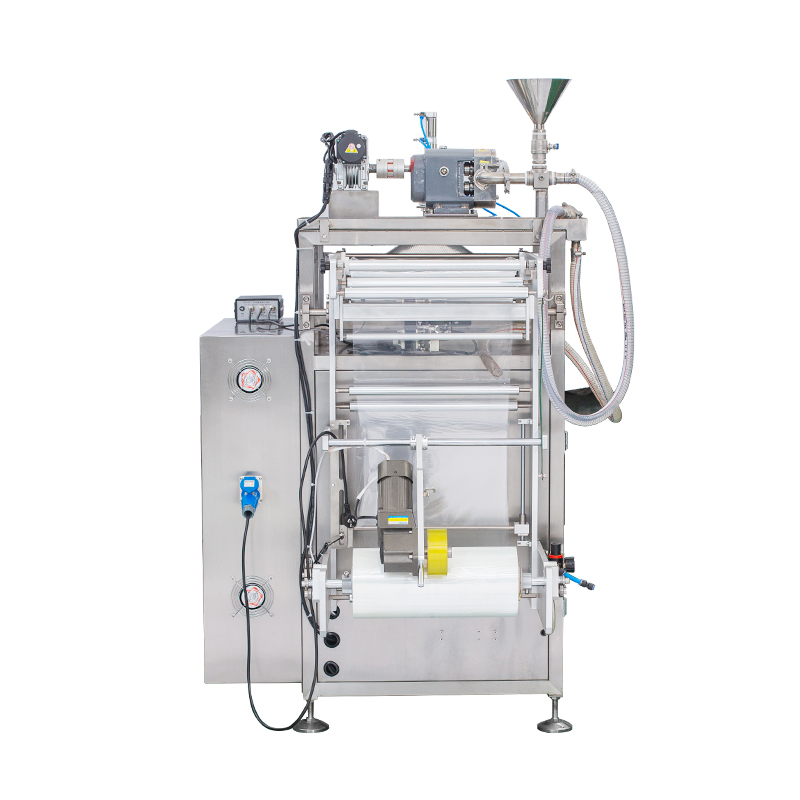
Operational methodologies can only go so far if the equipment itself is inherently difficult to adjust. Assessing baseline capabilities requires understanding how the mechanical architecture of different machines affects format change speed and accessibility. Open-frame designs with cantilevered components allow operators to reach adjustment points easily, whereas enclosed, heavily guarded legacy machines force operators into awkward postures, slowing down the transition.
When standard equipment fails to meet unique product handling requirements, facilities often turn to a custom packing machine. Evaluating the trade-offs here is necessary. A bespoke system can be engineered for specific, rapid changeovers between a defined set of proprietary products. Engineers can design dedicated change parts that snap into place without tools. However, this hyper-specialization may lack flexibility for future, unforeseen SKUs. If marketing introduces a radical new package design two years later, the custom machine might require extensive retrofitting. You must specify maximum allowable changeover time requirements during the initial custom engineering phase. These metrics must be rigorously tested and validated during the Factory Acceptance Test (FAT) before the equipment ships.
Format shifts on a horizontal premade pouch packing machine involve several specific adjustment points. Operators must modify the magazine width to accommodate the new pouch size, adjust the gripper spacing that carries the pouch through the machine, and recalibrate the opening stations and sealing bars. Historically, these adjustments required manual hand-cranks and rulers. Modern systems utilize automated, push-button width adjustments driven by servo motors. With a single tap on the screen, the grippers expand or contract to the exact millimeter required for the new SKU. Additionally, the open-architecture design of modern horizontal machines drastically reduces the time needed to clear pouch jams and clean out product spills during transitions, keeping the downtime window tight.
The changeover sequence for a large bag vertical packing machine follows a strict critical path. The primary bottlenecks are forming tube and collar replacement, film threading, and seal jaw calibration. Because these machines handle heavy bulk products, the format parts are physically demanding to move. Evaluation criteria for heavy-duty format parts must include ergonomic lifting aids, such as integrated hoists or swing-away jaw assemblies that prevent operator strain. Quick-lock forming tubes that secure with a single lever rather than multiple bolts save minutes. Furthermore, facilities should evaluate the return on investment for automated film splicers. These devices automatically join the end of an expiring film roll to the beginning of a new one, reducing the frequency and duration of roll-change micro-stops to near zero.
Reducing downtime requires eliminating wrenches and Allen keys from the production floor. Tool-less changeover mechanisms are non-negotiable for modern efficiency. Equipment must feature quick-release levers, detent pins, and hand wheels equipped with digital counters. Instead of loosening four bolts to slide a guide rail, an operator simply flips a lever, slides the rail until the digital counter reads the centerlined value, and locks the lever back into place. This eliminates the variability of manual measurement and prevents stripped threads or lost hardware.
Servo-motor automation takes this a step further. Servo-driven axes allow for the automatic, precise repositioning of machine components via software. Rather than relying on mechanical cams and linkages that require physical swapping, a servo machine changes its motion profile electronically. If a new bag requires a longer pull-down stroke, the servo motor adjusts its rotation instantly based on the recipe. This replaces manual mechanical adjustment with instantaneous digital execution, drastically cutting downtime and reducing wear on physical components.
The Human-Machine Interface (HMI) serves as the brain of the rapid changeover process. HMI recipe management allows facilities to store specific SKU parameters in a digital database. When an operator selects the new product recipe on the screen, the machine automatically adjusts all connected servo axes and thermal controllers to the correct settings. Integrating IoT connectivity allows plant managers to track changeover analytics in real-time. Sensors record exactly how long a transition took, identify which specific step caused a delay, and flag deviations from the standard operating procedure.
Visual management systems are highly effective for the physical aspects of a changeover. Color-coded and numbered change parts prevent part mix-ups and guide operators through a sequential setup. Implementing a visual management system involves:
Assigning a specific color to each SKU or package size.
Anodizing or tagging every forming tube, guide rail insert, and filler nozzle with the corresponding color.
Numbering the parts to dictate the exact order of installation (e.g., Blue-1, Blue-2).
Creating matching colored outlines on the shadow board for storage.
This visual cueing reduces cognitive load on the operator, speeds up the process, and virtually eliminates the risk of installing the wrong component.
In the food, beverage, and pharmaceutical sectors, mechanical adjustments are rarely the longest part of a changeover. The washdown bottleneck dictates the schedule. Cleaning a machine to remove cross-contamination risks, especially during allergen swaps, often takes significantly longer than swapping forming tubes or adjusting grippers. If a line is transitioning from a peanut-based product to a nut-free product, the sanitation protocol must be flawless, and the equipment must support rapid, thorough cleaning.
Hygienic machine design is the foundation of fast sanitation. Equipment must feature sloped surfaces that prevent water and product from pooling. IP69K-rated components—including motors, sensors, and enclosures—allow operators to use high-pressure, high-temperature washdown hoses directly on the machine without bagging or shielding sensitive electronics. Minimized catch-points, such as eliminating exposed threads, flat ledges, and tight crevices, ensure that product dust and debris wash away easily. When operators do not have to spend time scrubbing blind corners with a toothbrush, the sanitation phase accelerates dramatically.
For liquid fillers or powder augers integrated with the packing line, Clean-in-Place (CIP) integration is essential. Automated CIP systems circulate cleaning chemicals, hot water, and sanitizers through the internal piping and dosing heads without requiring operators to dismantle the equipment. This drastically reduces internal cleaning times compared to manual teardowns. The CIP system can run its cycle simultaneously while operators perform the external mechanical changeover tasks, utilizing parallel processing to shrink the total downtime window.
While upgrading equipment and methodologies yields massive efficiency gains, facilities must navigate specific implementation risks. The primary threat is the risk of over-automation. Highly automated changeover systems, packed with servos, linear actuators, and sensors, require specialized maintenance. If a servo drive fails or a position sensor faults during a push-button changeover, the resulting downtime can far exceed the time saved by the automation. Facilities must ensure their maintenance teams possess the electrical and software troubleshooting skills required to support advanced machinery, and they must stock critical spare parts to prevent extended outages.
Advanced equipment features remain useless without strict, documented, and visually aided Standard Operating Procedures (SOPs). Operators need clear instructions on how to execute the transition safely and efficiently. Text-heavy binders stored in an office are ineffective. Facilities must deploy digital training and shadow boards directly on the production floor. Using tablet-based video SOPs or Augmented Reality (AR) headsets allows operators to see exactly how a part should be removed or installed. Furthermore, 5S shadow boards located directly adjacent to the machine ensure that every tool and change part has a specific home. This eliminates motion waste, as operators never have to leave the machine footprint to search for a wrench or a forming collar.
Post-changeover verification and calibration present another significant risk. Even with centerlining and HMI recipes, the first few cycles after a format change are vulnerable to quality defects. Facilities must implement rapid verification checks to ensure seal integrity before ramping up to full-speed production. Operators should perform immediate burst testing, leak detection, or underwater vacuum checks on the first bags off the line. Confirming that the seal temperature and jaw pressure are producing hermetic seals prevents the disaster of running thousands of defective bags that must later be scrapped or manually reworked.
Investing in rapid changeover capabilities requires a clear financial justification. Plant managers must provide a framework for evaluating the higher capital expenditure of a servo-driven, quick-change machine against the recovered production hours and increased capacity. Upfront costs for tool-less mechanisms, automated adjustments, and HMI recipe systems are higher than standard mechanical machines. However, the long-term flexibility and increased OEE quickly offset this initial premium. By recovering just one hour of downtime per day, a facility effectively adds hundreds of hours of productive capacity annually without adding a new shift or expanding the building footprint.
Conducting a breakeven analysis requires modeling the Return on Investment based on specific operational data. Facilities must calculate the number of changeovers performed per day, the average time saved per changeover using the new equipment or SMED methods, and the reduction in startup scrap. Multiply the recovered time by the hourly value of production. Subtract the value of the reduced material waste. Compare this total annual savings against the cost of the equipment upgrades or SMED training programs. In many high-mix packaging environments, the ROI for changeover optimization is realized rapidly.
ROI Factor | Description | Measurement Method |
|---|---|---|
Recovered Production Time | Hours gained by reducing the mechanical swap duration. | (Old Changeover Time - New Changeover Time) × Changeovers per Year |
Scrap Reduction | Material saved by eliminating trial-and-error startup calibration. | Average bags wasted per startup × Material cost per bag × Changeovers per Year |
Labor Optimization | Reduction in man-hours required to perform the format change. | Operators required × Time saved per changeover × Hourly wage |
Conduct a comprehensive time-study audit of your current changeover processes by recording a standard format swap on video.
Identify and separate all internal versus external tasks to locate immediate operational bottlenecks.
Implement basic 5S staging and centerlining on your existing equipment to establish a baseline metric.
Demand physical demonstrations or video proofs of changeovers from OEMs during the procurement process for new machinery.
Strictly time the transition from the last good bag of SKU A to the first good bag of SKU B during any Factory Acceptance Test.
A: Industry standards vary by complexity, but sub-15 minutes is considered excellent for minor format changes like adjusting pouch width or swapping a film roll. For major changes involving complete washdowns, allergen swaps, and heavy part replacements, facilities should target under 30 to 45 minutes. Consistently exceeding an hour indicates a need for immediate process or equipment optimization.
A: A horizontal machine adjusts to different widths by modifying the spacing of the grippers that hold the pouch. Legacy machines require manual hand-crank adjustments, which are slow and prone to error. Modern systems use automated, servo-driven gripper adjustments controlled via the HMI, allowing the machine to resize itself to exact centerlined dimensions instantly.
A: Yes. While legacy machines lack automated features and tool-less parts, operational SMED tactics are highly effective. Staging materials externally, implementing centerlining with physical marks on the machine, and using 5S shadow boards can still reduce downtime by 20% to 30% without requiring any capital expenditure on new equipment.
A: The most time-consuming steps are typically forming tube replacement and film threading. These parts are heavy and awkward to maneuver. Utilizing quick-change forming collars, swing-away jaw assemblies, and automated film splicers mitigates this bottleneck, drastically reducing the physical labor and time required for the transition.
A: Trial-and-error relies on operator guesswork to dial in settings like jaw pressure and temperature. This lack of centerlining and HMI recipes leads to wasted material, high scrap rates, and extended downtime during startup calibration. Fixed, objective setpoints ensure the machine produces good bags on the first cycle.
A: Sanitation is a non-negotiable phase of changeovers in food packaging and often takes longer than mechanical swaps. Allergen cleanups require complete removal of cross-contamination risks. Hygienic machine design—featuring sloped surfaces, IP69K ratings, and CIP systems—is just as important as quick-release mechanical parts for maintaining rapid turnaround times.
A: Custom machines are best suited for highly unique product handling requirements. While they can be engineered for fast changeovers between specific proprietary products, standard modular machines often feature more refined, proven quick-change technologies. Standard machines generally offer greater long-term flexibility for unforeseen future SKUs.


