
Views: 0 Author: Site Editor Publish Time: 2026-11-21 Origin: Site


Liquid packaging is the process of filling, sealing, and protecting liquid products in bottles, jars, jugs, pouches, and other containers. It matters because it guards product quality, extends shelf life, supports hygiene, prevents leaks, and enables efficient transport. A liquid packing machine turns this process into a fast, clean, and consistent operation. Modern liquid packaging now handles sauces, thick creams, gels, and water, not just thin liquids. This article explains how these machines work, the main types including pouch machines, industry applications, and practical selection tips.
Liquid packaging is the process of filling, sealing, and protecting liquid products in bottles, jars, jugs, pouches, and other containers. It covers every step from the first drop of product entering a container to the moment a sealed unit leaves the line. The term also describes the materials and systems behind those steps. Modern liquid packaging handles far more than water and juice. Sauces, thick creams, gels, and semi-liquid foods all move through the same basic sequence. Each product type brings its own demands for viscosity, temperature, and container design. A liquid packing machine must fill, seal, and package liquid or semi-liquid products without waste, contamination, or inconsistency. That single requirement shapes every decision in the packaging process.
Every liquid packaging system must deliver five core functions. Each one protects the product and the people who use it.
Function | What it delivers |
|---|---|
Product protection | Shields contents from light, air, and physical damage |
Shelf life extension | Slows spoilage and preserves flavor, potency, or freshness |
Hygiene | Keeps contaminants out during filling and sealing |
Leak prevention | Holds a secure seal through handling and transport |
Transport efficiency | Allows stable stacking, lighter loads, and fewer losses |
These functions work together. A weak seal undermines hygiene. Poor barrier materials shorten shelf life. A container that leaks in transit wastes the product and damages nearby goods. Good liquid packaging balances all five functions at once. It also matches the container to the product. Thin liquids need tight, reliable seals. Thick creams and gels need filling systems that move them without air pockets. Flexible pouches now serve both categories well. They use less material than rigid containers and still deliver strong protection. That flexibility explains why liquid packaging keeps expanding into new product categories. Pouches, sachets, and stand-up bags now carry everything from shampoo to tomato paste. Each format relies on the same core functions. The difference lies in how the machine delivers them.
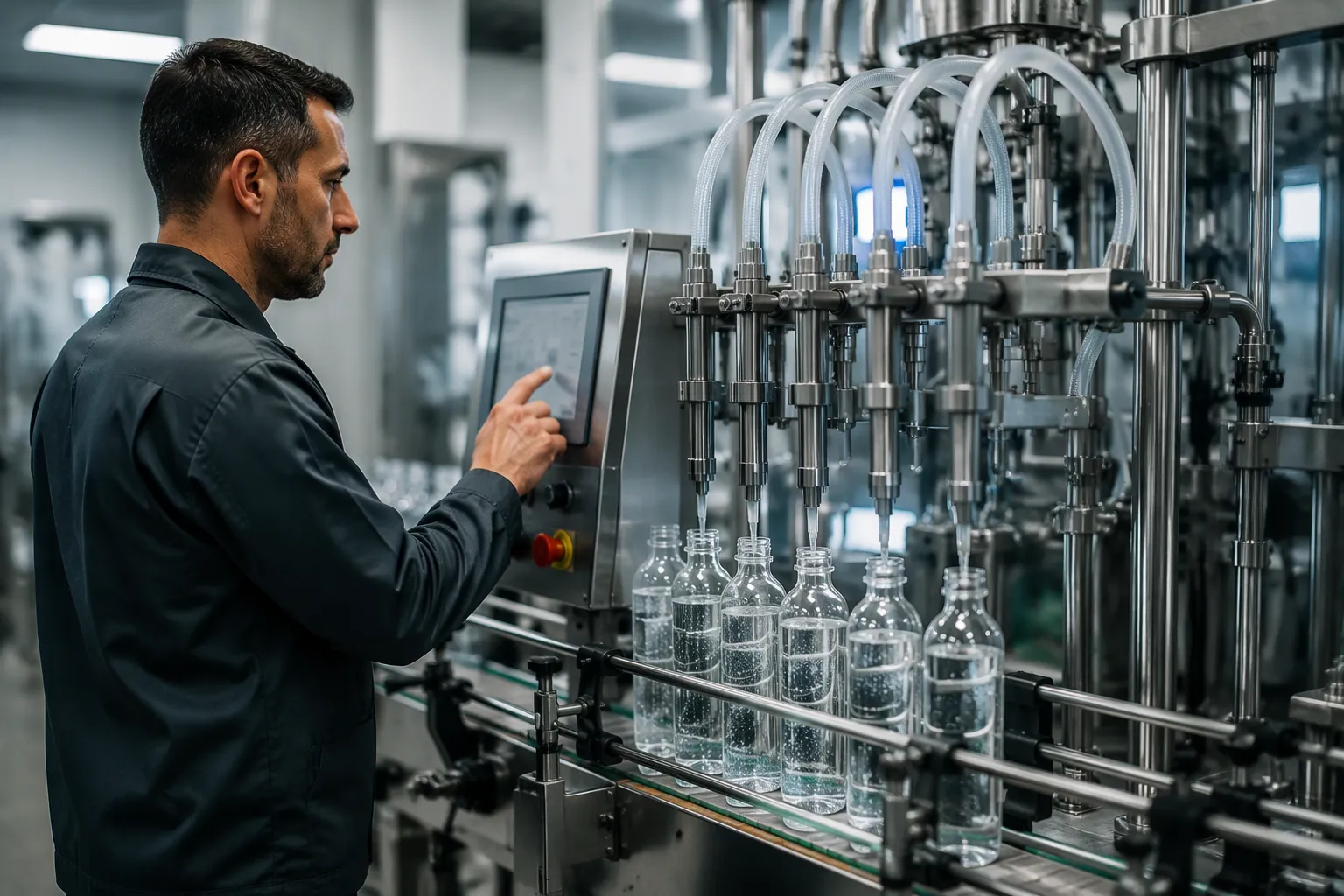
A liquid packing machine pours a set volume or weight of liquid into containers through a continuous, high-precision automated process. It sits at the center of most liquid packaging operations. The liquid packaging machine controls dose size, line speed, and seal quality at every cycle. Operators set the recipe once. The machine then repeats it thousands of times without drift. Small errors compound fast at high speed. Tight control at each stage keeps the output uniform. Speed settings balance throughput against fill accuracy. Push the line too fast, and splashing raises rejects.
Setup begins at the control panel. Operators enter the target fill volume or weight, the line speed, and the seal temperature. They also select the container profile and the nozzle size. The machine stores these values as a recipe. A changeover to a new bottle size then takes minutes, not hours. Calibration follows. A test run confirms the dose against a scale. Operators adjust the setting until the measured weight matches the target. Only then does full production start.
Container loading comes next. Empty bottles, jars, or pouches feed into the machine by conveyor or magazine. Magazines suit rigid containers. Conveyors suit pouches and bags. Guide rails hold each unit in position. Sensors confirm correct placement before any liquid enters. A misaligned bottle triggers a stop. This check protects the liquid packaging process from spills and misfills. It also keeps the step-by-step process of liquid packaging running without stops.
The filling stage delivers the measured dose of liquid. Nozzles drop into or hover above each container. Filling accuracy depends on nozzle design and product thickness. A thin liquid moves fast through narrow openings. A thick cream needs a wider path and more pressure. A drip-free cutoff stops stringing on sticky products. It also keeps the container rim clean for a strong closure. The machine fills, indexes forward, and repeats. Each filling cycle repeats the same dose. Speed and dose stay locked together, so output rises without loss of accuracy.
Sealing follows at once. The method depends on the container:
Container | Sealing method |
|---|---|
Bottle or jar | Screw cap or lug cap |
Pouch or sachet | Heat seal |
Cup or tray | Lidding film |
Heat sealing needs the right temperature and dwell time. Too cool, and the seam fails. Too hot, and the film burns. The machine holds both values steady.
The capping and lidding stage closes each unit. Automated capping machines apply torque to a set value. A loose cap leaks. An over-tight cap cracks. The machine holds the middle ground on every unit. Torque checks run at intervals to catch drift.
Labeling comes last. A labeling machine applies the label at a fixed position. Labels must sit square and clear of the closure area. Placement accuracy matters for retail scanning and brand look. The whole sequence — filling to capping and labeling — runs as one linked flow. Each stage hands off to the next without manual contact.
Automation makes the entire process of liquid packaging quick, clean, and consistent. The liquid packaging line runs the step-by-step process of liquid packaging with minimal human touch. That reduces contamination risk. It also keeps the packaging process stable across long shifts. A well-set liquid packing machine turns raw liquid packaging into a repeatable routine. Every unit leaves with the same dose, the same seal, and the same label position.
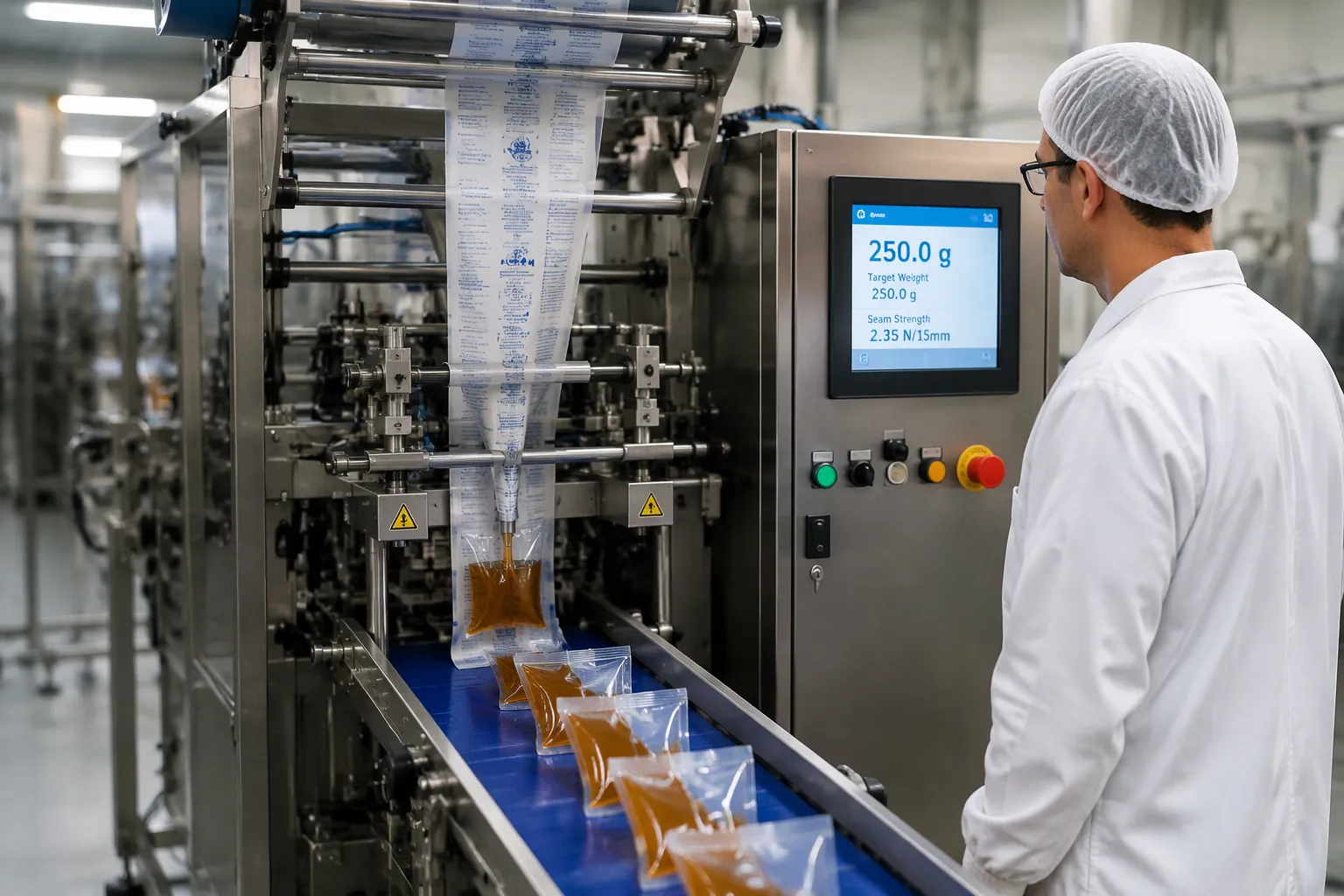
A liquid pouch packing machine forms a bag, fills it, and seals it in one continuous cycle. This form-fill-seal process starts with a flat film roll. The machine shapes the film into a tube or pouch, drops in a measured dose, and closes the top. Sachet shapes vary widely. Flat sachets, stand-up pouches, and three-side or four-side sealed bags all run on the same platform. Output typically ranges from 40 to 120 sachets per minute. Precise filling keeps each dose on target at those speeds. A secure seal keeps it there through shipping and handling.
The liquid pouch packing machine work depends on tight coordination between three stations. The forming station sets the pouch geometry. The filling stage delivers the dose. The sealing station closes the pouch under controlled heat and pressure. Any drift at one station shows up at the next. Operators watch dose weight and seam strength together. That habit keeps liquid pouch packaging reliable across long runs.
Buyers classify liquid pouch packing machines by automation level first. Manual units suit small batches and frequent changeovers. Semi-automatic models handle steady mid-volume output. Fully automatic lines run the step-by-step process of liquid packaging with minimal operator contact. Each level fits a different production scale.
Filling methods split into several families. The table below shows where each one fits best.
Mechanism | Best fit |
|---|---|
Gravity | Thin, free-flowing liquids without gas |
Pressure | Low-viscosity liquids needing faster flow |
Piston | Thick creams, gels, and pastes |
Regular filling and constant volume filling offer two more options. Regular filling suits liquids with consistent density. Constant volume filling holds a fixed dose regardless of small density shifts. Gravity and pressure fillers generally suit only low-viscosity liquids without gas. Piston fillers handle heavier products well. Many liquid pouch packing machines accept more than one mechanism. That flexibility lets one unit cover a wider product range. Liquid pouch packaging lines often pair piston fillers with pouch formers for sauces and creams. Thin liquids pair better with gravity or pressure systems. Matching the mechanism to the product keeps liquid pouch packing machines efficient. Filling machines built around one mechanism stay simpler to run and maintain.
Food and beverage producers rely on liquid packaging more than any other group. Bottled water, juice, and soft drinks move through high-speed lines every day. Cooking oil needs a tight seal and a strong barrier against light. Dairy products demand strict hygiene at every stage. Milk, yogurt drinks, and cream all pass through filling, capping, and sealing stations. Sauces and condiments bring thicker products into the mix. Tomato paste, ketchup, and dressings flow well through piston systems. Liquid pouch packaging now carries single-serve sauces and ready-to-drink portions. These formats cut material use and travel light.
Cosmetics producers package creams, gels, lotions, and shampoos. These products often need precise doses and clean container rims. Pharmaceuticals add a higher bar for hygiene and dose accuracy. Syrups, tinctures, and sterile solutions demand tight control at every step. Household chemicals cover a wide range too. Detergents, cleaners, and liquid soaps each bring their own container and closure needs.
Machine choice follows three factors: viscosity, container type, and hygiene requirements. A thin syrup suits gravity or pressure systems. A thick gel calls for a piston filler. Bottles need capping and labeling stations. Pouches need form-fill-seal units instead. Sterile products push hygiene demands higher across the whole packaging process. Liquid pouch packing machines fit many of these cases well. They handle sauces, creams, and gels at steady output. The right match keeps each liquid packaging line efficient and clean.
Product behavior narrows the choice fast. Viscosity comes first. Thin liquids flow easily and suit gravity or pressure systems. Thick creams and gels resist flow, so they need piston-driven equipment. Gas content matters too. A product holding dissolved gas can foam during filling, and foam throws off dose accuracy. Degassing or gentler handling solves it.
Output targets set the second filter. Small batches favor manual or semi-automatic units. High-volume lines need fully automatic systems. Buyers should compare daily output against realistic demand, not peak demand. A machine sized for the busiest week often sits idle the rest of the year.
Liquid type | Filling mechanism |
|---|---|
Water, juice, thin syrups | Gravity or pressure |
Sauces, dressings | Piston |
Creams, gels, pastes | Piston |
Changeover flexibility protects a long-term investment. A good liquid packing machine accepts different bottle sizes and shapes through adjustable guide rails and change parts. Quick changeover keeps short runs profitable. Rigid frames and quality seals extend service life. Cheap seals fail early and cost more in downtime than they save at purchase.
Operating costs deserve equal weight. Power draw, spare parts, and maintenance intervals all add up. A liquid pouch packing machine with common, locally available parts stays cheaper to run over years. Buyers should also weigh film or container cost per unit, not just machine price.
Testing before scaling up removes guesswork. A trial run on the actual product reveals fill accuracy, foam behavior, and seal strength. It also shows how the line handles real containers. Every machine type suits specific needs. Gravity fillers fit thin products, piston fillers fit thick ones, and pouch systems fit high-volume single-serve formats. A liquid pouch packing machine handles sauces and creams well at steady output. The right liquid packaging choice balances product fit, output, and flexibility. Smart buyers test first, then scale. That approach keeps liquid packaging costs predictable as demand grows.
Liquid packaging combines filling, sealing, and protection into one repeatable process. A liquid packing machine sets the dose, fills each container, and seals it clean and tight. Buyers can choose bottle lines, sachet systems, or a liquid pouch packing machine for high-volume single-serve formats. The best choice depends on liquid characteristics, output targets, and flexibility. Match the dose mechanism to viscosity first. Then test the actual product on real containers before scaling up production. A second liquid pouch packing machine option covers thicker creams and gels at steady output. Liquid packaging will keep adapting as new products reach the market.
It pours a set volume or weight of liquid into containers. The machine fills, seals, and closes each unit in a continuous automated cycle. Operators set the dose and speed once. The line then repeats that recipe with consistent accuracy.
Output typically ranges from 40 to 120 sachets per minute. Actual speed depends on pouch size, product thickness, and seal settings. Precise filling keeps each dose on target at those speeds. A secure seal holds it through shipping and handling.
Piston fillers handle thick creams, gels, and pastes well. Gravity and pressure systems generally suit only low-viscosity liquids without gas. Matching the mechanism to the product keeps the line efficient. A mismatch causes air pockets, spills, or dose errors.
No. Pouch systems handle sauces, creams, and gels at steady output. Piston-driven units cover thicker products. Gravity or pressure setups fit water and juice. One platform can accept more than one mechanism, so a single unit covers a wider product range.
Test the actual product on real containers first. A trial run reveals fill accuracy, foam behavior, and seal strength. Compare daily output against realistic demand, not peak demand. Then confirm changeover flexibility and spare parts availability.


