
Views: 0 Author: Site Editor Publish Time: 2026-06-22 Origin: Site


You can find many kinds of packing machines in stores. Each machine has special features and jobs. The main types are sachet, premade pouch, multi-lane, and vertical models. These machines do their work in different ways. For example:
Multi-lane machines pack things fast and in large amounts. Single-lane machines are better for small batches.
Vertical Form Fill Seal (VFFS) machines make, fill, and seal sachets quickly. VFFS models are very popular. They may be more than half of the sachet packaging machines by 2026.
Machine Type | How It Works | Key Benefit |
|---|---|---|
VFFS (Vertical Form Fill Seal) | Makes a tube, fills it, seals it, and cuts sachets up and down | Makes lots, does not need much space |
Pre-Made Pouch Filling Machines | Uses pouches already made, fills them, and seals them | Looks nice, always the same |
Multi-Lane Machines | Fills and seals many packs at the same time | Packs a lot, saves money |
Single-Lane Machines | Packs one product line each time | Good for testing, costs less |
Knowing these differences helps you pick the best packing machine for your job.
Learn about four main packing machines: sachet, premade pouch, multi-lane, and vertical. Each machine works for different jobs and speeds.
Pick a packing machine based on your product and how you want to pack it. Think about speed, price, and what material you need to pack.
Sachet packing machines are best for single-use items. They pack many materials fast. They help control portions.
Premade pouch machines save time and cut down on waste. They let you switch pouch sizes and styles quickly.
Multi-lane machines make packing faster by packing many things at once. They are good for factories that need to pack a lot.
Sachet packing machines fill and seal small packets. They are good for single-use products. You can pack powder, liquid, or granules in sachets. Most sachet machines use vertical form fill seal technology. You can pick single-lane or multi-lane models. Multi-lane machines pack many sachets at the same time.
Sachet packing machines work fast. Some machines pack between 30 and 500 sachets each minute. The table below shows how fast different machines work:
Machine Type | Speed Range (bags/sachets per minute) |
|---|---|
Standard Sachet Packing Machines | 30-80 |
High-Speed Sachet Packing Machines | 40-100 |
Multi-lane Sachet Machines | 50-500 |
You can use many materials for sachet packaging. Common materials are PP/PE, aluminum foil/PE, PET with aluminum coating/PE, nylon/EPE, and paper/PE.
Sachet packing machines are used in many industries. They pack tea, powder, soy sauce, and other foods. These machines also pack liquids and granules. Sachet packing is used for medicine, cosmetics, and household items.
Tea packaging
Powder packaging
Soy sauce packaging
Sachet packing machines give fast production and flexible choices. You can pack powder, liquid, or granules in different pouch sizes. Multi-lane machines help you save time and make more sachets. Sachet packing makes portion control easy. You can use pouch packing machines for food and non-food products.
Tip: Sachet packing machines let you try new products without spending a lot.
Sachet packing has some problems. Sachet packaging creates more plastic waste. You pay more for each unit than bulk packaging. Sachet machines are not good for packing large amounts. Sometimes there is too much packaging for small amounts of powder, liquid, or granules.
Packaging Type | Film Material Savings | Impact on Shipping |
|---|---|---|
Stick Pack | 25% to 40% less film | Lower carbon footprint because weight and volume are less |
Sachet | Standard film usage | Higher shipping impact because weight and volume are more |
A premade pouch packaging machine fills and seals pouches that are already made. This machine works with many pouch shapes and sizes. You do not have to make the pouch from film. You just put empty pouches into the machine. The machine grabs a pouch, opens it, fills it, and seals it. This saves time and helps stop mistakes. You can change pouch sizes fast. This lets you pack different things with less waiting.
A pouch packaging machine has many helpful features. You can use it for rotary or horizontal pouch types. The machine can handle pouches from 50 mm to 250 mm wide. It can fill pouches up to 2 liters in size.
Pouch Type | Size Range (mm) | Volume Capacity (L) |
|---|---|---|
Rotary Premade Pouch | 50-250 | Up to 2 |
Horizontal Premade Pouch | N/A | N/A |
You can move the grippers by hand in about 10 to 15 minutes. This makes it easy to use many pouch sizes. The machine uses a “no bag, no fill; no open, no seal” system. This means you do not waste much material.
You can use a premade pouch packaging machine for lots of products. The table below shows some common uses:
Product Type | Description |
|---|---|
Powders | Protein, spices, baking ingredients |
Liquids | Beverages, sauces, oils |
Pet Food | Kibble, treats, wet food |
Food Items | Frozen food, coffee, tea |
Pharmaceuticals | Medical doses |
Cosmetics | Creams, gels, lotions |
Snacks | Chips, nuts |
Dried Fruits | Raisins, apricots |
There are many good things about using a premade pouch packaging machine:
You spend 40-65% less money on equipment than with a form fill seal machine.
You save about 33% on energy costs.
You make 40% less production waste.
You can change pouch sizes quickly, which saves work.
The machine almost never wastes a pouch.
Tip: If you have a small business or want to pack many pouch styles, a premade pouch packaging machine gives you more choices.
A premade pouch packaging machine uses more pouch material than a form fill seal machine. You may pay more for each pouch. For very fast packing, a form fill seal machine is better. If you want to use the least material, pick a form fill seal machine.
Factor | FFS Systems | Premade Pouch | Winner |
|---|---|---|---|
Annual Energy Cost | $12,000-$15,000 | $8,000 | Premade (33% lower) |
Production Waste | 2-5% | 1-3% | Premade (40% less) |
Material Usage | Baseline | 2x higher | FFS (50% less) |
5-Year Energy Cost | $60,000-$75,000 | $40,000 | Premade saves $20,000-$35,000 |
Pick the machine that matches your product, speed, and budget.
Multi-lane packing machines fill and seal many sachets or stick packs at once. These machines have several lanes that work together. You can find machines with 2 to 16 lanes. This lets you pack thousands of items every hour. Multi-lane systems are fast and keep working at the same speed. They are good for products that need quick and big packaging.
Machine Name | Number of Packing Columns |
|---|---|
Automatic Multi Lanes Sachet Stick Packaging Machine Multilane Line | 2-16 |
Automatic 10 Lanes Liquid Sachet Packing Machine | 4-12 |
Multi-lane machines use servo-driven and microprocessor-controlled parts. These parts help you measure the right amount and waste less. You can switch jobs fast and seal each pack well. The machine makes the same amount every time and works quickly. You can use a touch screen to control it. PLC control and stepper motors let you set bag length. The machine uses photoelectric eyes to put bags in the right spot. It works steady and is easy to change.
Precise dosing
Low wastage
Easy job change-overs
Excellent sealing
Consistency in production
High rate of production
PLC control and stepper motor for bag length control
Accurate detection
Intelligent temperature controller with PID control
Microprocessor-controlled
Photoelectric eye for reliable positioning
You can use multi-lane packing machines in many industries. These machines pack food, medicine, beauty items, and chemicals. They give you fast and steady packing for lots of products.
Industry | Description |
|---|---|
Food | Essential for packaging various food products. |
Pharmaceuticals | Used for packaging medications and health products. |
Cosmetics | Important for packaging beauty and personal care items. |
Chemicals | Utilized for packaging chemical products efficiently. |
Multi-lane machines let you pack many items each hour. Each lane makes packs that look the same, so quality stays high. One machine does the job of many, so you save space. When you make a lot, you pay less for each pack. You can change the number of lanes, sachet sizes, and filling systems to fit your needs.
Tip: Multi-lane machines help you work faster and keep quality high in busy factories.
Multi-lane machines can have some problems. Sometimes, not all lanes fill the same amount. Bags may not seal well. Film can move the wrong way. The machine might stop before it finishes. Some packs may not weigh the same.
Uneven filling across lanes
Bag sealing not holding
Film tracking issues
Machine stopping mid-cycle
Inconsistent weights
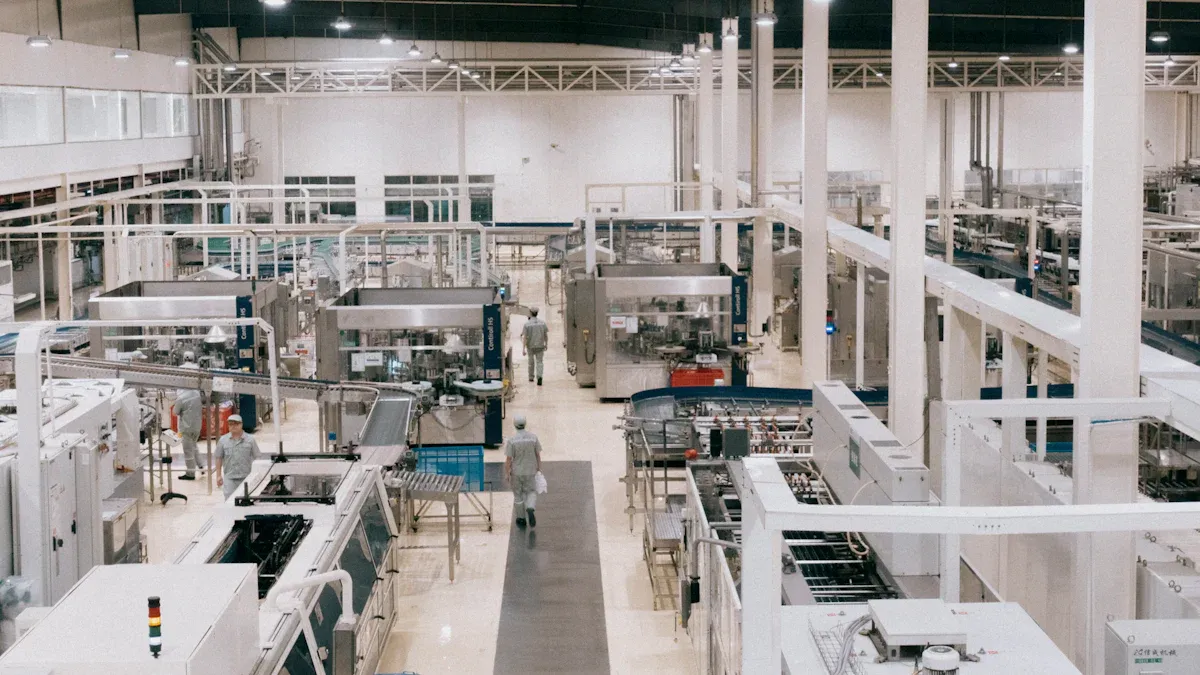
Image Source: unsplash
A vertical packing machine is tall and works from the top down. It uses vertical form fill seal technology. This machine makes, fills, and seals bags in one step. Many factories use it because it saves space. It works with many kinds of products. You can choose single-lane or multi-lane models. Multi-lane machines can pack up to 600 pouches each minute. Standard machines fill and seal 15 to 120 bags per minute.
Vertical packing machines let you pack in many ways. You can use them for pouches, sachets, stick packs, and flat pouches. They also make pillow bags, gusseted bags, 3 side seal bags, and block bottom bags. The table below shows the different packaging formats:
Packaging Format | Description |
|---|---|
Pouches | Flexible bags for many products |
Sachets | Small packets for one serving |
Stick Packs | Long, thin packs for single servings |
Pillow Bags | Simple bags, often used for snacks |
Gusseted Bags | Bags with sides that open for more space |
3 Side Seal Bags | Bags sealed on three sides |
Block Bottom Bags | Bags with flat bottoms for standing up |
Vertical packing machines are used for many products. Some common uses are:
Instant coffee powder
Milk powder and dairy items
Protein powder and supplements
Pharmaceutical powder
Spice and seasoning powder
Beverage powder
Health food packaging
OEM and contract packing
You will see these machines in food factories and health product plants. They are also used by contract packaging companies.
Vertical packing machines have many good points. They save space because they are compact. You can switch between stand-up and flat pouches easily. The machine works with many bag types and products. You use 20-30% less film than with pre-made pouches. It fills and seals bags quickly. The machine is good for food and non-food items.
Tip: If you need to pack many products in stand-up or flat pouches, a vertical packing machine is a flexible choice.
Vertical packing machines do not work for every job. You may need special parts for some pouch shapes. Thick or chunky products can be hard to pack. If you only pack one pouch type, a simpler machine might be better. You may need to adjust the machine for each new product or bag size.
Packing machines have different strengths and costs. The table below helps you see the main types:
Machine Type | Per-Bag Cost | Capex Range | Maintenance Cost | Best Use Case |
|---|---|---|---|---|
Premade Pouch | Higher ($0.010–0.020 per bag) | $80K–$200K | Lower (fewer moving parts) | Small/medium volumes, high flexibility, premium packaging |
VFFS | Lower ($0.005–0.010 per bag) | $40K–$300K | Higher (film threading, sealing) | High-volume production, low-cost packaging |
Multi-Lane | N/A | N/A | Higher (complex setups) | High-speed, high-volume applications |
Sachet | N/A | N/A | N/A | Small, single-use packaging |
If you want to spend less on each bag, VFFS machines are best for big jobs. Premade pouch machines cost more for each bag but give you nice and flexible packaging. Multi-lane machines pack many things at once, which is good for busy factories.
Think about a few things before picking a packing machine:
Choose what kind of product you will pack. Is it powder, liquid, or solid?
Check how many you need to pack each day. Fast machines help with big numbers.
Look at the type of package you want. Some machines make pouches, others make sachets or stick packs.
Think about hygiene rules. Food and medicine packing must follow strict rules.
Check how much it costs to own and fix the machine. Some machines need more care and parts.
Tip: Remember to add hidden costs like training, setup, and machine downtime to your budget.
Packing machines work for different products and industries. The table below shows some common matches:
Industry | Machine Type | Application Examples |
|---|---|---|
Food | Flow Wrappers, VFFS | Biscuit packaging, frozen food, powder, liquids |
Pharmaceuticals | Sachet Machines, Multi-Lane | Packing tablets, powders, granules |
Cosmetics | Stand-up Pouches | Shampoo, lotion packets |
Daily Chemicals | Multi-Lane Packing Machines | Detergents, personal care products |
You need packing machines that can fill and seal products safely. For food, you want machines that keep things fresh. For medicine, you must use machines that meet FDA and ISO rules. Cosmetics need packaging that looks nice and keeps the product safe.
Note: Picking the right packing machine for your product and industry helps you save money and keep quality high.
Every packing machine has its own strong points. Sachet and multi-lane machines are good for fast, single-use packs. Premade pouch machines let you use different pouch styles and look fancy. Vertical machines can pack many bag types and do not need much room. You should pick a machine that fits your product and how fast you want to pack. The table below can help you decide:
Package format | Likely machine class | When this is right |
|---|---|---|
Pillow bag, sachet | VFFS | Bulk granule, powder, or liquid, fast runs |
Stand-up doypack | Premade-pouch filler | Premium retail, many SKUs, slower speed |
Spout pouch | Dedicated spout filler | Liquid retail, controlled pour |
You can do better if you ask packaging experts for help. They can help you plan and stop mistakes. They also teach you about new machines. This can save you both time and money.
A sachet is a small, flat packet. A stick pack is long and narrow. You use sachets for powders, liquids, or granules. Stick packs work best for single servings, like instant coffee or drink mixes.
You should look at your product type, how many you need to pack, and your budget. Think about the package style you want. Ask a packaging expert for advice if you feel unsure.
Some machines can handle both powders and liquids. You may need to change filling parts or settings. Always check with the machine supplier before you buy.
Most modern packing machines have easy-to-clean parts. You can remove and wash contact parts. Regular cleaning keeps your machine safe and working well.


