
Views: 0 Author: Site Editor Publish Time: 2026-11-27 Origin: Site


A filling packing machine automates one main job: it puts product into containers and seals them through a set of steps that work together. Every cycle follows the same order, from container infeed to a closed, finished pack. This article walks through that sequence step by step. It then explains how metering methods adapt to liquids, pastes, and powders, which parts drive each stage, and how the system catches errors before they reach the output. Readers get a clear picture of how a filling machine keeps product volume and seal quality consistent at production speed.
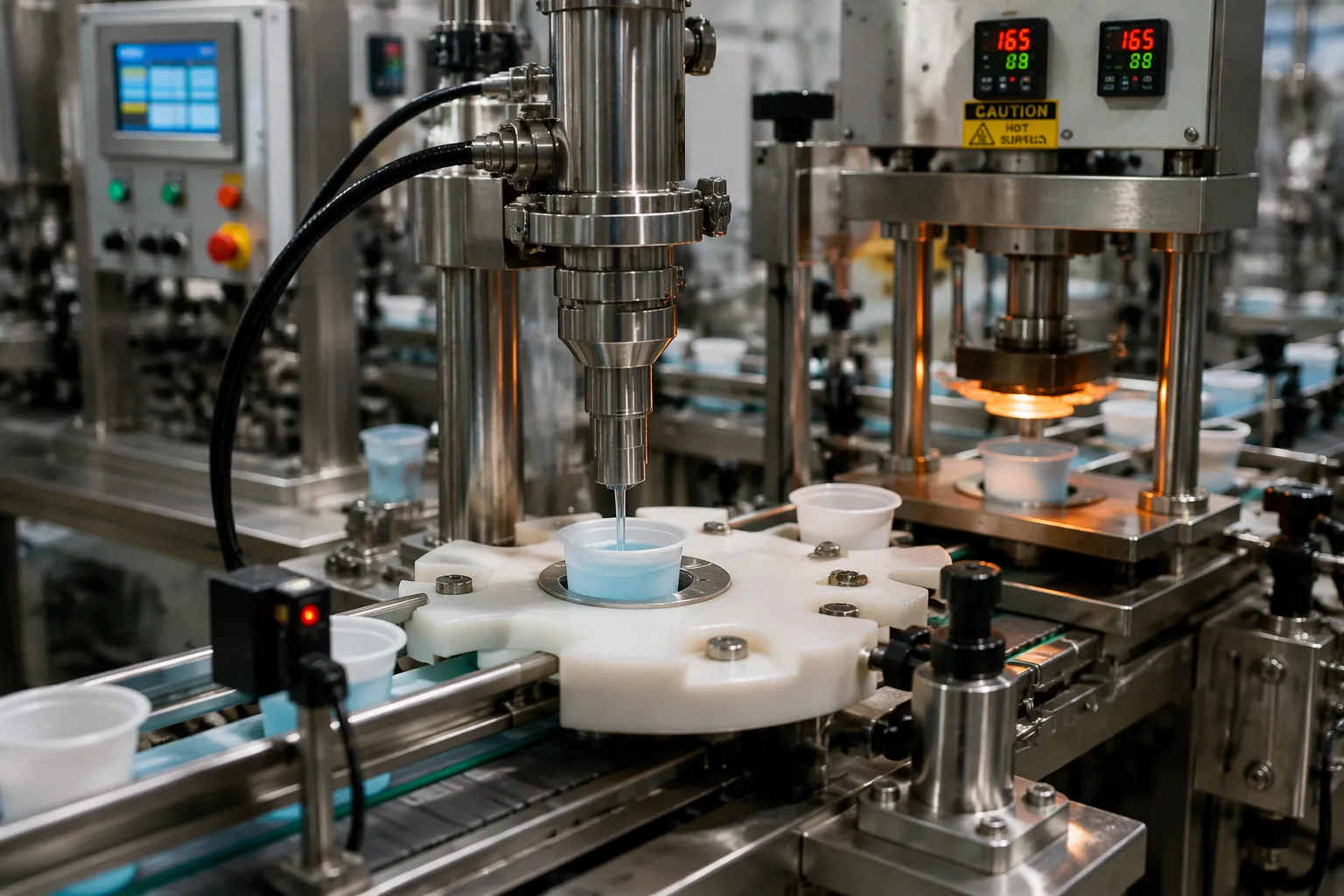
The basic operating sequence of an automatic filling machine follows a clear path. Product moves from storage to a container, then to a seal. Each stage depends on the one before it. This section breaks down that path into two main phases.
Containers move along a conveyor toward the filling station. A photoelectric sensor detects each container as it arrives. This sensor sends a signal to the machine's control system. A positioning device then holds the container in place. This device might use a star wheel, a timing screw, or a set of guide rails. The goal is simple: put the container directly under the nozzle.
For pouch-based lines, the process is different. Operators load preformed pouches into a bag magazine. A proximity sensor triggers a vacuum bag loader. Grippers hold the pouch steady. Vacuum suckers and a mechanical opener then pull the top of the pouch open. This step gets the pouch ready for filling. Automatic pouch filling machines use this sequence to keep pouches lined up and open.
Once the container sits in position, the nozzle lines up with its opening. The machine then dispenses product. There are several methods. Time-based dispensing opens a valve for a set duration. Volumetric filling measures a fixed volume of product. Piston fillers use a cylinder and piston to push a precise amount. Each method works for different products. The filling machine picks the method based on product type and container size.
Anti-drip features matter here. A drip-free nozzle cuts off product flow cleanly. This feature stops spills on the container rim. A clean rim is needed for a strong seal. After dispensing, the container moves to the sealing station. Heat sealing, for example, applies heat and pressure to close the pack. This transfer must stay in sync with the filling cycle.
Pouch filling and sealing machines handle this transfer differently. Grippers move the filled pouch to the sealing jaws. The jaws close and apply heat. Bag sealing then completes the pouch packaging process. Automatic pouch filling and sealing machines combine these steps into one continuous flow. Pouch packaging machines and pouch packing machines follow similar logic. Even a vertical form fill seal machine uses this same core sequence. Form-fill-seal machines and form fill seal machines work by building the bag, filling it, and sealing it in one cycle. Pouch filling machines and pouch packaging machine variants all share this basic structure. The filling packing machine coordinates every step through its control system.
How a product acts decides the metering method. A thin juice flows fast. A thick paste moves slowly. A powder drifts and packs. Bulk material enters through a hopper and rests in a storage tank or bin. The chosen mechanism then meters it before it reaches the container or bag. No single method wins everywhere. Each one fits a specific material.
Method | Best fit |
|---|---|
Gravity | Free-flowing liquids |
Piston | Pastes, sauces, thick gels |
Vacuum | Liquids drawn into a chamber |
Auger | Powders and granules |
Gravity fillers let product fall through a nozzle into the container. They work well for thin liquids. Piston fillers pull product into a cylinder, then push a set volume out. They handle pastes and chunky sauces well. Vacuum fillers draw liquid into a chamber, then release it. Each design has its own job on an automatic filling machine.
Nozzle size matters. A wide nozzle speeds up thick paste. A narrow one controls thin liquid. Drip control stops thin liquids from splashing the rim. A clean rim helps make a strong seal later in the line. Operators adjust these parts when they switch products.
An auger is a rotating screw inside a tube. It turns a set number of times and drops a measured dose of powder. Screw speed and turn count set the dose. Dust control features, such as shrouds or extraction ports, keep fine powder contained. This matters on pouch filling machines, where stray powder can mess up the seal area.
Powder often runs on automatic pouch filling machines and form-fill-seal machines. A vertical form fill seal machine builds the bag, fills it, and closes it in one cycle. Pouch filling and sealing machines, automatic pouch filling and sealing machines, pouch packaging machines, and every pouch packaging machine variant share one rule: match the meter to the material. The filling and sealing stages stay in sync on each platform. A well-matched filling machine keeps dose weight steady across a long run.
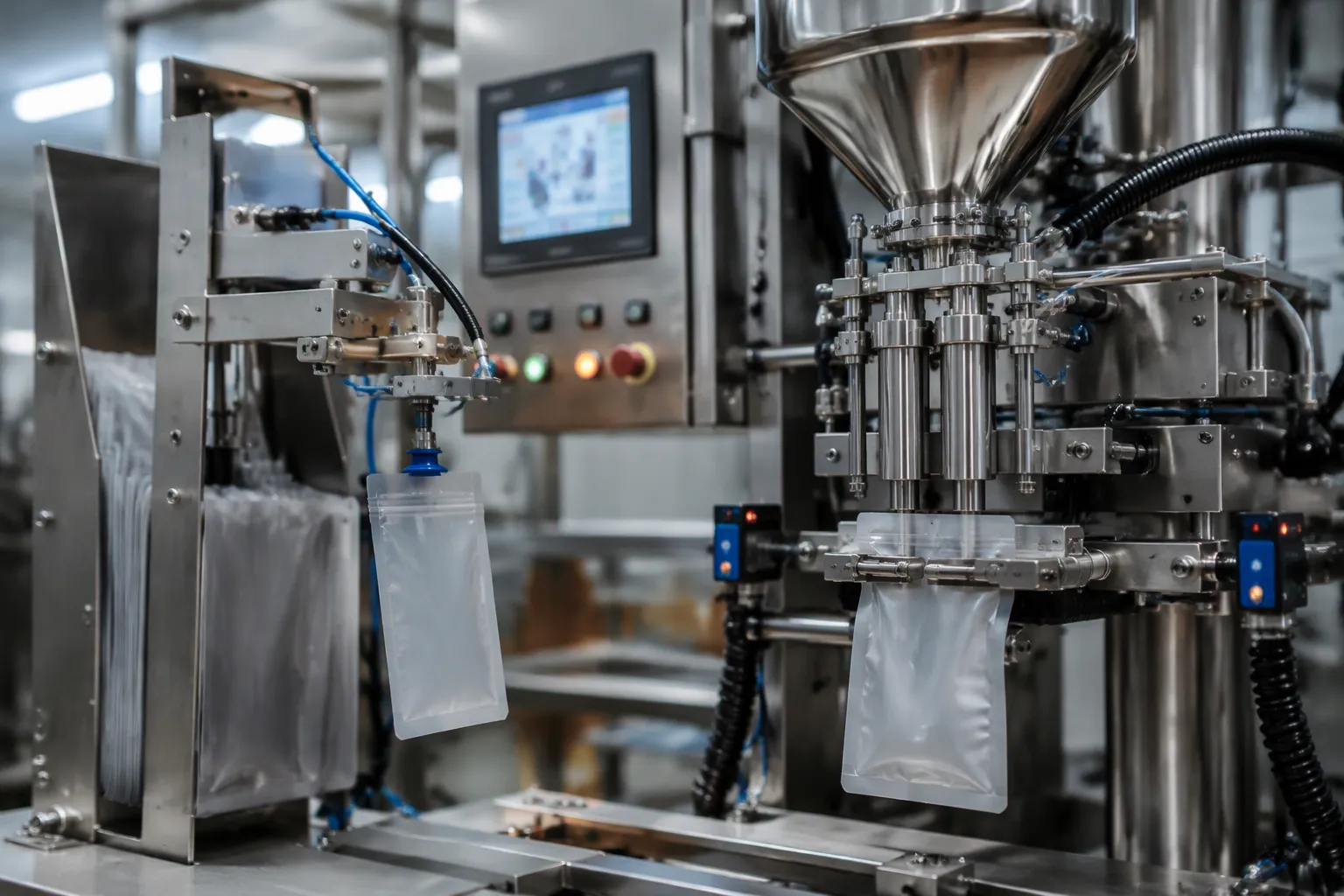
Every part on the line does one job. Pumps move liquid product from the tank to the nozzle. Nozzles shape the flow and point it into the container opening. Hoppers hold bulk material and feed it down to the metering unit. On pouch systems, a bag magazine stores flat pouches. A vacuum sucker pulls one pouch free. Grippers then hold it steady during filling and sealing.
These parts work as a team. A weak pump starves the nozzle. A misaligned gripper drops the pouch. Common parts of pouch packaging machines include the magazine, the suckers, the grippers, and the fill head. A rotary pouch machine carries pouches around a circle of stations. A rotary premade pouch filling and sealing machine uses this layout to run several pouches at once. The same logic applies to bag filling and sealing machines and to form-fill-seal machines.
Part | Role |
|---|---|
Pump | Moves liquid product to the nozzle |
Nozzle | Directs flow into the container |
Hopper | Stores and feeds bulk material |
Bag magazine | Holds flat pouches ready for loading |
Vacuum sucker | Pulls a single pouch from the stack |
Gripper | Holds the pouch during fill and seal |
A programmable logic controller, or PLC, works as the brain. It times every action on the filling packing machine. Infeed starts. The nozzle opens. The seal jaws close. The PLC keeps these events in order. Photoelectric sensors report where the container is. Proximity sensors confirm a pouch is there. The PLC reads those signals and adjusts the cycle.
Timing errors cause real problems. A pouch may reach the fill head late. A container may sit off-center. The PLC catches these conditions and pauses the cycle. This coordination keeps filling and sealing parts in step. It also protects the product and the pack. Every automatic filling machine depends on this control layer. The same holds for automatic pouch filling machines, pouch filling and sealing machines, and automatic pouch filling and sealing machines. Pouch packaging machines, pouch packing machines, and every automatic pouch packing machine share this design. So do pouch filling machines, pouch packaging machine variants, and the vertical form fill seal machine. A filling machine only runs smoothly when its controls and sensors agree.
Several faults can disrupt a cycle. Each one leaves a signal the machine can read.
A container is missing at the filling station.
A container sits off-center under the nozzle.
A pouch arrives closed or fails to open.
Product supply in the hopper runs low.
Product drips onto the container rim.
Photoelectric sensors watch for containers on the conveyor. A gap in the beam means no container. Proximity sensors confirm a pouch sits in the grippers. A vacuum switch reports whether the suckers opened the bag. Level sensors in the hopper track product supply. On pouch filling machines, a missed pouch shows up as an empty gripper position.
The PLC reads these signals every cycle. It compares them against the expected sequence. A mismatch triggers a stop or an adjustment. The machine does not guess. It waits for a clear signal before it acts.
Prevention features stop many faults before they start. No-container-no-fill logic is a common example. The automatic filling machine holds the nozzle closed when no container sits below it. Product stays in the line. The conveyor keeps moving.
Anti-drip nozzles cut the flow cleanly at the end of each dose. A clean rim supports a strong seal at the sealing station. This matters on pouch filling and sealing machines, where product on the seal area weakens the bond. Dust shrouds play a similar role on powder lines. They keep fine material away from the seal zone.
These features support steady output on pouch packaging machines and form-fill-seal machines. They do not remove every fault. Operators still check dose weight and seal quality at intervals. A well-set filling machine catches the common errors and flags the rest. That balance keeps pouch packaging machine lines running with fewer rejects.
A filling packing machine follows a set order. Containers come in, sensors line them up, nozzles fill them with product, and the pack goes on to sealing. Each stage relies on the one before it.
Two things stand out. Accuracy matters at every step, from placing the container to a clean cut-off at the nozzle. The filling method must also fit the material, whether that means gravity for thin liquids or an auger for powders. A filling machine built around those two ideas keeps output steady at production speed.
Containers travel along a conveyor toward the fill station. A photoelectric sensor spots each one. A positioning device then holds it under the nozzle. Pouch lines work differently. A vacuum loader pulls a pouch from the magazine, and grippers hold it open. This first step sets up every step after it.
A piston filler handles most pastes. It draws product into a cylinder, then pushes a set volume out through the nozzle. Wide nozzles help thick material flow faster. Thin liquids need narrow nozzles and drip control instead. The machine matches the meter and nozzle to the product.
Usually not well. Liquids need pumps, gravity flow, or pistons. Powders need an auger and dust control. Some lines swap fill heads between runs. Pouch packaging machines often run one product type per configuration. Matching the meter to the material keeps dose weight steady.
A photoelectric sensor watches the conveyor. A gap in its beam means no container. The PLC then holds the nozzle closed. This no-container-no-fill logic keeps product in the line. Proximity sensors do a similar job on pouch lines by confirming a pouch sits in the grippers.
Anti-drip nozzles cut flow cleanly at the end of each dose. A clean rim supports a strong seal. Powder lines add dust shrouds to keep fine material away from the seal zone. Operators still check seal quality at intervals. These features reduce rejects but do not remove every fault.


