
Views: 0 Author: Site Editor Publish Time: 2026-09-29 Origin: Site


Mismatched packaging equipment carries steep hidden penalties across the production floor. Incorrect dosing mechanisms inevitably lead to product give-away, slowly eroding profit margins with every cycle. They cause compromised seals, excessive downtime, and degraded product integrity that ultimately ruins brand reputation. Scaling production across diverse product lines presents a massive engineering challenge. Facility managers often need to process personal care creams on one shift and pharmaceutical capsules on the next. Generic machinery simply fails in these environments. It cannot accommodate varying material rheologies like flowability, viscosity, and fragility. It also struggles to meet the stringent accuracy tolerances required by modern regulatory bodies. Selecting the correct dosing and packing machines demands a systematic evaluation framework. You must align product physical characteristics directly with specific mechanical dosing principles. You also need to match these systems to flexible or rigid packaging formats while maintaining strict compliance standards.
Material Rheology Dictates the Mechanism: Free-flowing granules, cohesive powders, and high-viscosity pastes each require distinct dosing technologies (e.g., multi-head weighers, augers, or piston fillers) to maintain accuracy and prevent equipment failure.
Accuracy vs. Throughput Trade-offs: Volumetric dosing offers high speed for uniform products, while gravimetric (weight-based) dosing provides precision for high-value or variable-density materials.
Format Flexibility Impacts ROI: Dedicated multi-line systems maximize output for single formats (like stick packs or sachets), whereas premade pouch machines offer versatility for frequent SKU changeovers across zipper bags and aluminum foil pouches.
Validation is Non-Negotiable: Factory Acceptance Testing (FAT) using actual production materials under real-world environmental conditions is critical to mitigating implementation risks.
Establishing baseline metrics is the first step in evaluating packaging equipment. You cannot improve what you do not measure. Calculate acceptable margins for fill accuracy based on product value and regulatory requirements. Determine the target throughput in pouches or bottles per minute (PPM) required to meet production quotas. Calculate Overall Equipment Effectiveness (OEE) by multiplying availability, performance, and quality rates. This metric provides a realistic view of actual manufacturing productivity rather than theoretical machine speeds.
To establish a robust baseline, follow these specific measurement protocols:
Define the target weight and acceptable upper and lower control limits (UCL and LCL) for every SKU on the production schedule.
Calculate the standard deviation of fill weights across a continuous 1,000-cycle run to determine true mechanical repeatability.
Determine the exact PPM required to hit daily shift targets, factoring in planned maintenance stops and sanitation cycles.
Measure current changeover times from the last good product of run A to the first good product of run B to establish a baseline for SMED improvements.
Volumetric dosing measures product by physical volume. It works best for materials with highly consistent bulk density. Volumetric systems offer lower initial equipment investment and achieve higher operational speeds. Gravimetric dosing measures product by exact weight using load cells. You need this technology for materials with fluctuating densities. It is mandatory for high-value pharmaceuticals and operations requiring strict regulatory compliance where under-filling is illegal and over-filling destroys profitability.
Sanitation standards dictate the physical design of the machinery. Clean-in-Place (CIP) systems automate internal cleaning without requiring manual disassembly of dosing heads. Sterilize-in-Place (SIP) adds thermal or chemical sterilization for aseptic packaging. Food-grade and pharmaceutical applications require strict FDA and cGMP compliance. This necessitates 316L stainless steel contact parts, continuous smooth welds, and the elimination of dead legs where bacteria could accumulate during production runs.
Assess powder flowability using the angle of repose. Pour the powder onto a flat surface and measure the angle of the resulting cone. Lower angles indicate better flowability. Measure the compressibility index to understand how the material behaves under mechanical pressure or vibration. Free-flowing powders like granulated sugar and table salt move easily through gravity-fed systems. Cohesive, non-free-flowing powders like baking flour, milk powder, and active pharmaceutical ingredient (API) blends clump together. They require active mechanical force to move consistently through a hopper.
Powder Type | Angle of Repose | Flow Characteristics | Recommended Dosing System |
|---|---|---|---|
Highly Free-Flowing | 25 - 30 degrees | Particles separate easily, no bridging | Volumetric Cup Filler |
Free-Flowing | 31 - 35 degrees | Consistent flow under gravity | Vibratory Feeder |
Cohesive | 46 - 55 degrees | Clumps easily, forms rat-holes | Auger Filler with Agitator |
Highly Cohesive | > 56 degrees | Requires constant mechanical force | Auger Filler with Vacuum Assist |
Servo-driven auger screws force non-free-flowing powders into packaging. The rotating screw sits inside a conical funnel. As the servo motor turns the screw, the flighting pushes a specific volume of powder down through the tooling. The pitch of the screw determines the exact volume dispensed per revolution. Specialized powder packing machines adapt auger and micro-dosing systems for capsule filling operations. Precise amounts of powdered or granular ingredients deposit directly into empty pharmaceutical capsules at high speeds.
Implementation carries specific material handling risks. Powder bridging occurs when material forms an arch over the discharge opening, blocking hopper flow. Rat-holing creates empty vertical tunnels through the material while powder clings to the hopper walls. Aeration changes bulk density during transport, throwing off volumetric accuracy. Mitigate these risks using custom slow-speed agitators that constantly push powder into the auger flights. Install vibration aids on the hopper exterior. Implement vacuum dust extraction at the filling nozzle to keep sealing areas clean and ensure hermetic pouch seals.
Volumetric cup fillers handle highly uniform, free-flowing powders efficiently. A rotary plate sweeps material into fixed-volume cups. The plate rotates over a discharge chute, dropping the measured powder into the package. Specify vibratory feeders when handling delicate or fragile materials. Vibratory pans use electromagnetic coils to move product forward gently. They maintain product integrity without applying destructive mechanical shear or crushing forces.
Packing brittle or fragile granules presents unique mechanical challenges. Freeze-dried coffee, pharmaceutical capsules, and roasted nuts break easily under impact. Evaluate equipment drop heights carefully during the design phase. Minimize transition points between the multi-head weigher and the pouch opening. Use specialized internal baffles within the discharge chutes. These baffles redirect kinetic energy, slowing the product descent and preventing physical degradation during the dosing phase.
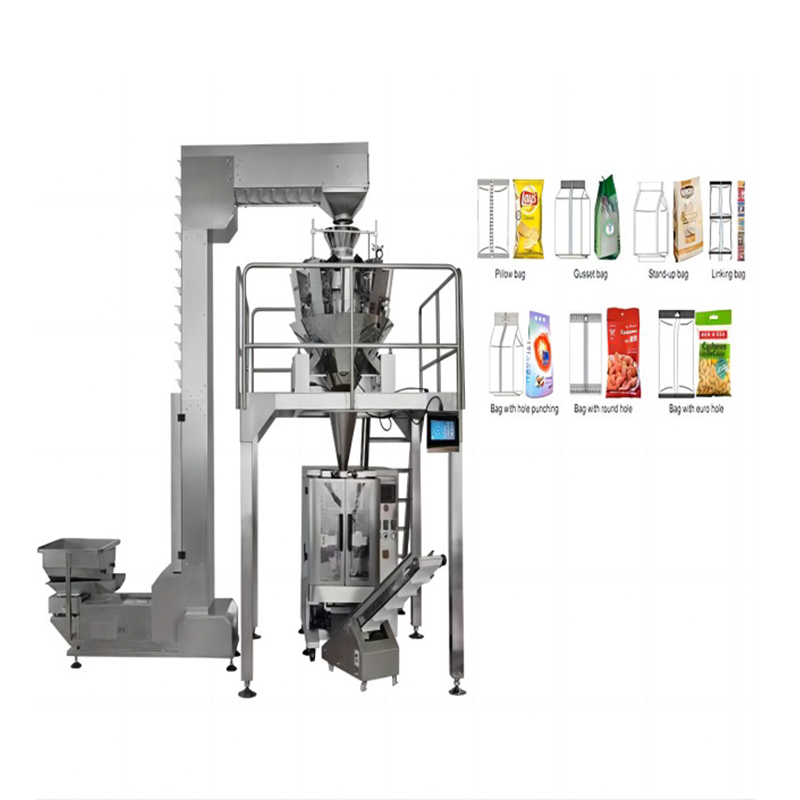
Multi-head weighers provide high-speed gravimetric accuracy for granular products. A central vibratory cone distributes product outward to radial feed pans. These pans drop material into a series of weigh hoppers. The central computer processor reads the exact weight in all hoppers simultaneously. It calculates thousands of potential combinations in milliseconds to find the exact match for the target weight. Calibration requirements are strict. Load cell sensitivity dictates final accuracy. Environmental vibration from nearby heavy equipment can severely impact weighing precision, requiring structural isolation.
A premade pouch granule packing machine utilizes sequential rotary or linear stations to process packaging. The operation follows a strict mechanical sequence:
Magazine Loading: Suction cups grab individual flat pouches from a high-capacity magazine.
Pouch Transfer: Gripper arms secure the pouch edges and move it through the rotary stations.
Zipper Opening: Mechanical fingers and vacuum cups pull the top seal apart.
Inflation: Targeted air blasts open the bottom gusset to create a wide filling target.
Dosing: The synchronized multi-head weigher drops the exact product dose into the open pouch.
Gas Flushing: Nitrogen displaces ambient oxygen to create Modified Atmosphere Packaging (MAP).
Heat Sealing: Serrated or flat heated jaws apply precise pressure to weld the film shut.
Format versatility drives equipment selection in modern facilities. These machines handle diverse premium formats on a single frame. You can run stand-up zipper bags, flat-bottom pouches, and aluminum foil pouches with minimal tooling changes. Premade pouches offer premium retail aesthetics and superior print quality. They also drastically reduce machine complexity and maintenance requirements compared to Vertical Form Fill Seal (VFFS) systems that form bags from flat roll stock.
Categorize liquids by viscosity using centipoise (cP) ratings before selecting a pump. Match the viscosity profile directly to the pump type. This matching prevents cavitation, inconsistent fills, and premature pump failure.
Gravity fillers handle thin, free-flowing liquids with low cP ratings. Specify these for water, light oils, and liquid medications. Piston fillers handle thick creams, lotions, and heavy pastes. The internal cylinder volume dictates the precise fill size. The pneumatic or servo-driven piston stroke provides the heavy mechanical force necessary to push high-viscosity personal care products through the nozzle. Peristaltic pumps serve sterile or pharmaceutical applications. Rollers squeeze flexible tubing to move the liquid forward. The product only contacts the interior of the tubing. This completely prevents cross-contamination and simplifies cleaning procedures.
Pump Technology | Ideal Viscosity Range (cP) | Primary Mechanical Advantage | Common Applications |
|---|---|---|---|
Gravity Filler | 1 - 1,000 | Simple operation, gravity-fed flow | Water, Juices, Light Oils |
Peristaltic Pump | 1 - 3,000 | Zero product contact with pump mechanics | Eye Drops, Sterile Vials, Lab Reagents |
Piston Pump | 3,000 - 100,000+ | High-pressure volumetric displacement | Lotions, Peanut Butter, Cosmetic Creams |
Rotary Gear Pump | 5,000 - 50,000 | Continuous flow for large volumes | Shampoos, Motor Oils, Syrups |
High-volume stick packs or sachets require specialized mechanical architecture. A multi-line liquid and paste packing machine processes multiple lanes simultaneously from a single web of film. You might run ketchup, lotions, or liquid medications across 4, 6, or 10 parallel lanes. Engineering challenges multiply with each additional lane. You must ensure uniform fluid pressure in the main manifold. You must also guarantee identical fill volumes across every single nozzle to maintain compliance and prevent film tracking issues.
Handle liquids with suspended solids carefully to maintain product texture. Sauces with seeds, chunky salsas, or exfoliating body scrubs require specialized rotary valves. Standard check valves will crush the particulates, ruining the product and potentially clogging the nozzle. Temperature-sensitive pastes require heated, water-jacketed hoppers. Maintaining a specific, elevated temperature range ensures consistent flowability during the filling process and prevents the product from solidifying in the pipework.
Match dosing heads to the final container type using a strict mechanical framework. Flexible packaging integration requires precise electrical timing. Dosing heads must synchronize perfectly with the jaw movements of VFFS, stick pack, and sachet formers. Rigid packaging demands entirely different mechanics. Dosing nozzles must align exactly with indexing conveyors or star wheels. This alignment applies to filling HDPE bottles, glass jars, and blister packing machines. The dosing system must track the container speed to prevent spills.
Upstream equipment dictates downstream dosing requirements. High-shear mixers and granulators add liquid binders to cohesive powders. They knead the mixture and transform it into free-flowing granules. This upstream process shifts the required downstream dosing technology entirely. You move from auger fillers to multi-head weighers. Downstream logistics require seamless mechanical handoffs. The packaging machine must feed smoothly to bottle unscramblers, inline checkweighers, metal detectors, and automatic cartoners.
Open PLC architectures and SCADA integration allow comprehensive data logging. This integration provides batch traceability required for CFR 21 Part 11 compliance in pharmaceutical manufacturing. It allows centralized monitoring of machine faults, production rates, and parameter changes.
Evaluate Single-Minute Exchange of Die (SMED) capabilities for changeover efficiency. Fast changeovers dictate overall plant profitability in high-mix, low-volume environments. Tool-less changeovers reduce downtime significantly by replacing bolts with quick-release clamps. Recipe-driven Human-Machine Interface (HMI) settings automate mechanical adjustments via servo motors. Modular dosing heads allow operators to swap entire assemblies quickly. One head can be cleaned offline while the second head continues production.
Theoretical machine specs are insufficient for final equipment approval. Structure a rigorous Factory Acceptance Testing (FAT) protocol using exact production materials. Run the actual pouch films, bottles, and caps you will use in daily production. Replicate the exact environmental conditions of your facility, including ambient humidity and temperature, as these drastically affect powder flowability and film sealing characteristics.
Outline a strict checklist for FAT execution:
Conduct continuous run tests lasting a minimum of four hours to evaluate thermal stability in the sealing jaws.
Perform seal integrity testing using vacuum chambers or burst testers on random samples.
Conduct standard deviation analysis of fill weights across hundreds of cycles to verify dosing accuracy.
Simulate emergency stops and power failures to test machine recovery protocols.
Verify all safety interlocks and guarding mechanisms function correctly.
Focus heavily on operator training and long-term maintenance schedules to ensure continuous production. Define replacement intervals for critical wear parts based on cycle counts rather than calendar days. Monitor auger tooling, Teflon sealing jaws, and pneumatic piston seals for signs of degradation. Track energy consumption metrics and compressed air usage to optimize operational efficiency. Comprehensive, hands-on training ensures operators can troubleshoot minor faults, adjust HMI parameters, and clear jams before they escalate into major production stoppages.
Audit your current product portfolio to document the exact viscosity, bulk density, and flowability metrics for every SKU.
Draft a standardized Factory Acceptance Testing (FAT) document that mandates testing with your specific facility's ambient temperature and humidity levels.
Standardize your packaging formats to minimize the number of required changeover parts and reduce daily mechanical adjustments.
Implement a cycle-count-based maintenance schedule for all high-wear components like auger flights, piston seals, and heating elements.
A: Volumetric dosing measures product by physical volume using cups or auger revolutions. It operates at high speeds and costs less, but requires highly consistent product bulk density. Gravimetric dosing measures product by exact weight using load cells. It provides superior precision and is mandatory for fluctuating densities or high-value materials where accuracy outweighs raw speed.
A: Cohesive powders require active mechanical assistance to maintain flow. Install custom hopper agitators to break up clumps continuously. Use vibration aids on the hopper exterior to encourage downward movement. Implement vacuum dust extraction at the nozzle to keep the sealing jaws clean and prevent powder bridging in the feed throat.
A: Peristaltic pumps move liquid by squeezing flexible tubing with external rollers. The product never touches the mechanical pump components. This completely eliminates cross-contamination risks. It also allows for rapid changeovers simply by replacing the sterile tubing, making it ideal for strict pharmaceutical hygiene standards and aseptic environments.
A: Generally, no. Powders and liquids require entirely different dosing mechanisms, hopper designs, and sealing parameters. While some modular base machines allow swapping dosing heads, it is highly inefficient for daily production. Dedicated machines provide better reliability, accuracy, and sanitation for specific material types.
A: A FAT is a critical validation process conducted at the manufacturer's facility before equipment shipment. It uses your actual product, packaging materials, and environmental parameters to prove the machine meets all agreed-upon performance, accuracy, and safety specifications under real-world conditions before you authorize delivery.
A: A multi-head weigher distributes product into multiple individual weigh hoppers. The central processor reads the weight in each hopper simultaneously. It calculates thousands of potential combinations in milliseconds to find the exact group of hoppers that matches your target weight, then discharges them together into the package.


