
Views: 0 Author: Site Editor Publish Time: 2026-11-26 Origin: Site


A filling packing machine is equipment that measures a product and deposits it into a container, then closes or packs that container. It automates two jobs that once required separate stations and steady hands. Think of a liquid pouch line that fills, seals, and cuts without an operator touching the film. Accuracy and repeatability separate it from manual work. The machine handles liquids, powders, granules, and pastes across many container formats. We will walk through the working sequence, the main machine types, the parts inside, and the factors that guide a sound choice. You will learn how filling and packing merge into one continuous flow.
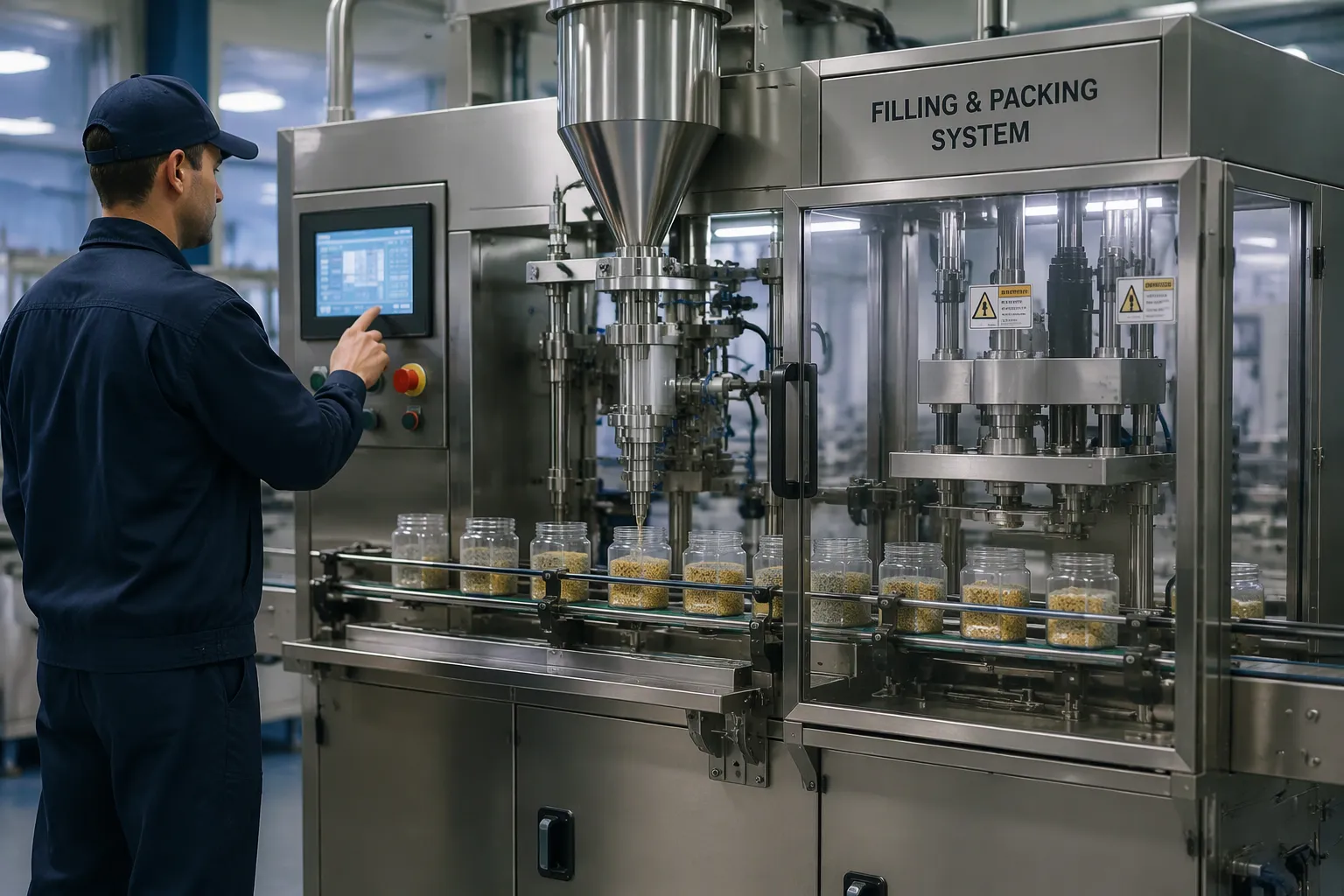
A filling packing machine is a single unit that measures a product, drops it into a container, and then closes that container. It replaces two manual jobs with one automated flow. The equipment handles liquids such as juice and detergent, powders such as flour and spice blends, granules such as coffee beans and rice, and pastes such as tomato sauce and cream. Each product type needs a different dosing method, so the machine's filling head changes with the material. A liquid may run through a piston or gravity filler. A powder may need an auger or a screw feeder. We see the same core idea across all of them: measure a set amount, release it, and move the container onward. That repeatability is the real value. Operators no longer guess at portion size, and output stays consistent from the first pack to the last.
A standalone filling machine does one job. It deposits product into a container and stops there. Someone else seals, labels, or boxes the item later. A filling packing machine goes further. It combines the filling stage with a sealing or packing stage inside one frame. The product goes in, the machine closes the bag or pouch, and a finished pack comes out.
Machine type | What it does | Where it fits |
|---|---|---|
Standalone filler | Measures and deposits product only | Lines with a separate sealing station |
Filling packing machine | Fills, then seals or packs in one pass | Lines that need finished packs from one unit |
This difference matters for workflow. A combined unit shortens the line, cuts handling between stages, and reduces the floor space we need. It also keeps the fill and the seal synchronized, so the packaging stays tight and uniform. A standalone filler still makes sense when a plant already owns sealing equipment or runs several products through shared downstream stations. Neither choice is better in every case. The right pick depends on the packing volume, the container format, and the space available. For many small and mid-size operations, though, one machine that fills and packs saves time and labor. That is why the combined design has become so common in modern packaging lines.
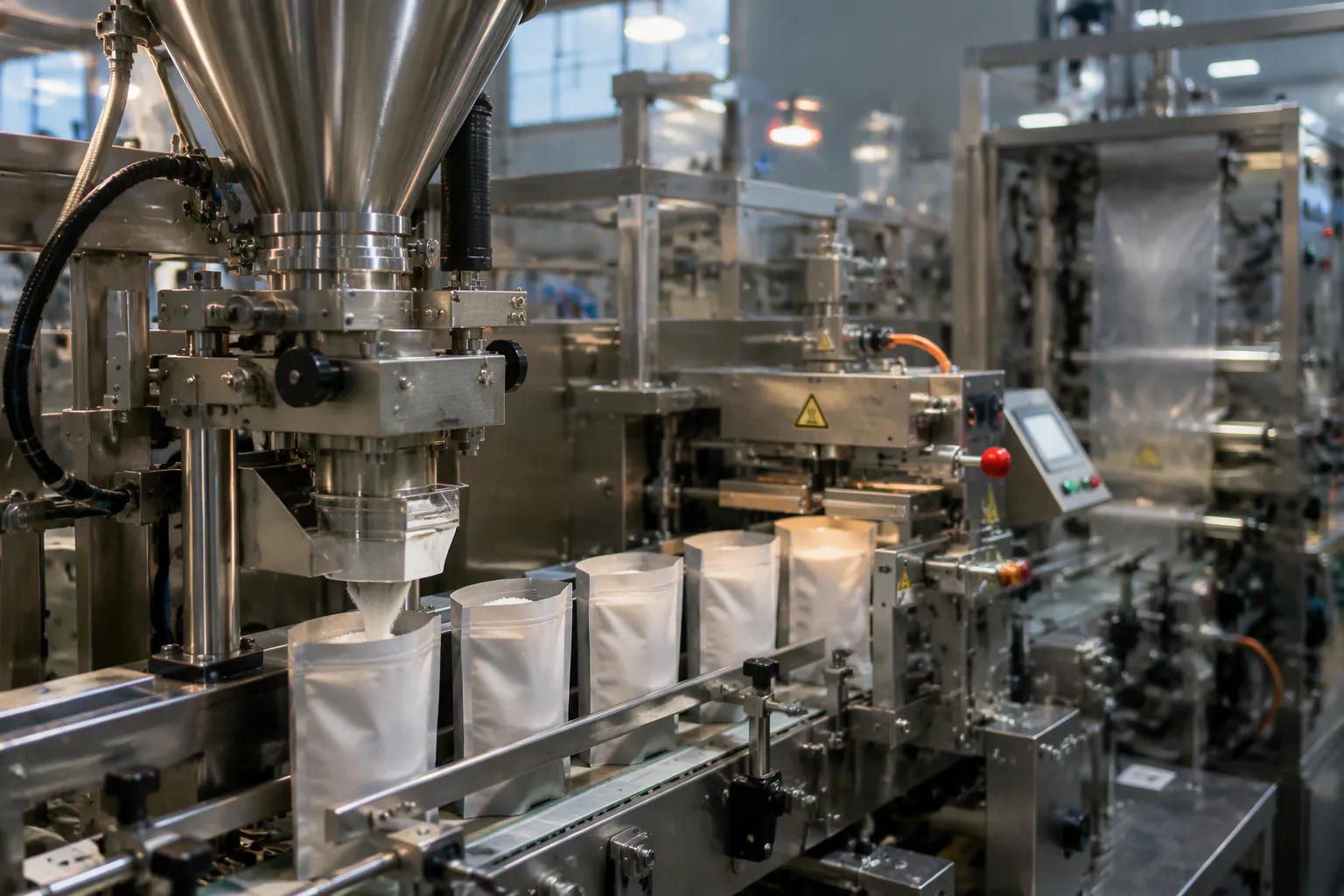
Every filling packing machine follows the same basic rhythm. Product moves in, a measured dose drops into each container, and a finished pack moves out. The details change with the machine type, but the sequence holds. Here is how the packing process unfolds on a typical line.
Product feed. A hopper or tank holds the material. A pump, auger, or gravity line moves it toward the dosing head.
Measuring. The dosing head releases a set volume or weight. A piston measures liquids. An auger measures powders. A timed valve handles granules.
Filling. The measured dose drops into the container below. The container may be a rigid bottle, a premade pouch, or film formed into a bag on the machine itself.
The working mechanism stays synchronized throughout. A sensor confirms each container is in place before the fill begins. This step protects accuracy and keeps the packing process clean. Poor alignment here causes spills, short fills, and rejects downstream.
Once the product is inside, the machine closes the container. Pouch and vertical form fill seal machines rely on heat sealing. A heated jaw presses the film against itself. Temperature and pressure are controlled together, so the seal forms evenly without burning or weakening the material. The pouch packaging process then moves to cutting. A blade separates the finished pack from the film web or the next bag in line. Finally, the pack discharges onto a conveyor or into a collection bin.
This final stage carries real weight in the overall packing process. A weak seal leaks. An overheated seal scorches. Both outcomes waste product and film. Modern machines hold the sealing parameters steady across long runs, which keeps every pack consistent.
The full sequence — feed, measure, fill, seal, cut, discharge — repeats continuously. Operators set the parameters once, then monitor. That continuity is what makes automated packing process lines so productive. It also explains why filling, sealing, and labeling stations often sit close together on one frame. Each stage hands off to the next without manual handling.
Rotary packing machines follow this same logic at higher throughput. They index containers around a circle, performing filling and sealing at fixed stations. Vertical form fill seal machines build the bag, fill it, and seal it in one vertical flow. Premade pouch systems pick a bag from a magazine, open it, fill it, and seal it. Each design applies the same core sequence to a different container format.
Premade pouch machines start with a stack of finished bags. A bag magazine holds the supply. The unit picks up each pouch, opens it with air or mechanical fingers, and presents it to the fill head. After filling, it tucks the top, then seals. Side gusset bags get extra care here, since the gusset must fold flat before the jaw closes. An automatic zipper opener handles resealable pouches, so the zipper track stays clear of product. These pouch filling and sealing machines suit flat, stand-up, and zipper formats. Automatic pouch filling and sealing machines run the same cycle without an operator feeding bags. That makes them a strong fit for medium and high output lines. Smaller plants often choose automatic pouch packing machines for the same reason: one unit covers bag filling and sealing in a single pass.
A rotary packing machine carries containers around a rotating platform. Each station performs one task: filling, sealing, capping, or labeling. The rotating mechanism indexes the platform in steps, so stations work in parallel. This design allows simultaneous filling, capping, and labeling on one frame. Operating a rotary packing machine rewards steady settings, since every station repeats the same motion. Vertical form fill seal units build the bag from film, fill it, and seal it in one downward flow. Automatic liquid fillers handle bottles and jars where speed matters. Hand sealing machines remain a practical choice for low volume, samples, and short runs. Each type fits a different job, and none is wasted.
Type | Best fit |
|---|---|
Premade pouch | Flat and stand-up pouches, zipper formats |
Rotary | High output, multi-station work |
Vertical form fill seal | Film-based bag filling |
Hand sealer | Low volume and samples |
Every unit shares a common skeleton. A hopper or tank holds the product. A pump, auger, or gravity line moves it toward the dosing head. That dosing head is the heart of the filling mechanism. It releases a set volume or weight into each container. Piston fillers suit liquids. Augers suit powders. Timed valves suit granules.
The rest of the frame supports that core. A conveyor or indexing platform carries containers into position. Sensors confirm each one is aligned before the fill starts. The sealing station sits downstream, with heated jaws that control temperature and pressure together. Film or pouch handling parts feed the packaging material. A control panel ties it all together, and operators set the parameters there once.
Start with the product. A liquid, powder, granule, or paste each needs a different filling system. Next, match the container format. A premade pouch line differs from a film-based one. Then weigh output against accuracy. Higher speed often trades against fill precision, so define the tolerance your product truly needs.
Factor | What to check |
|---|---|
Product type | Liquid, powder, granule, or paste |
Container | Bottle, flat pouch, stand-up pouch, or film |
Output | Packs per minute your line requires |
Accuracy | Fill tolerance your product allows |
Space | Floor area and line layout |
Fit matters as much as specs. Measure the available floor space first. Confirm the machine handles your pouch or bottle size without custom tooling. Ask how easily the filling system switches between products. A filling packing machine that changes over quickly earns its cost across many short runs. Finally, check seal quality on samples before you commit.
A filling packing machine measures a product, deposits it into a container, and then seals or packs that container in one pass. It turns two separate jobs into a single automated flow. The working sequence stays consistent: product feeds in, a dosing head releases a measured amount, and the container is sealed, cut, and discharged. Premade pouch units, rotary systems, vertical form fill seal machines, and hand sealers each apply that sequence to a different format. Choose by product type, container, output, accuracy, and floor space. Our FAQs cover the finer details. A well-matched machine keeps your packing line steady for years.
It manages liquids, powders, granules, and pastes. Each type needs a matching dosing head. A pouch line might run sauce. A powder line runs flour. The filling packing machine adapts through changeable tooling. Operators switch heads between runs.
Rotary packing machines index containers in a circle. Rotary packing machines suit high output. A rotary packing machine needs steady settings. Rotary packing machines cut handling between stages. Rotary packing machines save floor space. Rotary packing machines reward maintenance. Rotary packing machines fit multi-station work. Rotary packing machines remain common. Rotary packing machines pair with pouch infeed. Rotary packing machines handle capping too. Rotary packing machines run continuously.
Flat, stand-up, and zipper pouch styles all run on premade systems. A pouch magazine feeds each bag. The machine opens, fills, and seals it. Side gusset pouch designs need careful folding. Zipper pouch tracks stay clear of product. Each pouch leaves sealed.
Clean sealing jaws daily. Check fill accuracy with sample weights. A packing line rewards small habits. Inspect pouch seals for weak spots. Track packing speed against targets. Replace worn pouch guides early. Good packing practice prevents downtime. Review packing logs weekly. Adjust packing settings after product changes. Solid packing routines protect output.
Yes. A combined filling packing machine fills and seals in one pass. It shortens the packing line and reduces handling. Pouch output stays consistent. The packing process repeats without manual steps. This packing design suits many products. Packing speed stays steady across runs.


