
Views: 0 Author: Site Editor Publish Time: 2026-11-24 Origin: Site


Food packaging machines are automated, multi-function devices that form, fill, seal, and label food products. These systems enclose food in containers, bags, or pouches so it can travel safely from a plant to a store shelf. They handle fresh, frozen, dry, and shelf-stable foods with equal ease.
Modern packaging machinery relies on automation to repeat each motion with precision. A single food-packaging machine may combine filling, sealing, and labeling in one pass. That speed matters when a plant packs thousands of units per shift.
Readers will learn about the main types of food packaging machines, how packaging machines work, and where each design fits best.
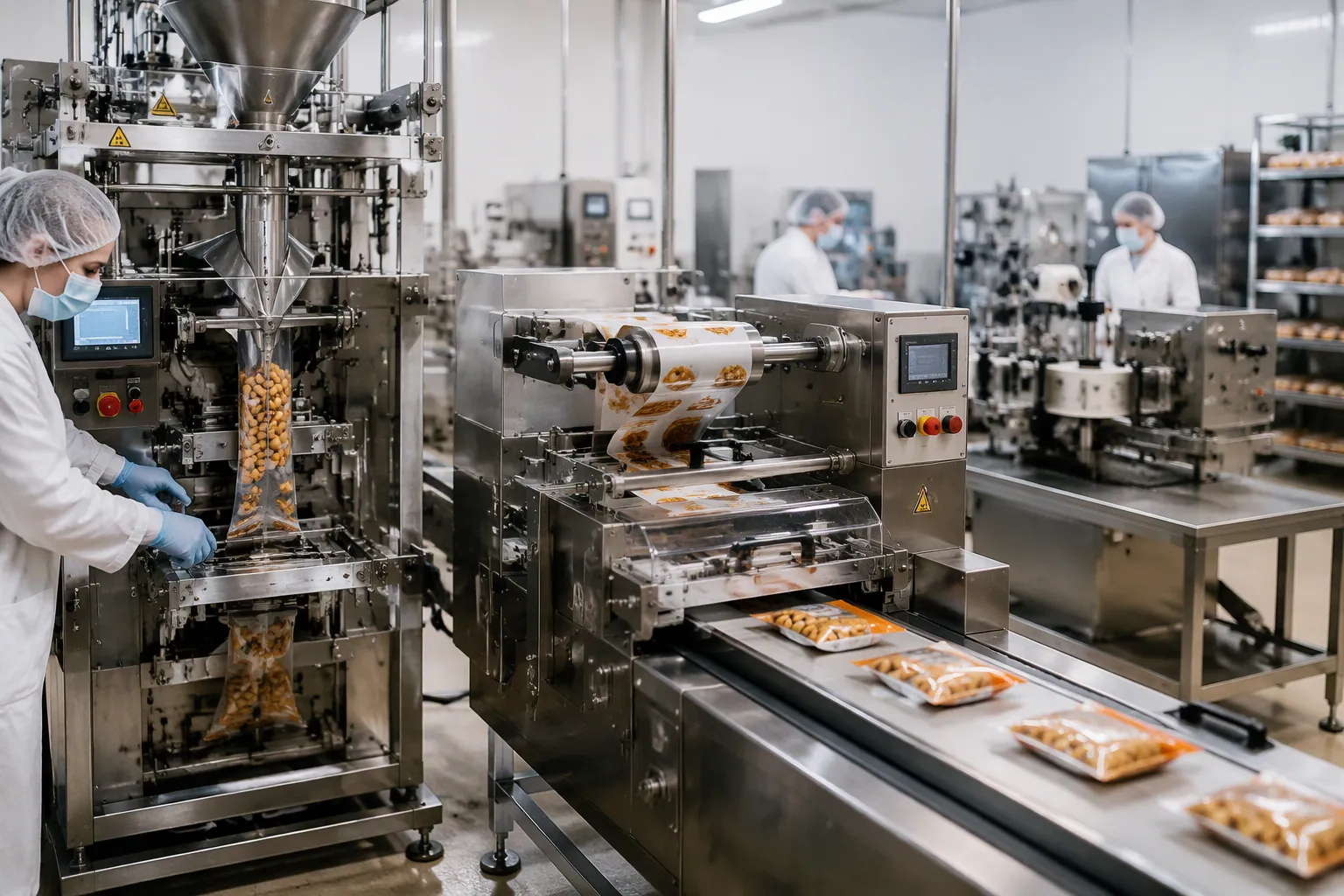
The market offers many types of food packaging machines. Each design targets a specific job on the line. Some portion and close products. Others wrap, label, or protect food with specialized systems. A quick tour of the main categories helps buyers see where each design fits.
These machines measure product into a container and close it. Vertical form fill seal (VFFS) units rank among the top types used in the food industry. A VFFS machine pulls film from a roll, shapes it into a tube, drops in product, and seals the ends. Snacks, coffee, and frozen vegetables often run on this design.
Horizontal form fill seal (HFFS) machines work from a single roll too. They create, fill, and seal pouches while the film moves sideways. Flat pouches and sachets come off these units at high speed.
Vacuum sealers remove air before closing the package. They suit meat, cheese, and other products that spoil quickly. Filling machines handle the portioning step. Liquid filling machines dispense sauces and drinks. Powder filling machines meter flour and spices. Sealing machines then close each pack with heat, pressure, or both. Together, this filling and sealing/closing stage forms the heart of most lines.
Wrapping systems cover products in film for protection and display. Flow wrappers, for example, enclose bars and bakery items in a tight sleeve. Labeling machines print and apply tags, barcodes, and date codes. A labeling machine keeps every pack traceable and shelf-ready.
Specialized systems go further:
Tray packaging machines load food into trays and seal a film lid on top.
Modified atmosphere packaging (MAP) swaps air inside the pack for a gas mix. This slows spoilage and extends shelf life.
Vacuum skin packaging (VSP) pulls film tight against the product. The result looks premium and blocks oxygen.
Automation ties these designs together. An automated packaging system links filling, sealing, and labeling into one flow. Automatic packaging machines cut manual handling and keep output steady. Each type of food packaging machine earns its place. The right mix depends on the product, the pack format, and the line speed a plant needs.
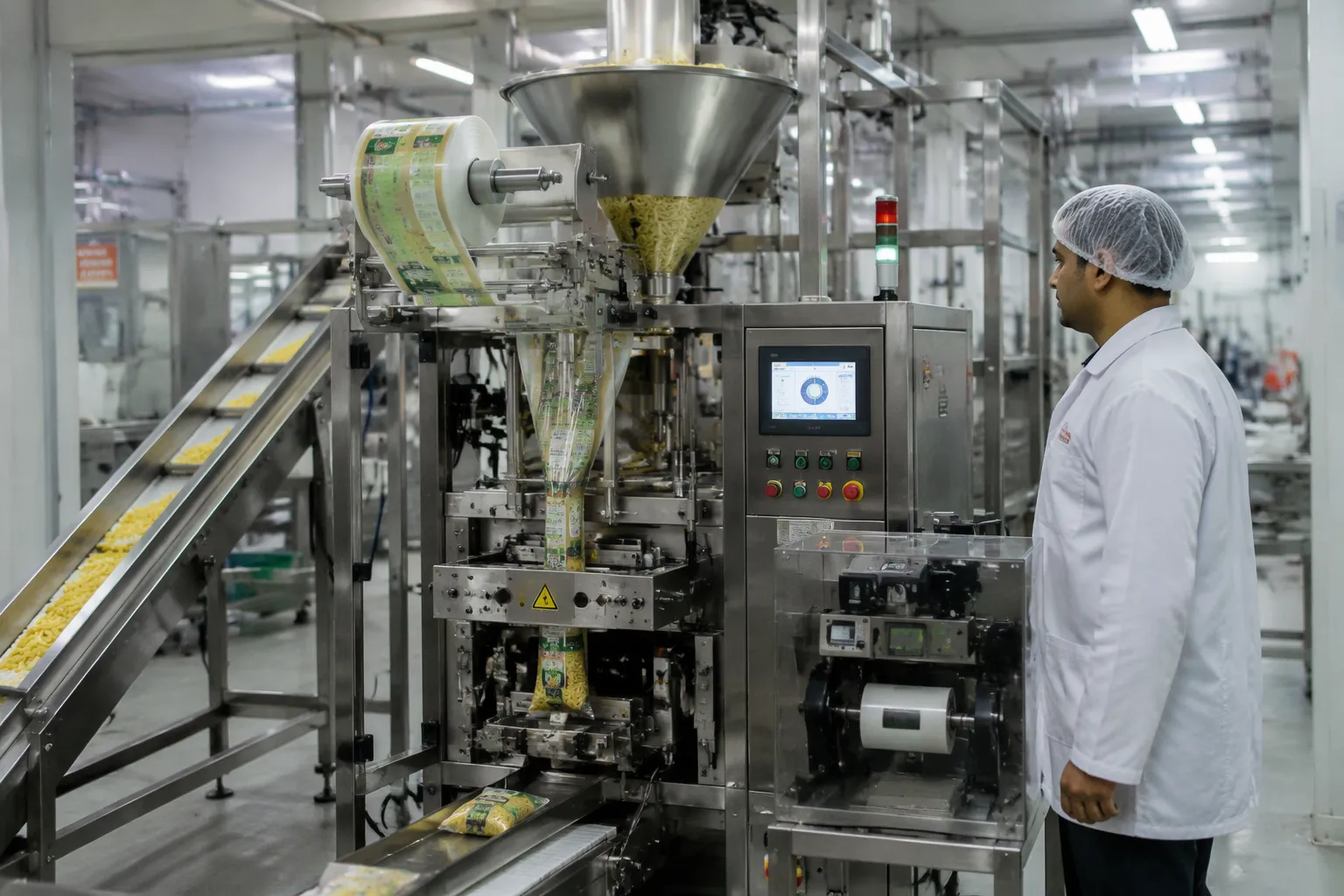
Every design follows the same basic logic. Product goes in, film or a container takes shape around it, and the pack closes tight. Understanding the shared parts makes the whole process easier to follow.
A hopper holds loose product before it drops into the line. Think of it as a funnel with a gate. Conveyors move items from one station to the next at a steady pace. Fillers measure the right amount into each container. On liquid lines, filling machines use pumps or nozzles. Powder lines rely on augers or cups instead.
Sealing jaws press film together with heat, pressure, or both. The sealing/closing mechanism decides how strong the final seam will be. A form-fill-seal unit combines film shaping, filling/insertion, and closing in one frame. Sensors watch position and timing throughout. They feed data back to the controller, which adjusts motors in real time. This automation keeps every cycle identical.
The sequence below applies to most food packaging machines, though details vary by type.
Product feeding: raw or prepared food enters the hopper or lands on a conveyor.
Forming: film unwinds from a roll and takes the shape of a bag, pouch, or tray.
Filling: the filling system drops or pours a measured portion into the open pack.
Sealing/closing: heated jaws or a lid press the pack shut.
Labeling: a printer or applicator adds dates, barcodes, and batch codes.
Each step depends on precise timing. A pouch must sit exactly under the filler before product releases. Jaws must close at the right moment to avoid weak seams. Packaging machinery uses servo motors and sensors to hold these positions within tight limits. The result is a pack that protects food from air, moisture, and contamination.
Different packaging machines handle these steps at different speeds. A vertical system forms, fills, and seals in one downward motion. A tray sealer fills pre-made trays and seals a film lid on top. Both rely on the same core idea: controlled motion plus a clean seal. Operators set parameters on a touchscreen, and the packaging machine repeats the cycle thousands of times. That repeatability is what makes modern food packaging so reliable.
Speed tops the list of gains. A single packaging machine can turn out thousands of packs per shift, and it never slows for a break. That throughput lets a plant meet retail orders without adding extra shifts. Packaging automation also removes the human error that creeps into manual work. Every bag gets the same fill weight, the same seal time, and the same film tension.
Consistency matters just as much as speed. Food packaging machines hold each cycle within tight limits, so pack number one matches pack number ten thousand. Shoppers see uniform shelves, and retailers see fewer rejects. A vertical form fill seal unit suits high-speed snack lines, while a tray sealer fits prepared meals. Each design delivers steady quality in its own lane.
A clean seal keeps air, moisture, and microbes away from the product. Tray packaging machines create airtight seals that preserve food 3–5 times longer than a loose wrap. That extra window gives retailers more selling time and households more storage time. Vacuum sealers and modified atmosphere systems push shelf life further by removing or replacing the air inside the pack.
These gains translate into safer food and less waste. Packaging machinery blocks the oxygen that spoils fats and dulls flavors. Labeling then adds dates and batch codes, so every pack stays traceable from plant to shelf. Fewer spoiled units mean fewer recalls and lower disposal costs. Food packaging machines therefore protect both the consumer and the bottom line, and packaging equipment pays for itself through reduced losses over time.
Fresh foods need protection without heat damage. Produce, bakery items, and fresh meat often run through tray sealers or flow wrappers. These systems close the pack fast and keep it cool. Vacuum skin packaging suits premium cuts, where appearance matters as much as protection.
Frozen products demand a strong barrier against moisture and freezer burn. Vertical form fill seal units bag frozen vegetables and fries at high speed. Dry goods such as flour, rice, and snacks flow through weighing and filling machines before sealing. Shelf-stable items like canned sauces and ready meals rely on filling machines and sealing machines that hold a tight closure. Beverage plants use similar equipment for bottles and pouches.
Snack lines often combine several units into one automated packaging line. An automated packaging system links forming, filling, and labeling in a single flow. That setup lets a plant move from raw product to finished case with minimal handling.
Product type drives the first decision. A powder behaves nothing like a sauce, so the filling method changes with the food. Output volume comes next. High-volume plants benefit from automatic packaging machines, while smaller operations may prefer semi-automatic units.
Packaging format shapes the choice too. Bags, trays, pouches, and bottles each need a different design. Budget covers the purchase price plus film, spare parts, and operator training. Floor space and utility needs matter as well.
Factor | What to check |
|---|---|
Product type | Filling method for liquids, powders, or solids |
Output volume | Packs per shift against current and future demand |
Packaging format | Bag, tray, pouch, or bottle |
Budget | Machine cost plus film and upkeep |
A buyer should also confirm service support and spare-part availability. Reliable packaging equipment keeps an integrated packaging lines running without long stops. Packaging automation pays off when the machine matches the job, not when it simply runs fast.
Food packaging machines automate the forming, filling, sealing, and labeling of food products. The main types include vertical and horizontal form fill seal units, vacuum sealers, tray sealers, and modified atmosphere systems. Each design feeds product, forms the pack, fills it, and closes a clean seal. These systems deliver faster output, consistent quality, and longer shelf life. In short, food packaging machines are automated, multi-function devices that enclose food safely for distribution. Good packaging machinery fits the product and the production volume. That match matters more than raw speed. Careful selection keeps food packaging efficient, safe, and reliable.
They enclose food in bags, trays, pouches, or bottles. Each unit forms the pack, fills it with a measured portion, and closes a clean seal. Labeling then adds dates and codes. These steps protect the product and prepare it for store shelves.
Yes. Semi-automatic units suit low-volume kitchens and farms. Operators load product by hand while the machine handles sealing. Larger plants step up to automatic packaging machines as demand grows. Matching output to real demand keeps costs sensible.
Start with the product itself. Powders, liquids, and solids each need a different filling method. Then check pack format, output volume, and budget. Reliable food packaging machines also need service support and spare parts nearby. A good match beats raw speed.
It changes the work rather than erasing it. Operators set parameters, load film, and watch quality. Packaging machines handle the repetitive motions. Staff then focus on checks, changeovers, and troubleshooting. That division keeps food packaging fast and consistent.


