
Views: 0 Author: Site Editor Publish Time: 2026-11-25 Origin: Site


Food packaging machines come in several main groups. The main types of food packaging machines include filling, capping, sealing, vacuum and modified atmosphere, form-fill-seal, wrapping, labeling, cartoning, case packing, and palletizing equipment, plus complete systems.
Knowing these different types of food packaging machines matters for four reasons. The product decides whether a pouch, bottle, or tray runs smoothly. Speed goals shape the automation level a plant needs. Shelf-life goals point toward vacuum or modified atmosphere options. Rules guide hygiene and safety features.
This article covers what each of these types of food packaging machines does, where it fits, and how to choose.
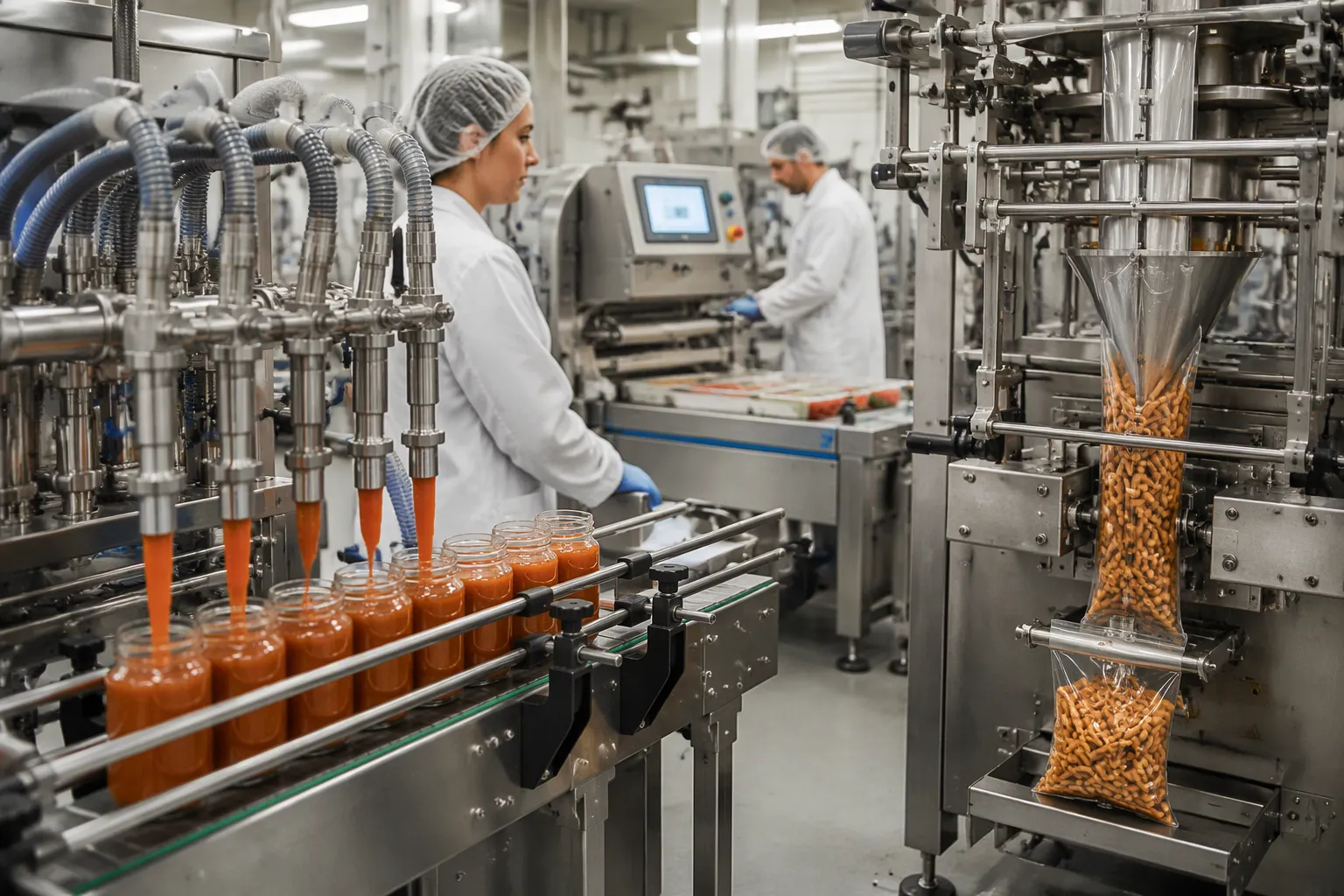
Primary packaging touches the food directly. This group covers the main types of food packaging machines that fill, close, form, or protect the product itself.
Filling machines put product into bottles, jars, pouches, or trays. Liquid filling machines handle water, juice, oil, and sauces. Liquid and paste filling machines work for thicker products like ketchup or jam. Powder and granule fillers use augers or cups. Pouch filling machines combine dosing with bag forming. These units often pair with weighers in feeding, weighing, filling, sealing, labeling, and boxing units.
Capping machines twist or press caps onto bottles and jars. They fit beverage, sauce, and dairy lines. Sealing machines close containers with heat, induction, or adhesive. Heat sealers bond film to trays and cups. Induction sealers weld foil liners to bottle necks. These filling and sealing machines protect freshness and stop leaks. Many plants run filling & sealing machines as one compact cell. Liquid and paste fillers work well here too.
Form-fill-seal equipment builds the pack from flat film. VFFS machines form a bag, fill it, and seal it vertically. Snacks, frozen vegetables, and coffee fit well. HFFS systems run horizontally for trays, bars, and flat pouches. Flow wrappers enclose items in film at high speed. Shrink wrap machines tighten film around multipacks. Stick pack machines dose small single-serve portions.
Vacuum packaging machines pull air from the pack before sealing. They suit meat, cheese, and nuts. Modified atmosphere packaging machines replace air with a gas mix. They help extend shelf life for fresh produce and ready meals. Tray sealing machines seal film to preformed trays. Many tray sealing machines also support gas flushing. Vacuum and gas flushing can slow spoilage, though results depend on the product and cold chain.
Machine type | Typical fit |
|---|---|
Liquid and paste filling machines | Sauces, dairy, cosmetics-style pastes |
VFFS machines | Snacks, frozen goods, coffee |
HFFS systems | Bars, trays, flat pouches |
Vacuum packaging machines | Meat, cheese, nuts |
Modified atmosphere packaging machines | Fresh produce, ready meals |
This packaging machinery covers most primary formats. Each type of food packaging machines serves a specific product and pack shape. Buyers should match the machine to the food, not the reverse.
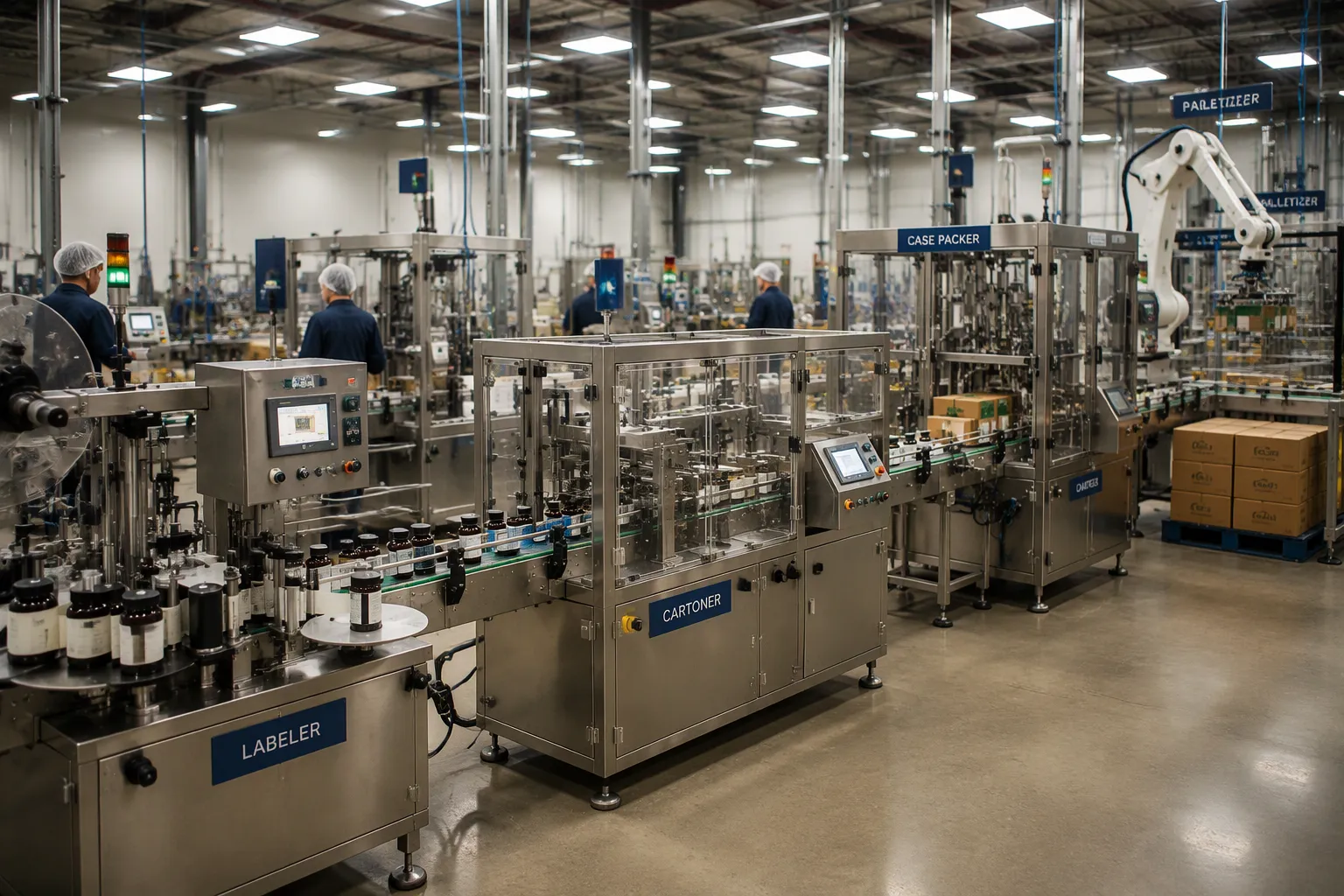
Secondary packaging moves filled packs into shelf-ready units. Specialized food packaging machines handle labeling, printing, cartoning, case packing, and palletizing. These units rarely touch the food itself. They still shape how a product looks, ships, and sells.
Labeling machines put pressure-sensitive labels, shrink sleeves, or wrap-around labels on bottles, jars, and pouches. They work well on beverage, dairy, and sauce lines. Printers add date codes, batch numbers, and lot codes right onto film, labels, or cartons. Inkjet and thermal transfer units cover most food jobs. Cutting machines trim film, labels, and carton blanks to size. They feed the next machines with shapes that stay the same.
Cartoning machines fold flat carton blanks around products. They work for cereal boxes, frozen meals, and single-serve kits. A cartoning machine can run fast and handle tricky folds. Many cartoning machines also glue or tuck flaps shut. These units team up well with labeling and printing stations on the same line. Together they make a small secondary packaging cell.
Case packing machines load finished packs into corrugated cases. They handle bags, bottles, and cartons. Pick and place machines use robotic arms to lift and place products fast and accurately. They fit layouts that change and runs with mixed products. Palletizers stack cases onto pallets for shipping. They range from simple layer formers to robotic arms.
Air pillow machines blow up film cushions when needed. They protect fragile items inside cases and fill empty space. These machines cut shipping damage and reduce material waste. Protective packaging also includes void fill and edge protectors. Each option fits a different product fragility and shipping distance.
These secondary units often work next to primary food packaging machines. They do not replace fillers, sealers, or form-fill-seal equipment. Instead, they finish the line. A plant can add a case packer or palletizer without changing its primary setup. This modular approach keeps the core types of food packaging machines focused on product contact. Secondary packaging machinery then handles the logistics layer.
Machine type | Role |
|---|---|
Labeling machines | Apply labels and sleeves |
Printers | Add codes and dates |
Cartoning machines | Fold cartons around products |
Case packing machines | Load packs into cases |
Palletizers | Stack cases onto pallets |
Pick and place machines | Position products with robotic arms |
Air pillow machines | Inflate protective cushions |
Buyers should treat these units as line extensions. They add speed, protection, and shelf appeal. They also need floor space and operator training. A clear layout plan helps each machine earn its place.
A single food packaging machine does one job, like filling or sealing. An integrated line joins several units into one flow. A complete food packaging system moves product from filling through case packing without people moving it by hand. Buyers compare both paths against their output goals and floor plan.
Standalone units work well for low to medium output. They take up little floor space and need one operator. Automation stays simple, often with manual loading and unloading. A complete food packaging system runs faster and steadier. It links filling, sealing, and labeling in one sequence. Footprint grows, but output per hour goes up. Automation rises too, from sensors to central controls.
Factor | Standalone machine | Integrated line |
|---|---|---|
Output | Low to medium | Medium to high |
Footprint | Small | Large |
Automation | Basic | Advanced |
Production scale comes first. Small batches and seasonal runs fit a single unit. High-volume plants gain from complete food packaging lines. Budget matters too. One machine costs less upfront. A full line costs more but spreads labor across fewer hands. Floor space decides many cases. Tight rooms favor compact units. Changeover needs also count. Frequent product swaps suit flexible standalone equipment. Heavy washdown demands easy-access designs in either path.
Supplier support ties the choice together. Spare parts, training, and service response protect uptime. A complete food packaging system depends on every unit working together. One weak link stalls the whole food packaging line. Buyers should confirm the supplier supports the full food packaging system, not just one unit. An integrated food packaging system also needs clear documentation. That step keeps food packaging systems running for years. Most plants start with standalone food packaging machines and scale into a complete food packaging system later. Both paths serve real needs. The right fit follows output, space, and support.
Food packaging machines sit on the same floor as products people eat. That fact shapes how they are built. Hygienic design stops food bits from building up in small gaps. Builders use smooth surfaces, sloped frames, and open joints. These choices let cleaners reach every surface. Non-food machines often skip these features because dust and cardboard pose less risk.
Washdown ability sets many models apart. Some food packaging equipment handles full washdown with water and cleaners. Other units need wipe-down only. The right level depends on the product. Raw meat lines need more protection than dry snack lines. Food-contact parts must also meet food-grade material rules. Stainless steel and food-safe plastics resist rust and do not pass chemicals into the product. Non-food machines can use standard steel and ordinary plastics. They fit their jobs well. The difference is fit, not quality.
Food packaging equipment carries extra paperwork and testing duties. Builders must show that contact surfaces are safe and cleanable. They often provide material certificates and design records. Buyers may ask for hygiene test results or cleaning validation data. These steps support food-safety audits and traceability goals.
Safety rules apply to both camps, yet food lines add layers. Guards, emergency stops, and lockout points protect operators on any machine. Food plants also manage allergen changeovers and cleaning chemical exposure. Regional rules vary, so buyers should confirm local food-safety and machine-safety duties with their supplier. A machine built for one market may need changes for another. Checking compliance early avoids costly retrofits later.
The product's features narrow the choices first. Liquids and sauces work well with liquid filling machines and bottle lines. Powders and granules need auger or cup fillers so they don't make dust or spill. Solid items like bars, cuts, or baked goods fit flow wrappers and HFFS systems. Single-serve portions point toward stick pack machines or small pouch fillers.
The packaging format settles the rest. Pouches call for VFFS or HFFS equipment. Bottles need fillers, capping machines, and labelers in a row. Trays pair with tray sealers, often with gas flushing. Stick packs run on their own stick pack units. Cases need a case packer later in the line.
Product | Format | Machine fit |
|---|---|---|
Sauce, juice | Bottle | Liquid filler, capper, labeler |
Powder | Pouch | Auger filler, VFFS |
Bar, baked good | Flow wrap | Flow wrapper |
Ready meal | Sealed tray | Tray sealer with gas flushing |
Capacity planning comes next. The buyer should state the target output per shift and leave room for busy seasons. A complete food packaging system must handle the busiest week, not just the average one. Cleaning needs depend on the product. Wet or raw lines need washdown-ready food packaging equipment. Dry snack lines may only need wipe-down.
The automation level should match the crew and how often changeovers happen. Frequent swaps favor flexible standalone food packaging machines. Long runs favor linked units. Supplier support completes the checklist. Spare parts, training, and service response protect uptime. A food packaging system lives or dies on one weak link. Buyers should confirm the supplier backs the whole food packaging system. That step keeps a complete food packaging system productive for years.
Picking the right one among the different types of food packaging machines comes down to four guides. Product, format, scale, and compliance needs show the way. Standalone food packaging machines work well for small batches and tight rooms. A complete food packaging system fits high-volume plants. Both paths serve real needs, so neither wins by default.
Buyers should test before they commit. Samples and trials show how a food packaging system handles real product. Talking with the supplier fills the gaps. Careful checks keep food packaging systems on track. A complete food packaging system rewards that early work. Smart buyers lean on food packaging machines and systems that match their goals. Well-matched complete food packaging lines then run steady for years.
A VFFS machine forms a bag from flat film, fills it with product, and seals it — all in one vertical flow. It suits snacks, frozen vegetables, and coffee. The unit builds the pack from scratch, so plants skip pre-made bags.
Modified atmosphere packaging swaps air inside a sealed pack for a gas mix. The swap can slow spoilage in fresh produce and ready meals. Results depend on the product and a steady cold chain. Tray sealers often handle this job.
Some units run more than one format, but most food packaging machines focus on a single pack style. Frequent format swaps favor flexible standalone equipment. Long runs favor dedicated units. Buyers should confirm changeover time before they commit.
Washdown means a machine tolerates cleaning with water and cleaners. Raw meat and wet lines usually need it. Dry snack lines may only need wipe-down. The right level follows the product, not a blanket rule.
Buyers should run real product samples through the unit. Trials show how the machine handles actual texture, weight, and pack shape. Supplier consultation fills the gaps. Early checks protect uptime and avoid costly retrofits later.


