
Views: 0 Author: Site Editor Publish Time: 2026-06-22 Origin: Site


Capital equipment investments carry high stakes for any manufacturing facility. You are not just bagging a product. You are reducing labor dependencies across the production floor. You are eliminating packaging bottlenecks entirely. You are maintaining critical product integrity. Many buyers focus purely on the initial sticker price. They might obsess over maximum theoretical speed. This is often known as Bags Per Minute (BPM). This narrow view ignores hidden operational costs completely.
Material waste drains your daily profits rapidly. Difficult changeovers steal productive hours from your schedule. Poor downstream integration creates massive line inefficiencies. This article provides a comprehensive technical evaluation framework. It helps operational leaders look deeper into equipment specifications. It guides procurement teams through complex hardware choices. You will identify the specific machine features driving real ROI. You will learn how to ensure continuous, flawless production.
Select machine architecture (VFFS, HFFS, or Premade Pouch) based on long-term consumable costs and required bag complexity, not just initial budget.
Prioritize tool-less changeover features and standardized HMI controls if your facility runs high-mix, low-volume product lines.
Advanced sealing technologies (like ultrasonic) and MAP (Modified Atmosphere Packaging) are non-negotiable for extending food-grade shelf life.
Future-proof your line by ensuring the bagging machine’s PLC can seamlessly handshake with downstream equipment, particularly an automatic case packing machine.
Evaluate machine features based on your material handling needs. You face a core decision between roll-film and premade pouches. Look for robust spindles on the back of the machine. Examine the forming collars carefully. These are essential if you choose Form-Fill-Seal (FFS) systems. FFS lets you utilize highly economical roll film. Roll film drastically reduces your daily packaging overhead. Alternatively, look for reliable gripping and opening jaws. These matter most when you run premade pouches. Premade pouches deliver high-end aesthetic consistency. They stand out on competitive retail shelves. They handle premium closures like heavy zippers perfectly.
The bagger must seamlessly integrate your dosing equipment. The bagging unit does not weigh your product. It simply forms the bag around it. Ensure the machine features standardized mounting protocols. It needs clear communication wiring for various fillers. Use auger fillers for dusty powders. Powders require sealed delivery tubes. Choose multi-head weighers for solid snacks. Snacks need gentle dropping mechanisms. Select piston pumps for thick liquids. Liquids demand drip-free nozzles. Your chosen machine must accept these different feed systems easily.
Assess the spatial design of the equipment. Plant layout dictates many purchasing decisions. Look for compact, vertical profiles. Vertical Form-Fill-Seal (VFFS) units save massive amounts of space. They work perfectly if your floor space remains restricted. They utilize gravity to drop products efficiently. Consider horizontal configurations (HFFS) instead for specialized tasks. Horizontal wrappers handle complex bag shapes effortlessly. They form bottom gussets accurately. They apply zippers at much higher speeds. You must match the machine footprint to your facility constraints.
Machine Type | Best Application | Floor Footprint | Material Economics |
|---|---|---|---|
Vertical Form-Fill-Seal (VFFS) | High speed, standard pillow bags, gravity-fed items | Compact / Vertical layout | Highly economical (Roll Film) |
Horizontal Form-Fill-Seal (HFFS) | Complex shapes, stand-up pouches, integrated zippers | Large / Horizontal layout | Highly economical (Roll Film) |
Premade Pouch Machine | Premium aesthetics, short runs, heavy-duty bags | Medium flexible layout | More expensive (Pre-formed) |
Facilities handling multiple SKUs need specific operational flexibility. Prioritize tool-less changeovers during your initial evaluation. Operators should never need wrenches to adjust bag widths. Look for quick-release mechanical levers. Demand easily adjustable physical bag guides. Seek recipe-driven PLC memory setups. These digital recipes remember exact physical parameters. They allow operators to switch bag sizes rapidly. They execute changeovers in minutes rather than hours. This prevents massive downtime between product runs. It keeps your overall production efficiency very high.
Look beyond theoretical maximum speed limits listed on brochures. Evaluate the sustained running speed under a full operational load. A machine rated for 100 BPM sounds great initially. However, it only provides value under certain strict conditions. It must maintain perfect seal integrity at that top speed. It must also guarantee strict weight accuracy continuously. Fast machines producing defective bags cost you money. You should always demand realistic performance metrics.
Follow these basic steps to evaluate realistic machine speeds:
Request a sustained run test lasting over one full hour.
Measure the exact percentage of rejected bags produced.
Verify product weight accuracy across the entire test batch.
Inspect the final seal quality under maximum thermal load.
Check the machine noise levels at top speed.
High-speed automation generates significant kinetic energy. Moving parts create heavy vibrations across the chassis. Look for heavy-gauge stainless steel frames. Grade 304 stainless steel serves most industrial needs. Grade 316 stainless steel works best for highly corrosive environments. Heavy frames reduce operational vibration significantly. They anchor the entire mechanical process firmly. This minimizes daily wear on critical servo motors. It ensures long-term continuous production without structural fatigue. Flimsy frames degrade quickly under constant stress.
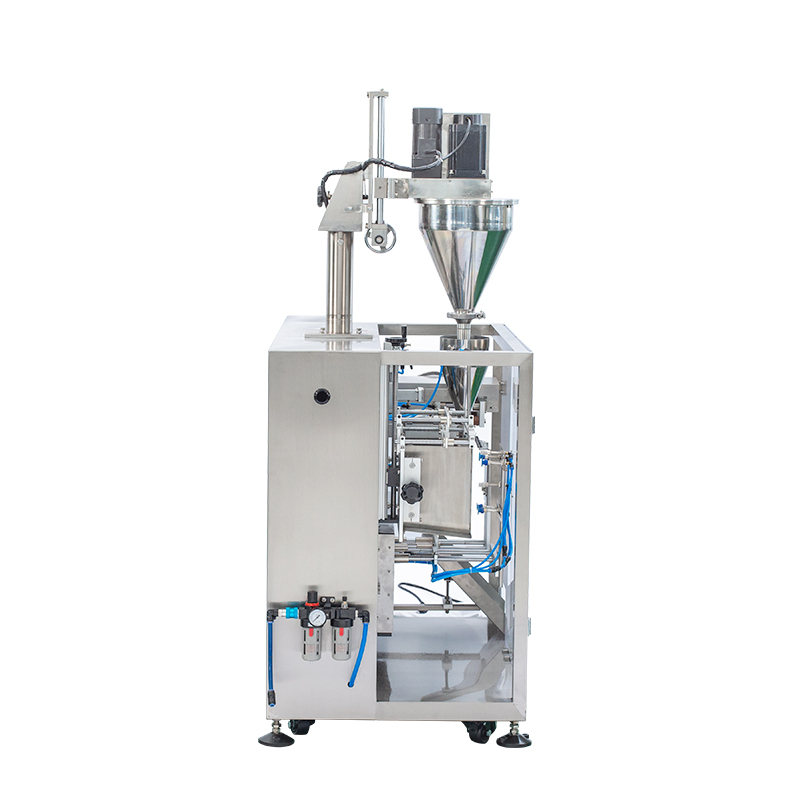
Look for advanced sealing technology options immediately. You must consider your exact film thickness. You also need to account for your specific product type. Standard heat sealing cannot solve every packaging challenge. It struggles when dealing with messy or sensitive products. Ultrasonic sealing features are highly critical here. They utilize high-frequency sound waves to create friction. They prevent product degradation in heat-sensitive items. Chocolates and cheeses benefit greatly from ultrasonic methods. They also seal perfectly through product contamination. Sometimes crumbs or liquids enter the seal zone. Ultrasonic waves push them out effectively before sealing.
Modified Atmosphere Packaging (MAP) matters heavily for perishables. Food and pharmaceutical industries absolutely require this feature. It prevents premature spoilage and oxidation. Gas flushing displaces internal oxygen using pure nitrogen. Your machine must feature dedicated gas injection tubes. This vital feature ensures maximum product freshness. It dramatically extends overall retail shelf life. It protects delicate items from crushing during transit. Supermarkets demand extended shelf life from modern suppliers.
Seek built-in quality control features for daily peace of mind. Smart sensors save money and reduce daily operator headaches. They act as a second pair of eyes continuously.
Look for these essential automated sensor capabilities:
"No-bag-no-fill" detectors preventing messy product spills inside the machine.
Seal-integrity verification systems checking every pouch for microscopic leaks.
Automatic reject chutes separating defective items immediately from the line.
Film tracking sensors correcting minor alignment shifts automatically.
These automated features minimize expensive daily material waste. They stop defective products from reaching consumer hands. They protect your overall brand reputation effortlessly. You save hours of manual sorting labor.
A bagging machine should never exist in isolation. It forms just one part of your packaging ecosystem. It must communicate across the entire production floor. Look for advanced Programmable Logic Controller (PLC) systems. They act as the central brain of your equipment. They must handle seamless I/O digital communication. They need to talk directly to end-of-line equipment. A standalone bagger eventually creates a localized bottleneck. You must think about the complete packaging journey.
Examine the discharge conveyor carefully before purchasing. It moves the finished bag away from the sealing jaws. It needs specific physical conditioning capabilities. It must settle the bagged product properly inside the pouch. It should flatten the bag for uniform case stacking. It must ensure all barcodes and labels face upward. This precise physical orientation is a critical prerequisite. It feeds bags smoothly into an automatic case packing machine. If bags arrive twisted, the packer jams immediately. This halts your entire line instantly.
Plan for future automation expansion today. You might not need full automation right now. However, you will need it as sales grow. Look for modular software architectures in the control panel. Examine the hardware design for physical flexibility. You might start using manual case loading right now. Later, you can seamlessly plug into automated secondary systems. You will add cartoners and case erectors easily. You can connect robotic pallet wrappers eventually. Buy a machine capable of growing alongside your business.
Evaluate the main touchscreen interface thoroughly during your demo. The Human-Machine Interface (HMI) controls all daily operations. Operators interact with this screen constantly. Look for intuitive, icon-based navigation menus. Ensure the system offers complete multi-language support. Seek built-in troubleshooting guides displayed directly on the screen. Complex interfaces naturally increase your initial training time. They also drive up daily operator error rates. Simple screens lead to highly confident operators. They resolve minor issues without calling engineering.
Look for modern smart-connectivity features. Industry 4.0 concepts now apply to basic bagging equipment. Machine learning algorithms optimize daily servo performance automatically. Basic IoT sensors monitor servo temperatures constantly. They track pneumatic air pressure drops accurately. They measure sealing jaw wear during continuous operation. These sensors alert maintenance teams early via digital dashboards. They stop minor problems before catastrophic mechanical failures occur. Predictive maintenance saves thousands of dollars annually. It prevents unplanned overnight line stoppages.
Regulated industries require strict historical data logging. Medical and food suppliers must prove compliance constantly. The machine must automatically back up all operational parameters. It should track distinct user logins reliably. It must export production data seamlessly via Ethernet or USB. This creates solid digital audit trails. It also enables Overall Equipment Effectiveness (OEE) tracking. You can analyze downtime reasons mathematically. You can pinpoint exactly when efficiency drops during shifts. Data drives better daily management decisions.
Sanitary design standards protect your brand reputation. Operating in clean rooms requires strict mechanical features. Food environments demand similar rigorous sanitary designs. Look for washdown-rated components exclusively. Electrical ratings of IP65 or higher are mandatory. You need to spray the machine with water safely. The machine should feature intelligently sloped surfaces. This prevents dangerous water pooling after chemical cleaning. Bacteria breed quickly in stagnant water puddles. Easily removable conveyor belts comply with strict hygiene regulations. They allow fast sanitization between product batches.
Examine the internal replacement parts carefully. Machines relying on proprietary components carry extreme financial risk. Single-source parts cause massive unexpected downtime. You cannot wait weeks for a custom circuit board. Look for globally recognized automation components instead. Use standard pneumatic valves from major global brands. Choose common servo motors found worldwide. You should buy replacement parts from local distributors easily. Standardized parts keep your production line running smoothly. They eliminate stressful supply chain dependencies.
Weigh the daily cost of operations carefully. Think about consumables over a five-year lifecycle. A cheaper premade pouch machine looks initially attractive to buyers. It saves capital budget during the first year. However, premade bags cost up to 30% more per unit. Roll film proves much cheaper over time. You must run a full five-year financial projection. Match your machine features to a sustainable financial model. Smart investments generate positive returns through lower daily running costs. Operational savings often outweigh the initial purchase price rapidly.
The best automatic bag packing machine requires careful balance. You must weigh immediate production needs carefully. You have to consider long-term line scalability. You also need to evaluate daily operational costs realistically. Focus on machine architecture and advanced sealing technologies. Ensure the equipment connects seamlessly with downstream packaging systems. Prioritize intuitive controls and hygienic design elements.
Demand a Factory Acceptance Test (FAT) immediately. Use your actual packaging film for this rigorous test. Run your specific product before finalizing any purchase. Audit the vendor's spare parts availability thoroughly. Check their technical support infrastructure for reliability. Protect your investment by asking tough technical questions today. Proper evaluation guarantees a highly profitable equipment purchase.
A: Consider your consumable budget and aesthetic goals. FFS machines offer lower consumable costs. They deliver much higher production speeds. Premade pouch machines offer superior aesthetic consistency. They provide greater flexibility for complex bag types.
A: A high-quality machine operates effectively for 8 to 12 years. You must perform proper daily maintenance. You also need to follow periodic servicing schedules.
A: Yes, highly flexible machines handle multiple sizes easily. They must feature tool-less changeover mechanisms. They need servo-driven adjustments. They also require recipe-saving capabilities within the PLC.
A: Bagging represents only one step. The bagger must communicate downstream. It needs to talk to your case packer. Otherwise, it creates a massive production bottleneck. This negates the efficiency gained by automating the bagging process.


