
Views: 0 Author: Site Editor Publish Time: 2026-06-09 Origin: Site


Transitioning oral solid dosage forms from R&D bench-tops to commercial batches demands precise mechanical engineering. You must shift from manual compounding to highly reliable, automated systems. Choosing the proper filling method involves much more than raw throughput. It heavily dictates your dose uniformity, overall material yield, and strict GMP compliance. Poor equipment selection easily leads to product rejection and wasted active pharmaceutical ingredients. We designed this guide to explain the core mechanical methods of filling capsules. You will learn about formulation constraints and physical material behaviors. We also break down how to evaluate a commercial capsule packing machine based on process risk mitigation and daily production capabilities. Understanding these exact variables ensures a smooth transition from early trials to full-scale manufacturing. Read on to master your industrial scale-up strategy.
Capsule filling methods scale across three tiers: manual compounding, semi-automatic processing, and fully automatic encapsulation.
Industrial automatic systems rely on specific dosing mechanics—primarily tamping disc and dosator technologies—to ensure strict weight uniformity.
Physical formulation traits (tapped density, hygroscopicity, flowability) directly dictate the viability of specific filling methods.
When evaluating a capsule packing machine, key criteria include waste rejection mechanisms, integrated weight checking, and changeover flexibility.
Scaling a pharmaceutical or nutraceutical product requires matching your equipment to your target output. We categorize production into three distinct mechanical tiers. Each tier addresses specific operational constraints and facility requirements.
The manual punch method represents the most basic approach to encapsulation. Operators rely on manual powder spreading and simple mechanical tamping tools. They utilize small, pre-drilled trays holding anywhere from 24 to 300 shells. The operator manually separates the shells, pours the blended powder over the tray, and uses a scraper to distribute the material evenly into the cavities.
Early-stage clinical trials utilize this method frequently. Compounding pharmacies and low-budget R&D labs also rely heavily on manual plates. However, it carries severe limitations. High manual labor costs drive up your per-unit expense rapidly. The process remains highly prone to human error. Operators apply inconsistent pressure during the tamping phase. This inevitably causes significant batch-to-batch weight variation, making strict quality control nearly impossible.
Semi-automatic setups bridge the gap between bench-top trials and continuous manufacturing. This equipment automates the rectification process. It properly orients the shells so the body faces downward. The machine also utilizes vacuum suction to separate the caps from the bodies automatically.
Despite these automated steps, operators must intervene physically. A technician manually moves the heavy module rings between the initial separation station, the powder filling auger, and the final locking station. Medium-scale production facilities use them frequently. Contract manufacturers appreciate them when handling multiple, frequent product changeovers. Throughput typically caps around 10,000 to 30,000 capsules per hour. Unfortunately, moving rings manually introduces serious cross-contamination risks and relies entirely on operator pacing.
Commercial manufacturing requires continuous, closed-loop processing. Fully automatic systems operate without human intervention once loaded. They manage the entire encapsulation cycle seamlessly. Top-tier machines routinely exceed 400,000 units per hour. This speed drastically reduces raw material waste via precision powder handling and ensures aseptic, touch-free processing.
A modern, fully automated capsule packing machine executes seven distinct chronological steps:
Rectification: Mechanical forks flip and align random shells into a uniform, body-down position.
Separation: Vacuum blocks pull the bodies downward while retaining the caps in the upper module.
Waste Rejection: Sensor-driven pins detect un-separated shells and eject them into a waste bin.
Dosing: The core mechanism precisely injects the compressed powder plug into the open body.
Locking: Upper and lower modules align perfectly. A push-pin snaps the cap onto the body.
Ejection: Upward mechanical force pushes the finished, locked product out of the tooling ring.
Cleaning: High-pressure compressed air blasts residual powder from the empty cavities.
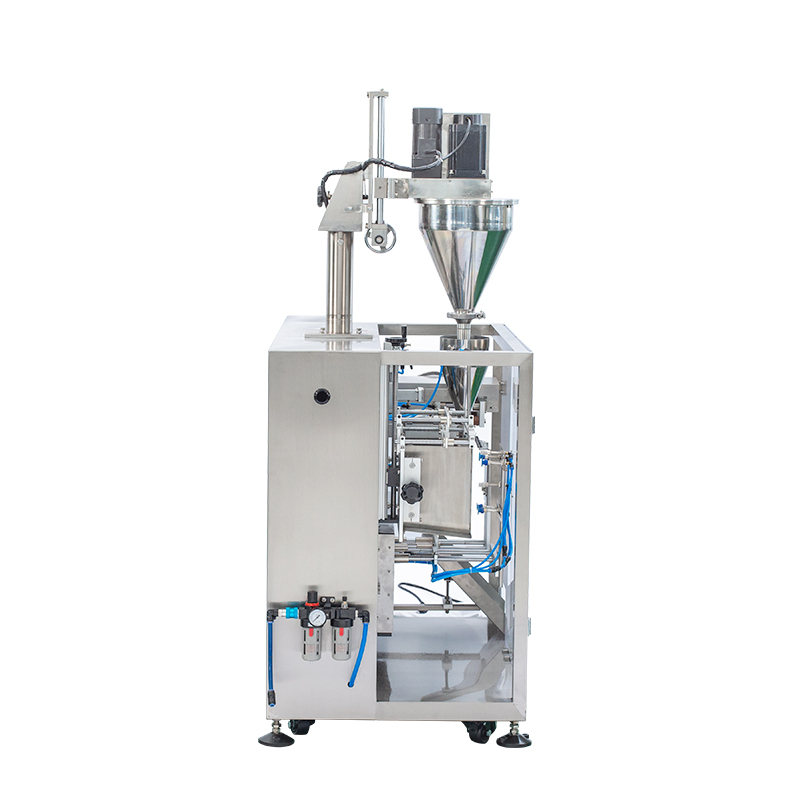
Once you transition to automatic equipment, the exact method of transferring powder from the hopper into the shell becomes the most critical engineering variable. Manufacturers primarily utilize three distinct mechanical dosing strategies.
This design utilizes a horizontally rotating disc featuring precision-drilled cavities. Tamping pins compress the powder in gradual stages. The rotation typically moves the powder across five or six distinct tamping stations. Each successive pin plunges deeper into the cavity. This progressive pressure forms a solid, cohesive "slug" of powder. At the final station, an ejection pin pushes this solid slug directly into the empty shell.
This mechanism offers highly granular control over your final fill weight. You adjust the overall weight by changing the physical thickness of the dosing disc. You also fine-tune the density by altering the downward pressure of the tamping pins. It works exceptionally well for slightly cohesive powders requiring mechanical force to densify.
The dosator method operates using vertical extraction. A hollow, cylindrical tube plunges directly into a deep powder bed. Inside this tube sits a spring-loaded piston. As the tube enters the powder bed, the internal piston compresses the material upward. This forms a tight plug inside the dosator tube. The entire dosator assembly lifts up, moves over the open shell, and the piston pushes downward to eject the plug.
Commercial pharmaceutical systems utilize this standard widely. It fits rapid, continuous-motion machine formats perfectly. The dosator excels at handling fine, free-flowing powders. You adjust the fill volume simply by changing the resting height of the internal piston.
Vacuum filling avoids mechanical compression entirely. It uses negative air pressure to draw powder upward into a dedicated dosing chamber. Once the chamber fills completely, the system maneuvers over the target shell. It releases the vacuum pressure immediately, allowing the precisely measured dose to drop neatly into the capsule.
This method provides one massive advantage: it minimizes mechanical stress completely. Delicate active pharmaceutical ingredients (APIs) benefit greatly. Granules designed to fracture easily remain perfectly intact throughout the entire encapsulation cycle.
Dosing Mechanism | Core Engineering Principle | Ideal Formulation Type | Primary Advantage |
|---|---|---|---|
Tamping Disc | Progressive mechanical compression into a slug | Cohesive powders | Granular weight control via disc thickness |
Dosator Tube | Plunging tube using an internal spring piston | Free-flowing powders | Excellent for continuous, high-speed motion |
Vacuum Fill | Negative air pressure drawing powder | Fragile granules / Delicate APIs | Zero mechanical stress on materials |
Modern nutraceutical and pharmaceutical demands frequently push beyond standard dry powder blends. Formulators increasingly utilize complex physical states to achieve specific release profiles.
Filling pellets requires entirely different mechanics. The machine must switch from aggressive mechanical compression to gentle volumetric or gravimetric dropping. You require specialized feeding stations to handle these materials. Standard tamping pins easily crush the delicate enteric coatings found on sustained-release pellets. If the machine fractures these coatings, the drug releases instantly in the stomach rather than absorbing slowly in the intestinal tract.
Packaging oils, suspensions, and pastes demands precision volumetric pumps. Unlike softgels, traditional two-piece hard capsules lack natural leak-proof qualities. They require careful risk mitigation to ensure stability.
Leak Prevention: You must apply subsequent thermal sealing to fuse the cap and body. Alternatively, you can apply a gelatin band around the seam.
Tailing Elimination: Viscous liquids frequently string out during the upward pump stroke. This phenomenon, known as "tailing," leaves residue on the exterior shell. You must install highly calibrated cut-off nozzles to prevent this exterior contamination completely.
Even the most advanced machinery fails if the formulation behaves poorly under operational stress. Understanding physical constraints prevents costly manufacturing bottlenecks.
Environmental conditions and intrinsic material properties dictate filling success. Hard gelatin shells naturally contain 10–15% moisture. If you formulate using highly hygroscopic APIs, the powder pulls moisture directly out of the gelatin shell. This extraction causes severe brittleness. The shells shatter under the locking pins, jamming the mechanical tracks instantly.
Additionally, poor powder flow dynamics lead directly to inconsistent dosing. Adding specific excipients becomes practically mandatory for high-speed automated filling. Formulators routinely add magnesium stearate to improve general flow. They incorporate sodium lauryl sulfate to reduce static electricity buildup inside the dosing hoppers.
Certain API chemistries actively attack the encapsulation material. Formulations containing reactive aldehydes pose severe risks. They cause gelatin cross-linking over time. This chemical reaction permanently hardens the shell, severely altering its dissolution profile inside the human body. The product may pass completely undigested. You must evaluate alternative materials carefully. Switching to Hydroxypropyl methylcellulose (HPMC) vegetarian variants effectively mitigates this cross-linking risk.
Material spillage at commercial speeds destroys profitability. Escaping powder wastes highly expensive APIs. It also aggressively contaminates intricate mechanical tracks, leading to premature wear and unplanned downtime. You solve this physical spillage by upgrading your equipment capabilities. Choose automated systems featuring integrated powder guards. Closed dosing stations keep material completely contained. Vacuum-assisted cleaning intervals clear debris automatically before it accumulates.
Procuring capital equipment requires a methodical approach. Relying solely on brochure specifications often leads to implementation disasters. Use this targeted framework to evaluate vendors comprehensively.
Never evaluate a machine based on its maximum mechanical speed alone. A machine running empty operates very differently than a machine processing sticky powder. You must assess the actual yield rate. Request trial runs utilizing your specific formulation's tapped density. A slower machine generating 99% usable yield outpaces a faster machine generating 15% rejected waste.
Modern compliance demands proactive, in-line quality assurance. Your new equipment must inspect itself continuously.
Look for in-line automatic weight checking systems. They monitor mass in real time and reject out-of-spec products without halting the entire line.
Verify the presence of mechanical waste rejection pins. These specific stations physically detect un-separated, empty units. They blow them into a rejection bin before any powder dispenses.
Sanitary design dictates your daily operational efficiency. Assess the simplicity of the tooling design closely. Evaluate machines featuring fewer trap points and hidden crevices. Trap points harbor bacteria and cross-contaminate future batches. Tool-less module swapping significantly reduces turnaround times. It streamlines your clean-in-place (CIP) and wash-in-place (WIP) protocols dramatically.
Determine if the system switches formats easily. Can the capsule packing machine swap from tamping dosing discs to gravimetric pellet feeders? It must accomplish this with minimal retrofitting and technical labor. Extreme mechanical flexibility remains a core success criterion, especially for contract manufacturing organizations (CMOs) handling diverse client requests daily.
Evaluation Framework Scoring Chart | ||
Evaluation Criteria | Low Performance Indicator | High Performance Indicator |
|---|---|---|
Yield Accuracy | Frequent powder spillage > 3% | In-line weight checking < 1% variance |
Cleanability | Requires heavy tools / 4+ hour cleaning | Tool-less CIP design / < 1 hour turnaround |
Modularity | Locked to dry powder only | Swappable pellet, liquid, and powder modules |
Fault Handling | Machine jams on un-separated shells | Automatic targeted air rejection |
Moving from manual methods to a fully automated capsule packing machine presents complex manufacturing challenges. You must manage critical physical variables accurately. Controlling material flow, ambient moisture, and tapped density requires precise mechanical engineering solutions. Successful upscaling blends robust dosing mechanics—like dosators and tamping discs—with highly optimized chemical formulations.
We recommend shortlisting capable equipment vendors immediately. Ask them to offer pilot testing utilizing your specific API blend. Validate the chosen tamping or dosator mechanisms thoroughly before your full production rollout. Insist on integrated weight checking and tool-less modularity. Taking these proactive steps guarantees a highly compliant, yield-efficient manufacturing floor.
A: Size 0 is the undisputed industry standard for commercial supplements. It offers approximately 500mg of capacity and measures roughly 20mm in length. Sizes larger than 00 exist, but manufacturers rarely use them for human consumption due to obvious patient swallowing difficulties and poor compliance.
A: Advanced machines feature dedicated fault-detection stations placed immediately after the separation phase. They use tactile pins or optical sensors to identify un-separated caps and bodies. Once detected, the machine blows these defective shells into a designated rejection bin via targeted compressed air.
A: To maintain proper shell integrity and prevent static-induced powder bridging, facilities generally must maintain 30% to 45% relative humidity (RH). You must also operate the machinery in strictly controlled room temperatures to prevent gelatin deformation or API degradation.


