
Views: 0 Author: Site Editor Publish Time: 2026-06-15 Origin: Site


Scaling a confectionery business brings a critical bottleneck to the forefront. You eventually face the transition from manual packaging to automated machinery. Hand-wrapping causes repetitive strain injuries for workers. It also exposes delicate products to excess moisture. You need automation, but you cannot compromise product integrity. The bottom-of-the-funnel challenge is real. The market overflows with options. You will find everything from low-cost overseas imports to premium enterprise systems. Your primary challenge isn't just locating a machine. You must find a reliable vendor. Their equipment must match your specific product formulation. It must fit your facility footprint and meet stringent compliance requirements. This article provides a grounded, evidence-based framework. We will help you evaluate, price, and source the right automated systems for your production line. You will learn exactly how to match hardware specs to your sweet treats seamlessly.
Product-Machine Fit is Non-Negotiable: Viscous, fragile, or irregular candies require specific in-feed mechanisms (e.g., vibratory feeders or specialized plungers) to prevent jamming and product loss.
Cost Reality: Viable automation starts around $10,000 for standard flow wrappers, while full-scale, integrated lines or specialized double-twist wrappers can exceed $90,000.
Vendor Vetting Beats Hardware Specs: A reliable machine is tied to the manufacturer’s support infrastructure, Factory Acceptance Testing (FAT) transparency, and long-term parts availability.
Integration is Key: Standalone machines often bottleneck downstream; modern systems must integrate with multi-head weighers and checkweighers for legal-for-trade compliance.
You must understand your product deeply before buying equipment. Physical characteristics dictate the mechanical engineering you require. Overlooking these details leads to constant machine jams and ruined batches.
Different treats present unique handling challenges. You must configure your machinery to accommodate these exact traits.
Sticky/Gummy Formulations: Candies like fruit gummies or honey caramels drag on metal surfaces. They require specialized plungers and vibratory in-feed systems. We recommend specifying Teflon-coated or dimpled contact parts. These reduce friction and prevent equipment stalling.
Fragile Items (Hard Candies/Chocolates): Brittle items crack easily under pressure. They demand low-speed, soft-drop handling capabilities. Look for servo-driven film adjustments. Servos provide smoother acceleration, preventing sudden jerks during the wrapping process.
Moisture Sensitivity: Many confections absorb humidity quickly. They require materials boasting high barrier properties. You might use real cellophane or metalized films. Consequently, the machine's sealing jaws must maintain precise, sustained temperatures to guarantee an airtight seal.
High-speed throughput looks impressive on a spec sheet. However, it means nothing if piece-count or weight tolerances fail. Speed often compromises accuracy in cheaper machines. Baseline requirements must include seamless integration with checkweighers. These verify weight tolerances dynamically. They reject under-filled bags and minimize expensive product giveaway. You must balance bags-per-minute with legal-for-trade weight compliance.
Product Characteristic vs. Equipment Solution Matrix | ||
Candy Type | Primary Packaging Challenge | Required Machine Feature |
|---|---|---|
Gummies & Jellies | Sticking to hoppers and chutes | Dimpled steel, Teflon coating, Vibratory feeders |
Hard Candies | Cracking during drop/feed | Soft-drop chutes, Servo-driven belts |
Caramels | Moisture absorption & shape loss | Precision heated sealing jaws, High-barrier film compatibility |
Mixed Assortments | Inconsistent piece weights | Multi-head weighers, Rotary counting systems |
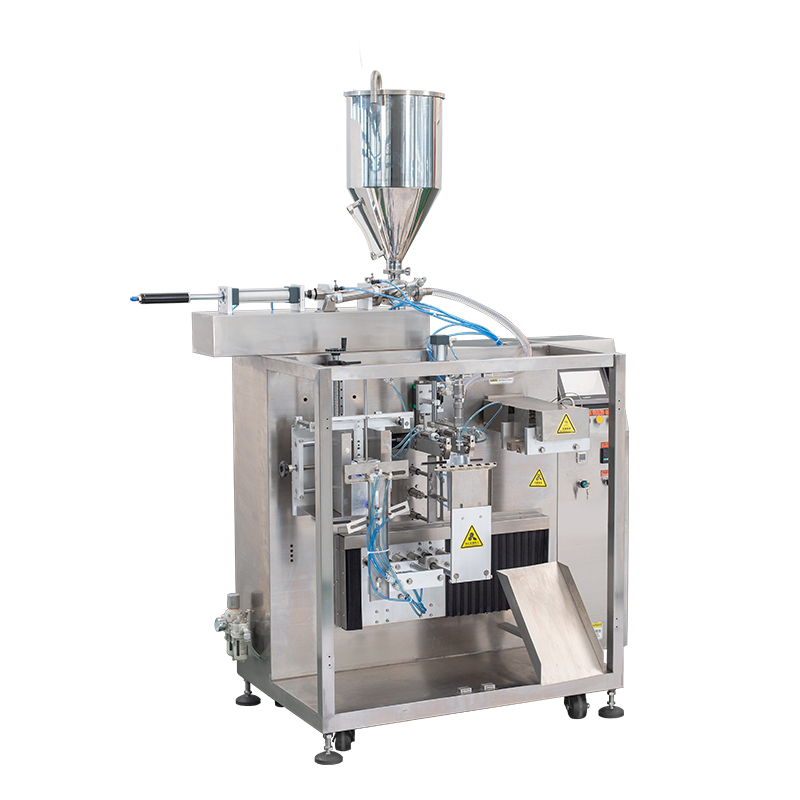
Selecting the correct candy packing machine dictates your production floor layout. It also determines the final retail presentation of your product. Here is a breakdown of the four main equipment categories.
Flow wrappers operate horizontally. They wrap products in a continuous web of film. The machine seals the package on three sides, creating a classic pillow pack.
Best For: Chocolate bars, licorice ropes, and individually wrapped hard candies.
Business Outcome: This is highly cost-effective technology. It offers immense versatility for small-to-medium operations. You achieve high-speed individual wrapping with relatively low maintenance requirements. Changeovers between different bar sizes are generally swift.
These systems form a bag from a flat roll of film. They fill the bag vertically via gravity or weighers, then seal it. Pouch variants handle pre-made bags, such as Doy Zip styles.
Best For: Bulk gummies, jelly beans, and mixed snack bags.
Business Outcome: VFFS systems maximize your floor space due to their compact vertical footprint. They adapt easily to modern consumer trends. You can run resealable or recyclable paper pouches. Advanced twin-tube designs can easily reach speeds exceeding 400 bags per minute.
This traditional machinery twists the packaging film at both ends. It creates the classic bowtie look associated with nostalgic treats.
Best For: Premium hard candies, caramels, and gourmet truffles.
Business Outcome: Twist wrapping delivers exceptional visual appeal. Consumers perceive it as a premium format. However, it comes with steeper capital requirements. It also yields slower operational speeds compared to modern horizontal flow wrapping.
Cartoners automatically erect, fill, and seal paperboard cartons. You can source them in both vertical and horizontal configurations.
Best For: Secondary packaging or premium boxed confections.
Business Outcome: They handle delicate items gently. Cartoners integrate seamlessly behind primary wrapping machines. They prepare your products directly for retail display shelves or wholesale distribution.
Understanding capital expenditure tiers prevents sticker shock. It also guides you away from dangerously under-priced equipment.
Pricing varies wildly based on automation levels and build quality. You get exactly what you pay for in packaging machinery.
Entry-Level / Semi-Auto ($2,000 – $10,000): This tier includes basic flow wrappers or semi-auto pouch fillers. Buyers often source them directly from overseas platforms like Alibaba. You face high risks here. Expect language barriers during setup. Spare parts are often proprietary or difficult to source. CE/UL electrical certifications might be missing or falsified.
Mid-Market Commercial ($12,000 – $35,000): These are reliable, small-scale commercial machines. This bracket includes entry-level VFFS systems or refurbished double-twist wrappers. They suit growing brands needing dependable daily output.
Enterprise Automation ($35,000 – $90,000+): Expect fully automated, high-speed lines. They feature servo-drives and integrated multi-head weighers. Suppliers usually include end-to-end turnkey installation and onsite training.
The sticker price never reflects the final installation bill. You must prepare your physical plant for industrial automation.
Facility Constraints: Many buyers forget to measure ceiling clearance. VFFS machines topped with multi-head weighers require significant vertical space. You also must verify your compressed air and industrial power availability. Upgrading your electrical panels costs thousands if done retroactively.
Tooling & Changeover: Running multiple bag sizes requires different forming tubes. Custom forming collars are expensive. Frequent changeovers consume labor hours and halt production. Factor tooling costs into your initial budget to avoid surprise expenses later.
Hardware specs matter, but the vendor relationship matters more. A broken machine stops cash flow instantly. You must partner with a supplier who guarantees uptime.
Avoid simple "box-movers" who merely import and resell. Look for true OEM (Original Equipment Manufacturer) partners. A competent OEM offers laboratory testing. They will run your specific candy formulation on their equipment before you sign a purchase order. This proves the machine handles your unique recipe without jamming.
Review the service level agreement thoroughly. Assess their domestic technical support presence. Ask for guaranteed emergency response times. Most importantly, demand machines built with standardized, non-proprietary replacement parts. You want PLC controllers from universally recognized brands like Siemens or Allen-Bradley. This ensures any local technician can troubleshoot the system.
Food safety is non-negotiable. Ensure the machine uses food-grade stainless steel (typically 304 or 316 grade) for all contact parts. The design must comply with Good Manufacturing Practices (GMP). Look for tool-less removal of belts and chutes to facilitate daily washdowns.
Importing a machine maximizes your capital ROI, but logistics can be complex. Verify the supplier's export experience. They must accurately provide standard clearance documents. Missing paperwork strands your equipment at the port. Ensure they supply a Commercial Invoice, a detailed Packing List, a Certificate of Origin (C.O.O.), and a Bill of Lading (BOL). For US imports, they must assist with ISF 10+2 forms.
Moving from research to procurement requires a structured approach. Follow this systematic process to secure the best equipment.
Step 1: Document Your Current Baseline. Record your current manual throughput accurately. Measure your maximum facility footprint, noting ceiling heights and door widths. Compile precise product dimensions and piece weights.
Step 2: Request Sample Runs. Send your most difficult candy to the shortlisted vendors. Choose the stickiest gummy or the most fragile chocolate. Demand video-documented testing. If they cannot run your worst-case scenario flawlessly, eliminate them.
Step 3: Perform a Factory Acceptance Test (FAT). Never release the final payment blindly. Conduct an FAT either virtually or on-site. Watch the machine run at its rated speed for an extended period. Verify safety guards, emergency stops, and changeover procedures personally.
Upgrading to an automated candy packing machine represents a major capital expenditure. However, it shifts production from a labor-intensive liability into a predictable, scalable asset. You eliminate repetitive strain risks while protecting your confections from environmental degradation.
Do not evaluate vendors based on top-speed claims alone. Prioritize gentle product handling and strict weight accuracy. Above all, thoroughly vet the supplier’s post-installation support infrastructure. Your machine is only as good as the service team standing behind it.
Start today. Compile your exact product spec sheets. Document your facility limitations. Reach out to certified packaging integrators to schedule a baseline consultation and request your initial sample runs.
A: Reliable machines utilize photo-eye sensors to monitor fill levels and integrate with multi-head weighers or rotary counting systems to ensure precise, varied dispensing without misfeeds. This prevents jams and ensures each bag meets weight requirements.
A: Yes, provided the machine is engineered with specific features like vibratory feeders, specialized plungers, and dimpled/teflon-coated contact surfaces designed for high-friction confections. These materials drastically reduce drag.
A: They can offer significant cost savings, but reliability hinges on the manufacturer's export experience, adherence to your local electrical/safety standards, and your ability to manage import logistics (BOL, ISF forms) and source local technicians for eventual repairs.


