
Views: 0 Author: Site Editor Publish Time: 2026-06-02 Origin: Site


Navigating the pharmaceutical and supplement manufacturing space often feels like learning a brand new language. You might hear operators call the exact same piece of equipment three different names. Vendors use varying terms depending on their geographic region. This terminology confusion creates real problems for teams trying to source reliable production lines.
Misunderstandings during the procurement phase lead directly to misaligned vendor proposals. They cause inaccurate capacity estimates. You might even purchase equipment entirely unsuited for your specific production environment. We want to eliminate this costly confusion.
This guide clarifies industry terminology while exploring the mechanical variations of a capsule packing machine. We provide a rigorous, evidence-based framework for evaluating equipment. Operations managers, process engineers, and procurement teams will gain the exact knowledge needed for shortlisting the right commercial production system.
Terminology: A capsule machine is professionally known as an encapsulator, capsule filler, or capsule packing machine.
Scale Dictates Technology: Machine selection must align strictly with production volume, moving from manual (R&D) to semi-automatic, to fully automatic systems.
Dosing Mechanisms Matter: The choice between tamping pin and dosator technologies fundamentally impacts fill weight precision, especially for micro-dosing or specific powder characteristics.
Industry professionals frequently debate the correct terminology for capsule equipment. A capsule filler, encapsulator, or capsule packing machine refers to industrial equipment designed specifically to separate, fill, and lock two-piece hard gelatin or HPMC capsules. These terms describe the primary filling mechanism inside the production room.
While often used interchangeably, nuances exist across different engineering circles. Let us break down the most common terms you will encounter:
Encapsulator / Capsule Filler: These represent the most common engineering terms. They specifically describe machines performing the primary actions of separating empty capsules, injecting the powder or pellets, and locking the caps back onto the bodies.
Capsule Packing Machine: Teams use this term interchangeably alongside fillers. Strictly speaking, it can sometimes encompass the downstream packaging line, including blister packing or bottling units. For our primary context, it refers directly to the primary filling equipment.
Using precise phrasing in your User Requirement Specification (URS) prevents costly misaligned vendor proposals. If you ask a vendor for a packing line when you need a primary filler, you waste weeks reviewing incorrect technical drawings. Accurate terminology ensures accurate capacity quoting. Vendors will propose the exact machinery matching your actual daily output needs.
Common Mistake: Never assume vendors define terms exactly as your internal team does. Always include a brief definitions section inside your URS documents.
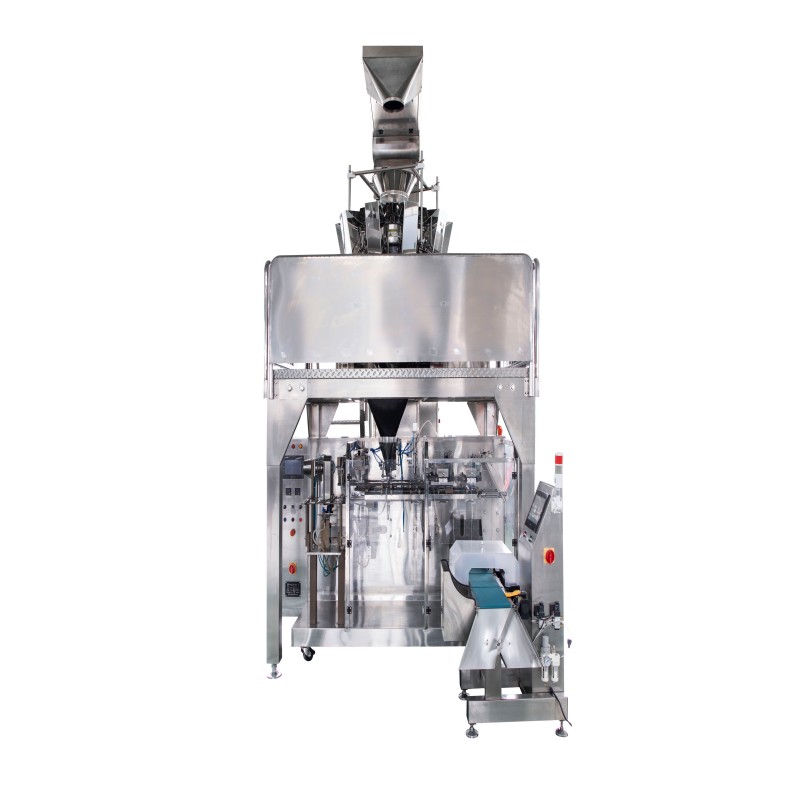
Selecting equipment requires mapping your current production volume directly to the correct automation tier. Buying too much machine wastes capital. Buying too little machine bottlenecks your entire facility. Let us explore the three main categories available today.
Manual fillers require operators to perform every action by hand. They manually load empty capsules, spread powder, and press the locking plates together.
Use Case: These units serve low-volume R&D labs, early-stage clinical trials, and small compounding pharmacies.
Limitation: The process remains highly operator-dependent. You will experience higher weight variation across batches. Output rarely exceeds 2,000 capsules per hour.
Semi-automatic units bridge the gap between benchtop R&D and full-scale commercial manufacturing. They automate the separation and filling actions but require human assistance between steps.
Use Case: They provide cost-effective scaling for mid-scale batch production. Nutraceutical startups frequently rely on these systems.
Limitation: Operators must manually transfer the capsule ring from the separation station over to the locking station. This introduces potential ergonomic risks and limits maximum hourly yields.
Fully automatic systems represent the pinnacle of encapsulating technology. They require zero human intervention during the active filling cycle.
Use Case: They dominate high-yield commercial manufacturing. Capacities range from 10,000 up to 100,000+ capsules per hour.
Advantage: These feature closed-loop operations. They offer automated rejection of faulty or unseparated capsules. You can easily integrate them alongside upstream powder feeding systems and downstream dedusting equipment.
The dosing mechanism dictates how powder moves from the hopper into the empty capsule body. You must match this mechanism to your specific powder characteristics. Choosing the wrong mechanism guarantees constant machine jams and unacceptable weight variations.
Most standard commercial machines utilize tamping pin technology. It provides robust performance across a wide variety of standard formulations.
How it works: The machine uses a rotating dosing disc paired with tamping pins. The pins compress powder into a compact slug across multiple sequential stations. The final station transfers this solid slug directly into the open capsule body.
Best for: Standard powders, granules, and pellets. It offers incredibly high throughput. It maintains highly reliable baseline accuracy for free-flowing materials.
Dosator systems handle complex, difficult-to-run powders. European machine manufacturers frequently champion this specific engineering approach.
How it works: The system utilizes a specialized dosing tube containing an internal piston. The tube punches downward directly into the powder bed. This action forms a compact slug. The piston then ejects this slug into the empty capsule.
Best for: Micro-dosing applications, inhalation powders, and highly cohesive or aerated powders. It excels when handling very low fill weights.
Powder rheology heavily influences your choice. You must analyze flowability and bulk density before shortlisting any equipment. We created a simplified chart to help guide your initial decision.
Powder Rheology & Mechanism Chart | ||
Powder Characteristic | Recommended Mechanism | Primary Reason |
|---|---|---|
Standard / Free-Flowing | Tamping Pin | High throughput, consistent slug formation, lower maintenance. |
Cohesive / Poor Flow | Dosator | Punching action bypasses poor gravity flow issues. |
Micro-dosing (under 25mg) | Dosator | Superior volume control at microscopic levels. |
Pellets / Granules | Tamping Pin / Modular | Gentle handling prevents crushing active ingredients. |
Best Practice: Poor powder flow cannot simply be fixed by buying a better machine. Upstream formulation optimization remains critical. Always test your powder flow using Carr’s Index or the Hausner Ratio before blaming the filling equipment.
Evaluating a capsule packing machine requires moving beyond basic marketing brochures. You must align specific mechanical features directly to your desired production outcomes.
Weight precision directly impacts your regulatory compliance. Evaluate exactly how the machine detects and isolates out-of-tolerance capsules. Modern systems employ sophisticated rejection logic.
Highlight the absolute necessity of integrated statistical weight control. Some machines utilize 100% checkweighing using advanced capacitance sensors. Others rely on sample polling, weighing a small fraction of output periodically. High-potency pharmaceuticals generally require 100% in-line checkweighing to guarantee patient safety.
Pharmaceutical and nutraceutical manufacturing environments demand strict adherence to global regulatory frameworks.
The machine must meet current Good Manufacturing Practice (cGMP) standards.
Software controls must comply seamlessly with FDA 21 CFR Part 11. This requires secure audit trails and electronic signatures for all recipe changes.
Assess "clean-in-place" (CIP) capabilities.
Verify all contact parts utilize 316L stainless steel featuring appropriate Ra surface finishing to prevent microbial growth.
Production facilities rarely run a single product forever. Assess how easily the machine handles different capsule sizes. Industry standards range from the very large Size 000 down to the tiny Size 5.
Calculate the hidden costs of format flexibility. Purchasing separate format parts (dosing discs, segment rings, sorting blocks) for every distinct capsule size quickly drains budgets. Ask vendors if their tooling offers modular interoperability.
Paper specifications often hide the daily realities of operating heavy machinery. Procurement teams frequently overlook the hidden operational risks associated with commercial production.
Vendors frequently boast about "rapid changeover" capabilities. You must challenge these claims rigorously. Real-world changeovers involve far more than swapping a single part.
Detail the actual time operators require to strip the machine completely. They must clean every contact surface, dry the components thoroughly, reassemble the complex mechanics, and finally calibrate the dosing pins. A vendor claiming a 30-minute changeover often ignores the mandatory cleaning validation steps. Expect a full product changeover to take several hours in a regulated cGMP environment.
Handling highly potent active pharmaceutical ingredients (HPAPIs) introduces massive risks. You must address the dangers of cross-contamination and operator exposure.
Evaluate machines based on their Occupational Exposure Band (OEB) ratings. High-level containment requires specialized negative pressure zones. Evaluate integrated containment doors, specialized sealing rings, and heavy-duty vacuum extraction systems. Protecting your operators remains non-negotiable.
Brilliant equipment remains functionally useless without rigorous testing. You cannot simply plug a machine in and start selling products.
You must perform a comprehensive FAT (Factory Acceptance Testing) at the vendor facility. Following delivery, execute a strict SAT (Site Acceptance Testing). Budget appropriately for comprehensive qualification protocols. This includes IQ (Installation Qualification), OQ (Operational Qualification), and PQ (Performance Qualification). Missing these steps guarantees failed regulatory audits.
Moving from technical research to actual purchasing requires a disciplined, logical framework. Do not let aggressive sales tactics rush your engineering decisions.
Your URS forms the legal and technical foundation of your purchase. Document specific needs meticulously. Include your target CPH (capsules per hour). Detail your exact product characteristics, including bulk density and flowability scores. Map out your available facility footprint. Do not forget to list strict utility constraints, including available compressed air pressure and precise power voltages.
Look far beyond the glossy spec sheet. The best machine in the world becomes a liability if you cannot get spare parts.
Assess their local service presence. Determine exact spare parts availability and guaranteed lead times. Evaluate the OEM technical support reliability. Can you reach an engineer at 2 AM during a critical night shift breakdown? Ask for references from current customers running similar formulations.
Calculate your expected payback period accurately. Factor in projected yield loss reduction. Automated models reduce wasted powder dramatically. Include labor savings generated by fully automated models requiring fewer operators. Consider ongoing energy consumption rates. Presenting a comprehensive ROI model helps secure final budget approval from your executive board.
Navigating the equipment market requires clear terminology and rigorous analysis. While this machinery goes by many names—from encapsulator to capsule packing machine—your selection process must remain rigidly scientific.
Successful deployment requires balancing mechanical precision against specific powder characteristics. You must maintain strict compliance standards while evaluating tooling flexibility. Never compromise on operator safety or dust containment protocols.
We encourage buyers to formalize their internal URS immediately. Request specific, data-backed case studies from potential OEMs. Demand proof of their claims regarding changeover times and weight accuracy. By applying this disciplined framework, you ensure a profitable, compliant, and highly efficient manufacturing future.
A: A capsule filler specifically performs primary dosing, separating empty capsules, filling them, and locking them. A capsule packing machine often refers to this exact same primary equipment. However, in some contexts, it describes the secondary downstream packaging lines, such as blister packers or automated bottling systems.
A: Standard automated machines handle all conventional industry sizes, including 000, 00, 0, 1, 2, 3, 4, and 5. However, you must purchase and install specific change parts and tooling formats for each individual size you intend to run.
A: Maintenance depends strictly on operating hours. Preventative maintenance schedules usually require daily visual inspections. You must perform weekly lubrication of moving cams, monthly vacuum filter changes, and regular dosing pin calibration to ensure consistent fill weights and prevent mechanical failure.
A: High-end automated machines support modular combination filling. You can fill powder and pellets into one single capsule using interchangeable stations. However, liquid filling requires highly specialized pumps, alongside separate banding and sealing equipment to prevent leakage.


