
Views: 0 Author: Site Editor Publish Time: 2026-06-05 Origin: Site


Are you tired of paying premium markups for daily supplements? Yes, a dedicated machine exists to streamline your filling process. Whether you need a simple tool for your morning routine or an industrial system for commercial production, automated solutions change everything. Relying on pre-filled capsules often forces you to accept unwanted binders. You also consume hidden excipients. Furthermore, you lack precise control over your daily dosages. Manual hand-packing without proper equipment feels tedious. It also leads to wildly inconsistent dosing across your batches. We created this complete guide to solve these exact problems. You will learn how every capsule packing machine operates. We break down every available tier. You will discover simple DIY manual kits. You will also explore fully automatic industrial units. Finally, we provide an objective evaluation framework. This helps you select the perfect equipment for your unique goals.
Cost Efficiency: DIY encapsulation with a manual machine can reduce supplement costs by up to 80% compared to buying pre-packaged products.
Scale Variability: Solutions range from $20 manual 24-hole kits (producing ~700 capsules/hour) to fully automatic industrial machines processing over 400,000 capsules/hour.
Quality Control: Filling your own capsules guarantees the elimination of commercial manufacturing excipients and binders.
Hardware Caveats: Entry-level machines require strict material evaluation—certain essential oils can degrade cheap plastics, and high-heat cleaning can warp components.
Understanding the core mechanics of a capsule filler helps you optimize your production. Even the simplest devices use clever engineering. They ensure consistent powder distribution and tight capsule locking.
Most entry-level machines share a standard structural design. You will typically find the following parts inside a standard kit:
The Base: This holds the longer bottom halves of your empty capsules.
The Stand: This elevates the base during the filling process. It provides stability.
The Top Plate (Cap Holder): This secures the shorter top halves of the capsules.
The Powder Spreader: Often shaped like a scraper card. You use it to push powder evenly into the holes.
The Tamping Tool: A multi-pronged press. It compresses the fluffy powder inside the capsule bodies.
You must follow a specific sequence to achieve consistent results. Here is the standard operating procedure for manual systems:
Separate your empty capsules. Place the long ends into the bottom base. Place the short ends into the top plate.
Pour your raw powder over the base. Use the spreader card to sweep the powder evenly into every hole.
Use your tamping tool to compress the powder downward. This creates extra space. You can now do a second powder pour to reach your target milligram dosage.
Align the loaded top plate over the filled base. Apply even, downward pressure. This action joins and locks the capsule halves together.
Release the pressure. Remove the top plate. The finished capsules will automatically eject from the machine.
Speed depends heavily on your chosen capsule size and batch quantity. Consider a standard manual batch of 24 Size "00" capsules. Each capsule holds approximately 500mg of powder. This specific batch requires about one tablespoon of raw powder. A beginner can complete this entire process in roughly two minutes.
The market offers hardware for every conceivable use case. Your choice depends entirely on your required output volume and available budget.
These devices are incredibly popular for home use. Biohackers love them for custom nootropic stacks. Home herbalists use them to process dried botanicals. Pet owners rely on them to create custom veterinary supplements.
These manual kits typically feature 24, 50, or 100 holes per batch. A skilled user operating a 100-hole machine works quite efficiently. They can produce between 600 and 700 capsules per hour. The operation is 100% human-powered. You do not need any electricity to run them.
Moving up the tier brings you to semi-automatic devices. These units target research and development labs. Boutique supplement brands also favor them. Small-batch pharmacies use them to compound custom prescriptions.
These machines fill hundreds of capsules per cycle. They blend mechanical loading systems with manual interventions. An operator usually transfers holding rings between different filling stations. This hybrid approach drastically increases hourly output while keeping equipment costs reasonable.
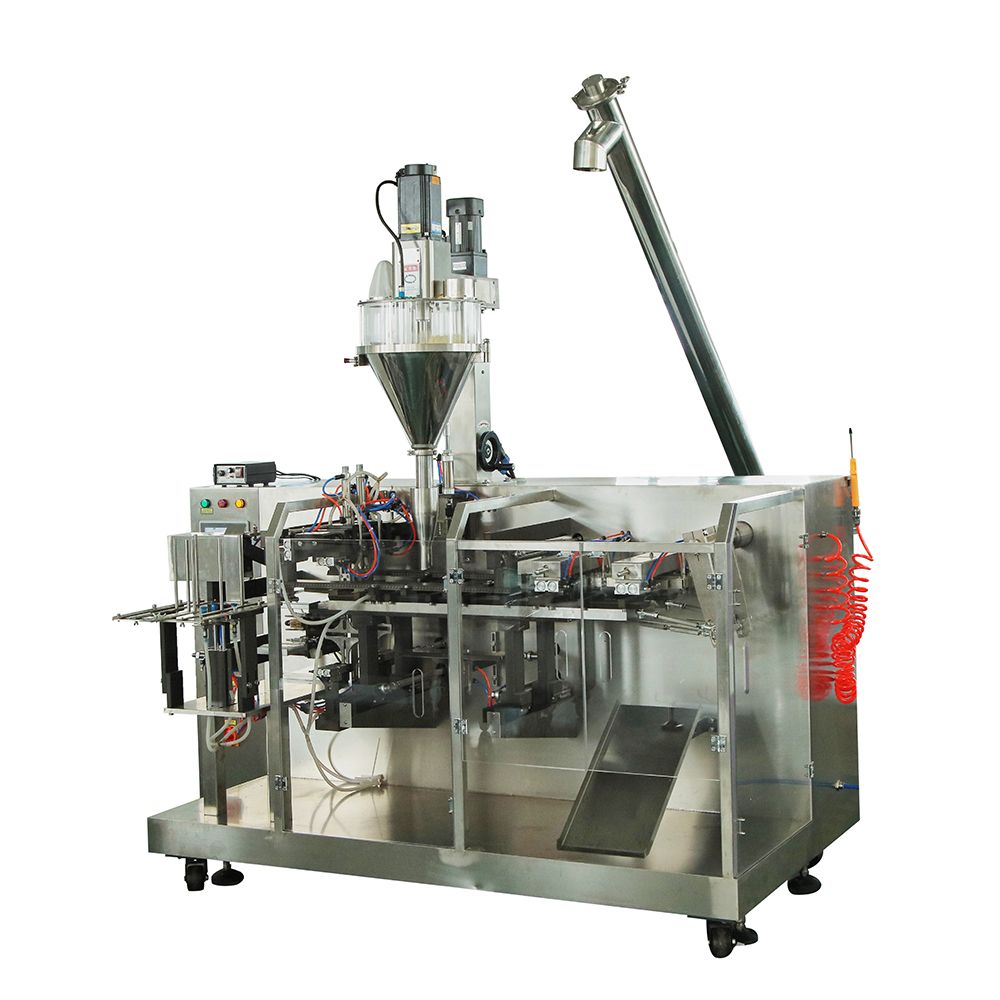
Large-scale nutraceutical companies require massive throughput. Pharmaceutical manufacturers also demand absolute precision. This is where the fully automatic capsule packing machine dominates the market.
These industrial giants boast staggering output figures. Slower models produce roughly 12,000 capsules per hour. High-end variants can process over 450,000 capsules per hour. They operate with minimal human intervention. They feature integrated PLC (Programmable Logic Controller) systems. Operators control them via HMI (Human-Machine Interface) touchscreens. Advanced models use double-sided grooved cams. This achieves an 85% or higher powder retention rate. They even feature automatic defective capsule rejection systems.
Use the chart below to compare the three main tiers at a glance.
Machine Tier | Target Audience | Average Output / Hour | Power Requirement |
|---|---|---|---|
Manual (DIY) | Home users, Biohackers | 600 – 700 capsules | None (Human-powered) |
Semi-Automatic | R&D Labs, Small Brands | 10,000 – 25,000 capsules | Electrical (110V/220V) |
Fully Automatic | Pharma, Large Manufacturers | 12,000 – 450,000+ capsules | Industrial Three-Phase Power |
Purchasing the wrong equipment wastes money and ruins your ingredients. You must evaluate several key dimensions before making a decision.
Construction materials dictate safety and regulatory compliance. Industrial machines face strict regulations. They must feature 304 or 316L Stainless Steel construction. This ensures strict compliance with GMP (Good Manufacturing Practice) standards. Stainless steel prevents corrosion and resists bacterial growth.
Manual home devices require different safety checks. You should look for FDA-compliant plastics. Ensure the materials are completely BPA-free. High-quality home units use ABS plastic. Many also use Delrin Acetal or food-grade Polypropylene.
You must watch out for the "Black Plastic" red flag. In the home-use tier, avoid opaque black plastic machines entirely. Transparent or white plastics are vastly preferable. Manufacturers often use black dyes to mask recycled materials. Black plastic easily hides manufacturing defects. It also masks trapped dirt and leftover powder.
Capsule machines are highly specific tools. They are precision-drilled for exact sizes. A machine designed for Size 0 will not fit Size 00 capsules. You cannot force them to work interchangeably.
Size 00 is the most popular industry standard for human use. These capsules hold between 750mg and 1000mg of powder. Sizes 4 and 5 represent the smaller end of the spectrum. These tiny capsules are commonly required for veterinary applications and pet supplements.
You must also check material compatibility. Ensure your machine works with both Gelatin and Vegetarian capsules. Vegetarian capsules often use HPMC (Hydroxypropyl Methylcellulose) or Pullulan. The machine should handle these materials without cracking them.
Sanitation is a critical part of encapsulation. For home units, you might wonder if the unit is dishwasher safe. Many consumer-grade plastics cannot handle extreme heat. Washing them improperly will destroy the machine.
Industrial units face different maintenance challenges. They must have tool-less teardown capabilities. Operators need to disassemble the contact parts quickly. This allows for rapid sanitation between different powder runs. It prevents cross-contamination between product batches.
Even the best equipment fails if you use it incorrectly. You must understand the physical limits of your hardware. Be aware of these common maintenance risks and operational edge cases.
Standard manual machines made of ABS plastic have strict thermal limits. Their maximum heat tolerance hovers near 180°F. Placing these plastic parts in a high-heat dishwasher cycle is a major mistake. The intense heat will warp the alignment plates permanently. A warped machine cannot align the top and bottom capsules. This renders the device completely useless. You must practice hand washing with warm soapy water instead.
Certain natural powders cause severe chemical damage. Powders high in essential oils are surprisingly destructive. Eugenol is a highly corrosive compound. You will find it in clove, nutmeg, and cinnamon powders. Over time, Eugenol will literally eat away at entry-level plastics. It causes the plastic to pit, crack, and degrade. You must upgrade your equipment if you plan to process these harsh botanicals frequently.
Most machines are strictly designed for dry powder processing. People often try to fill liquids, which usually ends in disaster. Using water-based liquids will melt standard gelatin capsules within minutes.
If you absolutely must fill oils, follow this pro tip. First, chill the oil in the refrigerator. This dramatically increases the liquid's viscosity. Next, use a precision glass dropper. Do not use the standard pour-and-scrape method. Finally, store your finished oil capsules carefully. Keep them in a sealed jar with dedicated desiccant drying bags. This prevents moisture buildup and stops premature leakage.
Manual machine users often face a frustrating problem. When you flip the top plate to marry the capsule halves, some top caps occasionally fall out. This ruins the batch alignment.
Experienced users rely on the wax paper hack to solve this. Place a clean piece of wax paper over the loaded top plate. Flip the plate upside down while holding the paper in place. Position the top plate directly over the bottom base. Slide the wax paper out right before you apply compression. This simple trick ensures a 100% seating rate for every batch.
You now understand the mechanics, categories, and risks. The final step is matching your personal goals to the correct hardware. Use this shortlisting logic to finalize your decision.
If your goal is personal cost savings: Focus on affordable DIY kits. You want to avoid commercial excipients and save money. Purchase a 100-hole manual machine. Ensure it uses transparent or white BPA-free plastic. Make sure it is precisely calibrated for Size 00 capsules.
If your goal is scaling a small business: You need moderate volume and better hygiene. Avoid cheap plastics entirely. Look toward entry-level semi-automatic systems. Ensure they feature stainless steel contact parts. This helps you maintain strict hygiene standards and passes basic health inspections.
If your goal is commercial manufacturing: You cannot compromise on speed or compliance. Only evaluate fully automatic systems. Demand verified GMP compliance documents from the manufacturer. Ask for verifiable throughput claims. Ensure the equipment features accessible HMI interfaces for your operating staff.
The journey from raw bulk powder to a perfectly finished capsule requires precision. The right hardware transforms a tedious chore into an efficient, highly repeatable process. Whether you press capsules by hand or program a touchscreen, the underlying mechanics remain remarkably similar.
Upfront costs vary wildly. A manual kit costs very little, while an automatic system demands heavy capital expenditure. However, the long-term ROI remains highly measurable across all tiers. You benefit from drastically reduced raw material costs. You also gain complete, uncompromising control over your formulations.
Take action today by defining your exact requirements. Determine your ideal capsule size. Decide whether Size 00 or Size 0 fits your dosage needs best. Calculate your target hourly output. Once you establish these two metrics, you can confidently purchase the perfect machine for your production line.
A: A beginner can complete a 24-hole batch in about 2 minutes. Experienced users using a 100-hole machine can comfortably output 600 to 700 capsules per hour. Speed increases significantly as you develop muscle memory for the tamping and joining steps.
A: Generally, no. Manual and semi-automatic machines are precision-drilled for specific sizes. You must buy a dedicated machine for each size. Industrial machines require you to purchase and swap dedicated tooling parts when changing from Size 00 to Size 1.
A: Mechanically, they fill exactly the same. However, vegetarian capsules are slightly more brittle in dry environments. They may crack under heavy tamping pressure if you do not store them with proper humidity controls. Gelatin capsules generally offer more physical flexibility during compression.

